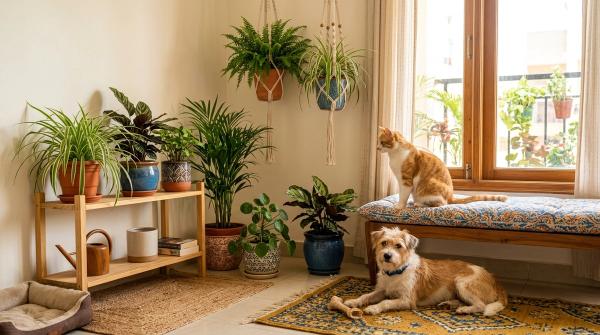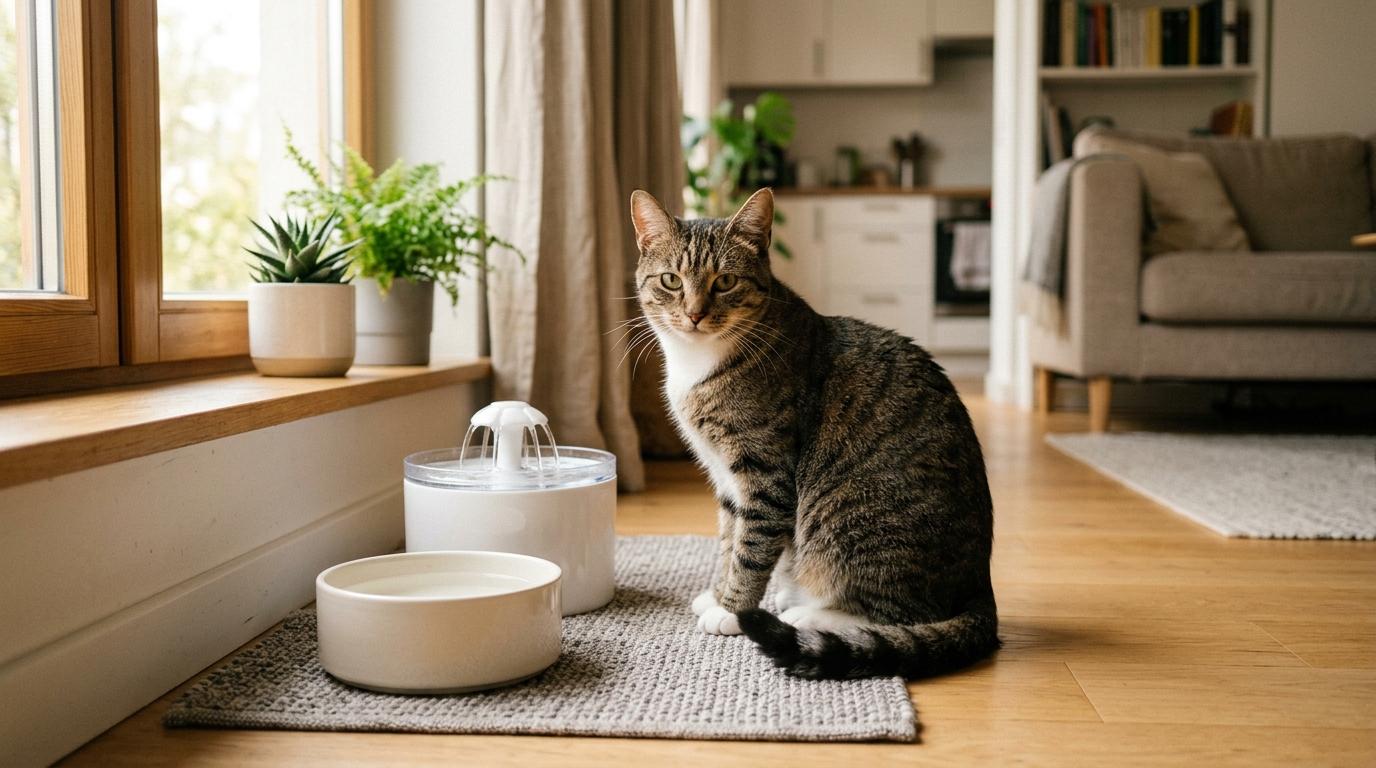
If you’re trying to decide between a cat water fountain vs bowl, the real answer is probably less dramatic than the internet makes it seem: for many cats, a clean, wide, shallow bowl is completely fine. A fountain can help cats who prefer moving water, but it is not automatically better. In a small apartment, choose the water setup your cat actually uses and you can realistically keep clean.
Why Cat Hydration Matters
#Cats can be particular about water. Some like it cold. Some like it fresh. Some like it moving. Some ignore the expensive thing you bought and drink out of a mug on your desk.
Hydration matters because indoor cats rely on us for food, water access, routine, and environment. Veterinary education sources consistently emphasize that steady water access supports normal body functions, but that does not mean every cat needs a fountain.
A cat who eats mostly wet food may not seem to drink much from a bowl because they already get moisture from meals. A cat who eats mostly dry food may visit water more often. Some cats love fountains immediately. Others never trust them.
The goal is simple: make fresh, clean water easy to find, comfortable to drink, and safe to use.
Cat Water Fountain vs Bowl: Quick Comparison
#When a Cat Water Bowl Is the Better Choice
#A cat water bowl is not the boring backup option. For many homes, it is the easiest and most sensible choice.
A bowl may be better if:
- Your cat already drinks from still water.
- You live in a small apartment with limited space.
- You do not want another cord or outlet issue.
- You are sensitive to background noise.
- You want cleaning to be quick.
- You sometimes have a pet sitter and want things simple.
- Your cat is nervous around motors, splashing, or new objects.
The best bowl is usually wide, shallow, and made from ceramic, glass, or stainless steel. These materials are easier to clean than scratched plastic, and a shallow shape can feel more comfortable because the cat’s whiskers are less likely to bump the sides.
If you choose a bowl, make it easy for your cat to drink from and easy for you to wash.
When a Cat Water Fountain May Be Worth Buying
#A cat water fountain can be useful for some cats, especially if moving water catches their attention.
A fountain may be worth trying if:
- Your cat tries to drink from the tap.
- Your cat paws at water before drinking.
- Your cat ignores still water.
- Your cat eats mostly dry food.
- You are genuinely willing to clean the fountain properly.
That last point matters. A fountain is not a self-cleaning hydration miracle. It is a water dish with a pump. It may make water more interesting, but it still needs regular washing.
If your cat already drinks happily from a bowl, you probably do not need to buy a fountain just because it looks popular online.
The Small-Apartment Reality Check
#Small apartments make every pet product feel larger than it looked online.
Before buying a fountain, ask:
- Where will I plug it in safely?
- Can I keep the cord away from chewing, batting, and foot traffic?
- Will I hear the pump from my bed, sofa, or desk?
- Is there enough space to take it apart and clean it?
- Am I actually going to clean the pump, or just rinse the top?
If those questions already make you tired, a bowl may be the better fit.
Fountains can work in small apartments, but placement, noise, and maintenance matter.
Cleaning Is the Real Deciding Factor
#This is where the cat water fountain vs bowl decision becomes practical.
A bowl gets dirty quickly. Hair, dust, food crumbs, and saliva can end up in the water. But cleaning it is easy: dump old water, wash the bowl, rinse it well, and refill it.
A fountain can look cleaner because water moves and may pass through a filter. But filters do not make the fountain self-cleaning. You still need to wash the reservoir, scrub small parts, and clean the pump.
If you are not willing to keep up with cat fountain cleaning, choose a bowl. Fresh water in a clean bowl is better than old water cycling through a dirty fountain.
Cat Water Cleaning Checklist
#If You Use a Cat Water Bowl
#- Empty old water every day.
- Wash the bowl daily with hot water and mild dish soap.
- Use the dishwasher if the bowl is dishwasher-safe.
- Rinse well so no soap residue is left behind.
- Refill with fresh water.
- Check for chips, cracks, scratches, or rough spots.
- Replace damaged bowls, especially if they are hard to clean.
If You Use a Cat Water Fountain
#- Check water level daily or every 1 to 2 days.
- Top it off so the pump does not run too low.
- Unplug it before cleaning.
- Empty and wash the reservoir regularly.
- Clean lids, spouts, trays, and removable parts.
- Take the pump apart according to instructions.
- Scrub the pump cavity with a small brush.
- Replace filters as directed by the manufacturer.
- Watch for slime, odor, cloudy water, or weaker flow.
- Stop using it until cleaned if it looks or smells dirty.
The pump is the part people forget most often, and it is one of the places where grime can hide.
Small Apartment Setup Tips for Indoor Cat Water
#1. Keep Water Away From the Litter Box
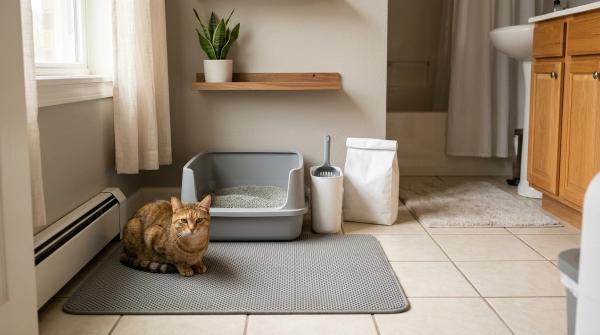
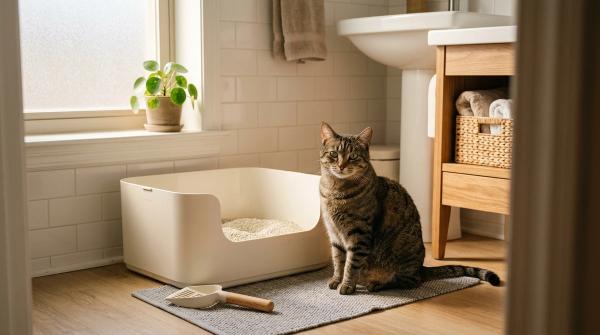
#Do not put your cat’s water beside the litter box. Most cats do not want to drink next to their bathroom area, and it is more hygienic to separate those spaces.
2. Separate Food and Water If You Can
#Some cats prefer water away from food. If your cat does not drink much, try moving the water a few feet away. In a studio apartment, even the other side of the room can help.
3. Offer Two Water Spots
#Even in a small apartment, two water stations can be useful:
- One ceramic bowl in the bedroom
- One bowl or fountain in the living area
This gives your cat options without turning your home into a hydration department.
4. Avoid Busy Walkways
#Cats may avoid water if the area feels exposed or chaotic. Try a quiet spot that is easy to reach but not in the middle of your daily path.
5. Be Careful With Cords
#If you choose a fountain, tuck the cord away safely. Do not run it across a walkway or leave it somewhere your cat can chew, bat, or drag it.
6. Test Before You Commit
#When introducing a fountain, keep the old bowl available too. Let your cat choose. Some cats need a few days to investigate; some never trust fountains, and that is fine.
Cost: What Are You Really Paying For?
#A cat water bowl is usually cheaper. A good ceramic, glass, or stainless steel bowl can last a long time if it does not crack, chip, or get scratched.
A fountain costs more upfront and may require:
- Replacement filters
- Small cleaning brushes
- A replacement pump eventually
- More cleaning time
For many small-apartment cats, one good bowl plus a second water spot may be more useful than one expensive fountain they barely use.
Noise: The Detail You Notice Later
#Noise matters more in a small space. A fountain may sound peaceful in a product video, but in a quiet apartment at 2 a.m., that soft trickle can feel loud.
If the water level gets low, some fountains get noisier. If the pump vibrates against the floor, wall, or cabinet, you may hear that too.
Read reviews for comments about pump hum, splashing, vibration, low-water noise, and whether the fountain stays quiet over time.
A bowl wins this category easily: it is silent.
Safety and Vet-Aware Warning Signs
#Choosing between a cat water fountain vs bowl is a home-care decision. It is not a way to diagnose or treat a health problem.
Call your vet if you notice:
- Your cat suddenly drinking much more than usual.
- Your cat visiting the bowl or fountain constantly.
- Your cat urinating much more than usual.
- The litter box suddenly has very large or frequent urine clumps.
- Your cat stops drinking.
- Your cat seems lethargic along with changes in drinking or urination.
Do not try to solve sudden drinking changes only by switching bowls or buying a fountain. Clean water is important daily care, but it is not diagnosis, treatment, or cure.
So, Which Should You Buy?
#Buy a wide, shallow ceramic, glass, or stainless steel cat water bowl if you want the easiest, quietest, most apartment-friendly option. Wash it daily and place it somewhere calm and easy to reach.
Buy a cat water fountain if your cat clearly likes moving water and you are ready to clean it properly. Choose one that fits your space, comes apart easily, and does not create noise or cord problems.
For many small-apartment cat parents, the best answer is not really fountain versus bowl. It is one clean main water source, plus maybe a second simple bowl in another quiet spot.
Your cat does not care if the setup looks fancy. They care if the water is fresh, safe, and easy to drink.