To remove a tick from your dog safely, use fine-point tweezers or a tick-removal tool. Part the fur, hold the tick as close to the skin as possible, and pull upward with slow, steady pressure. Don’t twist it, squeeze it, apply oil or ghee, or try to burn it off. Once it’s out, clean the bite area, wash your hands, check your dog for more ticks, and keep an eye on their appetite, energy, movement, and behaviour.
Most tick situations don’t need drama. They need calm handling, good lighting, and the right tool.
This guide is written especially for Indian dog parents dealing with dog ticks in monsoon, apartment walks, shared lawns, grooming visits, boarding, and those annoying “but we barely went outside!” tick surprises.
Why removing a tick properly matters
#Ticks attach to your dog’s skin and feed on blood. The longer they stay attached, the more important it becomes to remove them carefully and monitor your dog afterwards.
Ticks can carry diseases. In India, vets commonly watch for tick-borne illnesses such as ehrlichiosis and babesiosis. This guide is not meant to diagnose or treat your dog, and it should not replace veterinary advice. It’s here to help you handle the immediate situation safely and understand when a vet check is needed.
The main thing to remember is this: don’t rush.
A rushed removal can squeeze the tick, break it, irritate the skin, or make the bite harder to monitor. Slow, steady removal is much safer.
“But my dog lives in a flat. How did they get ticks?”
#This is extremely common.
A lot of pet parents assume ticks only come from farms, forests, or street-dog contact. But apartment dogs can get ticks too.
Dogs can pick up ticks from shared lawns, society gardens, walking paths, basement parking areas, stairwells, grooming salons, boarding spaces, kennels, other dogs or animals, and small grass patches outside buildings.
During monsoon, the risk often goes up. Warm, humid weather creates a better environment for ticks, and dogs often come back damp or muddy, which makes tiny ticks harder to spot.
So yes, even if your dog only goes for short apartment walks, routine tick checks still matter.
What you’ll need before removing the tick
#Before you start dog tick removal, gather everything you need. It’s much easier than trying to hold your dog still while hunting for cotton or antiseptic.
Keep these ready:
- Fine-point tweezers or a tick-removal tool
- Disposable gloves, if available
- Pet-safe antiseptic or a vet-approved cleaning solution
- Cotton or gauze
- A small container with rubbing alcohol, or a sealed bag/container for disposal
- Treats
- Good lighting
- Another person to gently distract or hold your dog, if needed
Try not to remove the tick with your bare fingers. If you have no other option and end up touching it, wash your hands thoroughly afterwards.
How to remove a tick from your dog safely
#1. Keep your dog calm
#Choose a quiet, well-lit place. Speak gently. Offer treats. If your dog is nervous or wriggly, ask someone to sit with them and distract them.
Avoid pinning your dog down harshly. It can scare them, make them struggle, and make the tick harder to remove.
2. Part the fur around the tick
#Use your fingers to gently separate the fur so you can clearly see the tick.
Ticks can look different depending on how long they’ve been attached. They may look like tiny black or brown dots, flat seeds, small dark bumps, or swollen greyish lumps.
Try not to poke, squeeze, or press the tick’s body.
3. Grip the tick close to the skin
#Use fine-point tweezers or a tick-removal tool. Place the tool as close to your dog’s skin as you can.
The goal is to hold the tick near its mouthparts, not around its swollen body. This is important because squeezing the body can push tick fluids toward the bite area.
4. Pull upward slowly and steadily
#Pull straight upward with slow, even pressure.
Do not twist. Do not jerk. Do not yank suddenly.
It may take a few seconds for the tick to release. Stay calm and keep the pressure steady.
5. Dispose of the tick safely
#Drop the tick into rubbing alcohol, or seal it in a small bag or container before throwing it away.
Don’t crush it with your fingers. It’s messy and not safe.
6. Clean the bite area
#Clean the spot with a pet-safe antiseptic or a cleaning solution your vet has approved.
Avoid harsh chemicals, Dettol-like products, random sprays, or human skin products unless your veterinarian has clearly told you they are safe for your dog.
7. Wash your hands and clean the tool
#Wash your hands well with soap and water. Clean the tweezers or tick tool too.
8. Check the rest of your dog’s body
#If you found one tick, there may be more.
Check carefully, especially inside and behind the ears, around the eyes and muzzle, under the collar or harness, armpits, groin area, under the tail, between the toes, around paw pads, along the belly, skin folds, and the neck and shoulder area.
Take your time. Small ticks are very easy to miss, especially on long-haired or fluffy dogs.
What not to do when your dog has a tick
#There are many home remedies for ticks, but most are either unsafe, ineffective, or both. If you’re dealing with a tick bite dog situation, avoid these common mistakes.
Don’t apply oil, ghee, or petroleum jelly
#Do not try to “suffocate” the tick with oil, coconut oil, ghee, petroleum jelly, or similar substances.
These methods don’t remove the tick quickly and may irritate it. The safest method is proper physical removal with the right tool.
Don’t use a flame or hot match
#Never try to burn a tick off your dog.
This can burn your dog’s skin or coat, frighten them badly, and make the situation dangerous. It is not a safe tick-removal method.
Don’t squeeze the tick’s body
#Avoid grabbing the swollen part of the tick. Squeezing it can increase the chance of tick fluids moving toward the bite site.
Always try to grip close to the skin.
Don’t twist or jerk
#Twisting or jerking can break the tick and leave mouthparts behind. Pull straight upward with steady pressure instead.
Don’t dig into your dog’s skin
#If a tiny dark speck remains after removal, don’t keep digging with tweezers. You may irritate or injure the skin.
Clean the area and call your vet if you notice swelling, pain, redness, discharge, or if your dog keeps licking the spot.
What if the tick’s head or mouthparts stay in?
#Sometimes, after removing a tick, you may see a small dark speck still stuck in the skin. This could be part of the tick’s mouthparts.
Don’t panic, and don’t dig deeply into the skin to remove it. In many cases, the skin will push it out over time, but the area should be monitored.
Clean the spot and watch it closely. Call your veterinarian if you notice swelling, pus or discharge, increasing redness, pain, heat around the bite, excessive licking or scratching, or your dog seeming dull or unwell.
What to watch for after a tick bite
#After removing the tick, keep an eye on your dog for the next few days and weeks. Some tick-related illnesses may not show signs immediately.
Use this simple checklist:
- Note the date you removed the tick
- Check the bite area once or twice daily
- Look for redness, swelling, pain, or discharge
- Watch your dog’s appetite
- Notice any unusual tiredness
- Watch for weakness or dull behaviour
- Check whether your dog is walking normally
- Look for limping or stiffness
- Notice gum colour, if you know what is normal for your dog
- Keep checking for more ticks after walks
- Call your vet if anything feels off
A small bite mark can remain for a while. That’s usually not a problem. But it should not become increasingly swollen, painful, red, or infected-looking.
When should you call a vet?
#Call your veterinarian if you’re unsure about the removal, if the tick was difficult to remove, or if your dog starts acting unwell.
Contact a vet promptly if you notice loss of appetite, unusual tiredness, weakness, fever-like signs, pale gums, nosebleeds, unexplained bruising, limping, stiff movement, swollen joints, vomiting, worsening condition, swelling or discharge at the bite site, multiple ticks, or ticks on a puppy, senior dog, pregnant dog, or already unwell dog.
Do not give your dog human fever medicines or painkillers. Also, don’t start antibiotics, tick fever medicines, or supplements without veterinary guidance.
Your vet may recommend an examination or blood tests depending on your dog’s symptoms, health history, and local tick risk.
Daily tick checks during monsoon
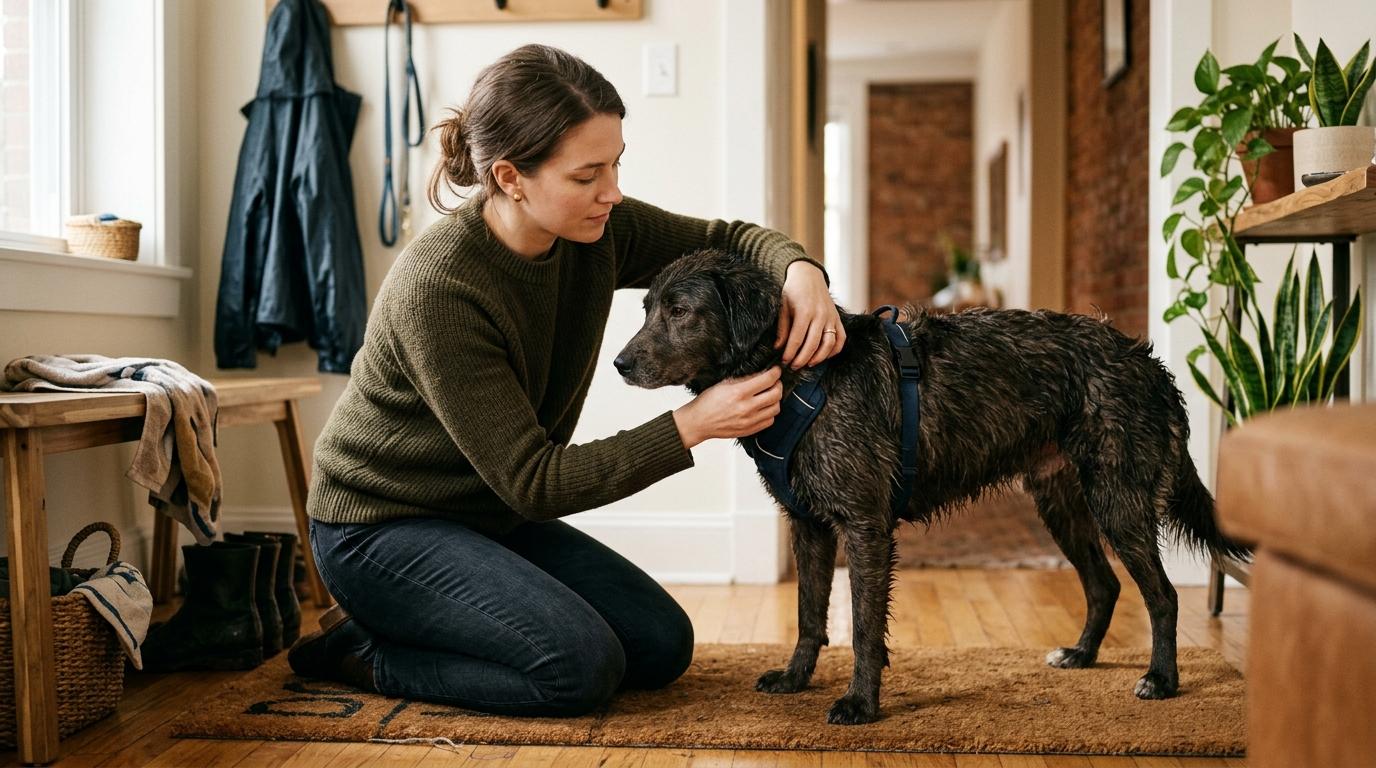
#During monsoon, make tick checks part of your post-walk routine. Once you get used to it, it only takes a few minutes.
After every walk:
- Wipe your dog’s paws and legs.
- Run your fingers slowly through the coat.
- Check the ears, neck, collar area, armpits, groin, and toes.
- Use a comb if your dog has a thick or long coat.
- Check bedding if you found a tick.
- Repeat the check later if your dog has dense fur.
Early ticks can be tiny. Sometimes they feel like small bumps under your fingers before you properly see them.
Dog tick prevention: what actually helps
#Good dog tick prevention is usually a routine, not a one-time fix.
Speak to your veterinarian about the safest tick-prevention option for your dog. Depending on your dog’s age, weight, health, coat, lifestyle, and exposure, your vet may suggest vet-approved spot-ons, oral preventives, tick collars, environmental control, or a regular prevention schedule.
Do not mix tick products unless your vet tells you to. Do not use dog tick products on cats. And don’t spray random chemicals on your dog, their bedding, or your home unless the product is clearly pet-safe and meant for that use.
At home, you can help by checking your dog after walks, cleaning bedding regularly, keeping sleeping areas clean, checking collars and harnesses, being extra careful after grooming or boarding, and following your vet’s prevention schedule.
If your dog keeps getting ticks from the same route, building area, or shared pet space, prevention becomes even more important.
Quick safety recap
#To safely remove a tick from your dog:
- Use fine-point tweezers or a tick-removal tool
- Hold the tick close to the skin
- Pull straight upward with steady pressure
- Don’t twist, burn, oil, squeeze, or jerk it
- Clean the bite area
- Wash your hands
- Check for more ticks
- Monitor appetite, energy, movement, gums, and behaviour
- Call your vet if you notice any red flags
The calmer you are, the easier it is for your dog too.