Direct answer: To reduce dog barking in apartment life, first figure out what is setting your dog off. Keep a simple trigger log for a couple of days, reduce balcony and corridor triggers where possible, give your dog enough exercise and mental enrichment, and reward calm behaviour. For dog barking in Indian apartments, avoid shouting, punishment, shock collars, or harsh “quick fixes”. If your dog mainly barks when left alone and seems panicked or distressed, speak to a vet or qualified behaviourist.
Why barking feels worse in apartment life
#Apartment life in India can be intense for dogs.
In one normal day, your dog may hear or see:
- Delivery agents ringing the bell repeatedly
- Lift doors opening and closing near your flat
- Guards, housekeeping staff, maids, neighbours, and children in the corridor
- Other dogs barking from nearby flats or balconies
- Street dogs, traffic, vendors, hawkers, and construction noise below
- Guests coming in and out
- Festival crackers, loud music, and sudden door activity
- Thunder during monsoon
- Shorter walks during heavy rain or extreme heat
For us, many of these sounds become background noise. For a dog, each one can feel like something worth checking.
Some dogs bark because they are excited. Some bark because they are worried. Some bark because they have learned that barking works. Maybe the person outside walks away. Maybe you come running. Maybe they get attention, even if that attention is scolding.
That is why good apartment dog training starts with understanding the trigger, not correcting the dog blindly.
First, ask: what happened just before the barking?
#Before you try to stop dog barking, pause and ask one simple question:
“What happened right before my dog started barking?”
Most barking has a pattern. Once you find that pattern, training becomes much easier.
1. Alert barking
#This is the classic dog barking at doorbell situation.
Your dog hears the bell, the lift, footsteps, voices, the door latch, or the intercom and thinks, “Someone is near our home.”
They may rush to the door, bark sharply, stare at the entrance, and refuse to move away.
This is very common in apartments because the main door is close to corridor activity. Your dog is not being dramatic. From their point of view, things are happening right outside their territory all day.
2. Balcony barking
#For some dogs, the balcony becomes a watch tower.
They bark at:
- Street dogs
- People walking below
- Bikes and cars
- Birds
- Children playing
- Dogs in the opposite building
- Movement near the gate or parking area
If the person or dog moves away after your dog barks, your dog may feel, “Good, I handled that.” Over time, barking from the balcony can become a strong habit.
3. Boredom or lack of stimulation
#A dog who does not get enough physical and mental activity may bark simply because there is too much unused energy and not enough to do.
In flats, this can look like:
- Barking at tiny sounds
- Barking for attention
- Reacting to every corridor noise
- Restlessness in the evening
- Difficulty settling after walks
Exercise helps, but dogs need more than walks. They also need sniffing, chewing, problem-solving, training, calm time, and routine.
4. Attention-seeking barking
#Sometimes dogs bark because it gets a response.
If your dog barks and you immediately look at them, talk to them, scold them, pick them up, or give them food, they may learn that barking is a very useful button to press.
This is especially common with puppy barking. Puppies are still learning how to ask for play, food, comfort, toilet breaks, and attention. They are usually not trying to annoy you. They just do not know a better way yet.
5. Barking when left alone
#Barking that mostly happens when your dog is alone needs extra care.
Separation anxiety in dogs or separation-related distress can include:
- Barking or howling when left alone
- Pacing
- Drooling
- Scratching at doors
- Destroying things near exits
- Toilet accidents despite being house-trained
- Panic when you prepare to leave
- Refusing food when alone
This is not stubbornness. It can be a genuine welfare issue.
Do not diagnose it yourself based on one sign. But if alone-time barking is intense, frequent, or looks like panic, speak to a veterinarian or qualified behaviourist.
The calm training checklist
#You do not need to fix everything in one day. In fact, trying to solve all barking at once usually makes both you and your dog more stressed.
Start small. Stay consistent. Build from there.
Step 1: Keep a trigger log for 48 hours
#A trigger log sounds boring, but it is one of the most useful tools for apartment barking.
For two days, note down:
- Time of barking
- What happened just before it
- Where your dog was
- What the bark sounded like
- How long it lasted
- What you did
- What helped or made it worse
Example:
After two days, you may realise your dog is not barking “all day”. Maybe the biggest problem is the doorbell. Maybe it is evening balcony time. Maybe it happens when your dog is left alone after lunch.
That clarity matters. You cannot train effectively if you do not know what you are training for.
Step 2: Manage the environment first
#Training is much harder when the trigger keeps happening at full intensity.
Management means making the situation easier so your dog has a chance to learn.
Try these simple changes:
- Close curtains during busy balcony hours
- Use frosted film on lower window panels if your dog reacts to movement
- Keep your dog away from the main door during peak delivery times
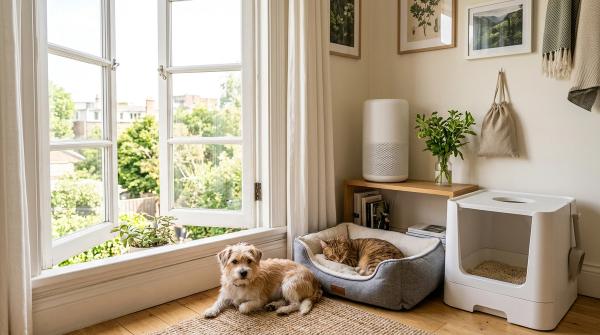
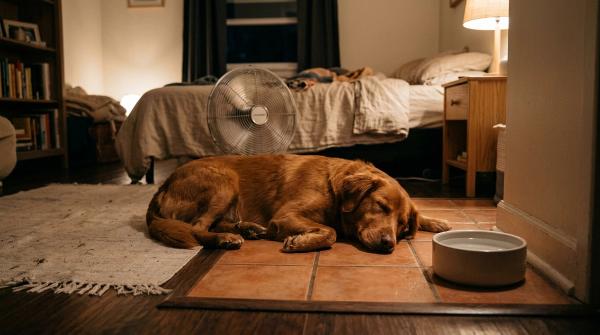
- Use a fan, white noise, soft music, or an air purifier near the entrance
- Ask regular visitors or delivery agents to call instead of ringing, if possible
- Keep treats near the door for training moments
- Use baby gates or room dividers if your dog rushes to the entrance
Management is not failure. It is smart training.
If your dog practises barking 20 times a day, the habit becomes stronger. If you reduce those rehearsals, your dog has more space to learn a calmer response.
Step 3: Match exercise to Indian weather
#A dog with unmet energy needs is more likely to react to every little sound. But in India, exercise needs planning.
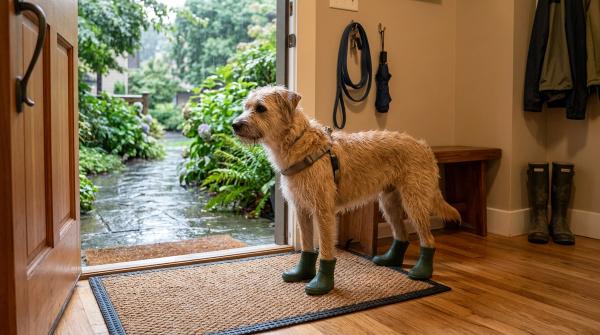
During hot months, walks are usually better early in the morning and later in the evening, when the ground is cooler. During monsoon, walks may become shorter or inconsistent. Some dogs also dislike stepping out in heavy rain.
On difficult weather days, bring enrichment indoors.
You can try:
- Snuffle mats
- Treat searches around the flat
- Lick mats
- Safe chew time
- Puzzle toys
- Short training sessions
- “Find it” games
- Simple cues like sit, touch, stay, and go to mat
Mental enrichment will not magically fix every barking problem, but it can reduce boredom and help your dog settle better.
Also, do not forget rest. Some dogs bark more because they are over-tired, not because they need more activity.
Step 4: Teach a calm “quiet” cue
#A quiet cue works best when it is taught gently. It should not be shouted over the barking.
Here is a simple way to begin:
- Wait for a tiny pause in the barking, even half a second.
- Say “quiet” in a calm voice.
- Immediately reward with a small treat.
- Repeat in short sessions.
- Slowly increase the quiet time before giving the reward.
The timing matters. You are not rewarding the barking. You are rewarding the pause.
Try not to shout “Quiet! Quiet! Quiet!” again and again. To your dog, that can sound like you are joining in.
For alert barking, you can also use this pattern:
- Your dog barks at the door.
- You calmly say, “Thank you, I heard it.”
- Call your dog away from the door.
- Reward when they come to you or settle.
This tells your dog, “I know something happened. I have handled it. You can relax.”
It may feel a little silly at first, but many dogs settle better when they feel acknowledged instead of just corrected.
Step 5: Desensitize apartment triggers
#Desensitization means introducing a trigger at a low level, where your dog can still stay calm, and then rewarding that calm behaviour.
For a doorbell:
- Play a doorbell sound at very low volume.
- If your dog stays calm, reward them.
- Repeat a few times.
- Stop before your dog gets worked up.
- Over days or weeks, slowly increase the volume.
For lift sounds, corridor sounds, or knocking, practise when the building is quieter. Start away from the main door. Reward your dog for looking at you, staying relaxed, or going to their mat.
Do not rush this step.
If your dog bursts into barking, the sound was probably too loud, too sudden, or too close. Make it easier and try again later.
Slow training is still training.
Step 6: Teach “go to mat” for door activity
#For many apartment dogs, “go to mat” is more useful than only saying “quiet”.
It gives your dog a clear job.
Instead of running to the door and deciding what to do, your dog learns that when the bell rings or someone is outside, they should go to their bed, mat, or a specific corner.
Start when there is no trigger:
- Place a mat a little away from the main door.
- Toss a treat onto the mat.
- When your dog steps on it, praise and reward.
- Add the cue, “go to mat.”
- Practise until your dog happily goes there.
- Later, add mild door sounds and reward staying on the mat.
At first, keep it very easy. If the doorbell is too exciting, practise with smaller sounds like touching the doorknob, opening the latch softly, or knocking once.
Build slowly. Confidence grows through easy wins.
Step 7: Handle puppy barking with patience
#With puppy barking, check the basics first.
Ask yourself:
- Does the puppy need to pee or poop?
- Are they hungry or thirsty?
- Are they sleepy?
- Are they overexcited?
- Do they need comfort?
- Have they had age-appropriate play?
- Have they had enough rest?
If it is demand barking, such as barking at you for attention, try this:
- Stay calm
- Avoid eye contact for a few seconds
- Do not scold or push the puppy away
- Wait for a small quiet pause
- Reward the quiet with attention, a toy, or a calm cue
Puppies learn fast. If barking gets them attention, they will use barking more. If quiet sitting, eye contact, or coming to you calmly gets them what they need, they will start offering those behaviours instead.
It takes repetition, but it works.
Quick management vs long-term training
#Use this as your apartment barking checklist.
What not to do when neighbours complain
#Neighbour complaints can make anyone panic. It is stressful, awkward, and sometimes embarrassing.
But harsh quick fixes often make barking worse because they add fear or stress to the situation.
Please avoid:
- Shock collars
- Punishment-based anti-bark collars
- Hitting
- Shouting
- Threatening
- Locking the dog away as punishment
- Forcing your dog to face scary sounds at full intensity
- Ignoring signs of distress when your dog is alone
Punishment may stop barking for that moment, but it does not teach your dog what to do instead. It also does not solve fear, boredom, frustration, or anxiety.
If barking is severe, persistent, or linked to distress, get help from a veterinarian or a qualified, force-free behaviour professional.
This guide is for education and training support. It is not a medical diagnosis.
A simple 7-day starter plan
#Here is a realistic way to begin.
Day 1 and 2: Observe
#Keep your trigger log. Do not change too much yet. Just notice the top three barking triggers.
You may be surprised by what you find.
Day 3: Reduce the easiest trigger
#Pick the easiest trigger to manage.
If balcony barking is the simplest one, close curtains during busy hours. If the doorbell is the biggest issue, ask regular deliveries or visitors to call instead of ringing where possible.
Start with the low-hanging fruit.
Day 4: Add enrichment
#Introduce:
- One sniffing game
- One chew or lick activity
- One short training session
Keep it simple. You do not need to buy ten new toys. A few treats hidden around the room can be enough to start.
Day 5: Start the quiet cue
#Begin rewarding tiny pauses in barking. Keep your voice calm and your sessions short.
Do not expect perfection. You are teaching a new skill.
Day 6: Start desensitization
#Use a low-volume doorbell sound, a soft knock, or a mild door noise.
Reward calm behaviour. Stop before your dog gets too excited.
Ending on an easy success is better than pushing too far.
Day 7: Review
#Look at your trigger log again.
Ask yourself:
- Is the barking shorter?
- Are the triggers clearer?
- Is your dog settling faster?
- Am I reacting more calmly too?
- What helped the most?
- What still needs work?
Keep what works. Adjust what does not.
Progress may be uneven. That is normal. Apartment barking is often a habit built over time, so it usually improves through steady practice, not one perfect trick.
Final thought
#Living with a barking dog in a flat can feel really stressful, especially when neighbours can hear everything. But your dog is not trying to ruin your day. They are reacting to a busy world with a dog’s ears, nose, and instincts.
Start small.
Keep a trigger log. Reduce the loudest triggers. Add exercise and enrichment. Reward quiet moments. Practise doorbell and lift sounds gently. And if your dog seems distressed, get professional help early.
Calm apartment living is not about forcing silence.
It is about helping your dog feel safe enough to be quieter.