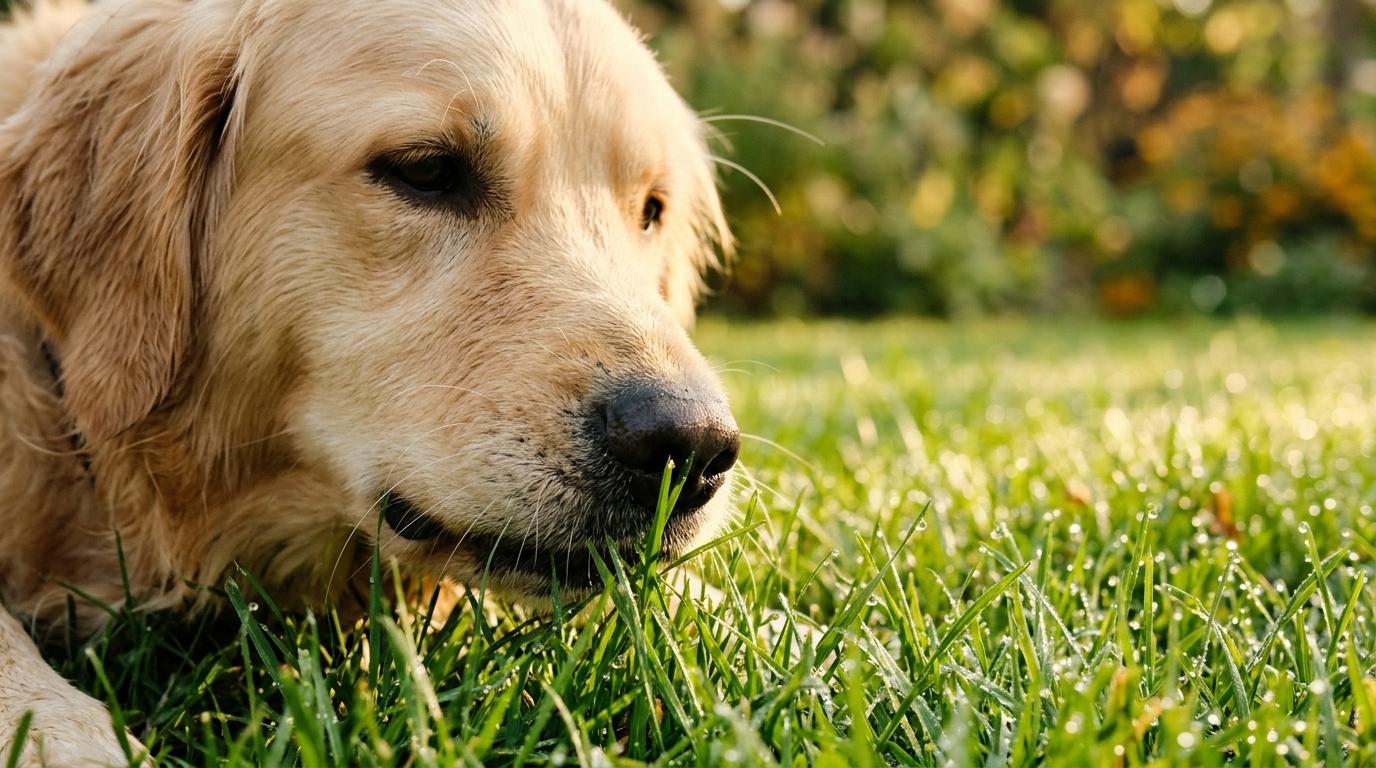
Watch a dog long enough in a sunlit backyard or park, and you will eventually witness an ancient, slightly bewildering scene. The dog lowers its head, parts the green blades with its whiskers, selects a tender clump of crabgrass or Kentucky bluegrass, and begins chewing deliberately. To an anxious pet parent, this grazing behavior looks alarmingly bovine. A persistent folk belief immediately asserts that the dog must feel nauseous, has an upset stomach, and is deliberately forcing itself to throw up.
The scientific reality is far more interesting and considerably less alarming. Large-scale veterinary behavioral surveys and evolutionary field studies show that the vast majority of dogs who eat grass are neither sick nor attempting to induce vomiting. Grass consumption is an ancient, hardwired ethological behavior inherited directly from wild canid ancestors, driven by opportunistic foraging, sensory curiosity, and digestive physiology.
Understanding why your dog grazes requires separating clinical fact from popular folklore. By examining veterinary data, nutritional mechanics, behavioral conditions like pica, and environmental risks, owners can distinguish completely harmless grazing from genuine medical emergencies.
The Lawn Grazing Enigma: Why Your Canine Grazer Is Not Broken
#Domestic dogs share more than 99 percent of their DNA with grey wolves. While humans classify dogs as carnivores in everyday conversation, taxonomists and comparative physiologists classify them as facultative carnivores or adaptive omnivores. Unlike strict obligate carnivores such as cats—who lack the enzymatic machinery to process plant matter and require meat to survive—canids possess flexible digestive tracts evolved to extract nutrients, fiber, and moisture from diverse ecological sources.
When a dog stops during a morning stroll to pluck broadleaf grass, it is engaging in a normal mammalian behavior known as plant consumption or herbivory. Veterinary ethologists document that grass is by far the most commonly eaten plant among domestic dogs. In suburban yards, dogs frequently target specific varieties, demonstrating strong preferences for fresh spring shoots, young ryegrass, and moisture-rich weeds over dry, woody stems.
This behavior frequently causes unnecessary owner distress because humans tend to project human medical logic onto animal habits. Humans rarely consume raw wild vegetation unless motivated by a specific functional purpose. When owners see a dog ingest a plant followed by occasional vomiting, they assume causation: the dog felt ill, sought out grass as an herbal emetic, purged its stomach contents, and recovered. Clinical veterinary investigations, however, reveal that this sequence of events is the rare exception rather than the rule.
The Sickness Myth Debunked: What Clinical Surveys Actually Reveal
#The belief that grass eating is primarily an act of self-medication was subjected to rigorous empirical testing by researchers at the University of California, Davis School of Veterinary Medicine. Led by veterinary behaviorist Dr. Benjamin L. Hart, the research team conducted comprehensive surveys involving more than 1,500 pet owners to evaluate the relationship between canine grass consumption and gastrointestinal distress.
The findings directly challenged long-standing pet care folklore:
- Pre-ingestion sickness was exceedingly rare: Fewer than 10 percent of dogs showed any clinical signs of illness—such as lethargy, pacing, drooling, or whining—prior to eating grass.
- Post-ingestion vomiting was uncommon: Only 22 percent of dogs regularly vomited after eating grass. The overwhelming majority (nearly 80 percent) simply digested or passed the plant fiber without gastric regurgitation.
- Universal frequency: Nearly 68 percent of dogs ate plants on a daily or weekly basis, demonstrating that the behavior is standard baseline canine conduct rather than an episodic response to illness.
- Age demographics: Young dogs and puppies engaged in grass eating significantly more frequently than older adult dogs, yet puppies displayed the lowest rates of gastrointestinal symptoms before or after grazing.
If grass eating were a deliberate attempt to relieve stomach distress through induced vomiting, the clinical data would demonstrate high rates of pre-existing nausea and near-universal subsequent vomiting. Instead, the data proves that grass consumption is an innate, baseline canine trait that occurs independently of digestive upset.
| Clinical Indicator | Popular Folk Myth | Veterinary Survey Reality |
|---|---|---|
| Primary Motivation | Self-induced vomiting to cure GI illness | Innate ancestral foraging and taste |
| Pre-Consumption Nausea | Present in 90 percent of episodes | Documented in under 10 percent |
| Post-Consumption Vomiting | Inevitable outcome of eating grass | Occurs in roughly 22 percent |
| Demographic Distribution | Sick or nutritionally deficient pets | Healthy puppies and adult dogs alike |
| Primary Health Hazard | The physical grass blade itself | Chemical fertilizers and parasites |
Why, then, do some dogs vomit after eating grass? The explanation lies in gastric mechanical irritation. Dogs do not chew grass into a fine paste; they tear blades and swallow them largely intact. The serrated edges and fibrous cellulose of coarse grass blades can tickle and irritate the sensitive mucosal lining of the stomach and pharyngeal tissues, triggering a reflexive gag or mild emesis. In these instances, vomiting is an accidental mechanical side effect of eating tough fibrous matter, not the calculated goal of the dog.
Evolutionary Roots: The Omnivorous Canid Foraging Blueprint
#To trace the origins of canine grass grazing, wildlife biologists look directly at wild canids living outside human intervention. Field research across North America and Eurasia reveals that wild grey wolves, coyotes, red foxes, and dingoes frequently ingest vegetative matter.
Extensive wolf scat analyses conducted across North American national parks demonstrate that graminoids (grasses and sedges), wild berries, and roots are present in 14 to 74 percent of examined fecal samples. In some seasonal periods, particularly mid-summer when ungulate hunting is challenging and fruit ripens, plant material constitutes a measurable fraction of wild canid diets.
Biologists propose two complementary evolutionary hypotheses for why wild canids consume grass:
The Intestinal Parasite Purging Mechanism
#In wild ecosystems, canids are perpetually exposed to internal endoparasites, including roundworms, hookworms, and tapeworms. Evolutionary parasitologists hypothesize that wild canids evolved the habit of swallowing fibrous, unchewed vegetation to mechanically sweep their gastrointestinal tracts.
As long, fibrous plant strands move through the small and large intestines, they do not break down. Instead, the coarse cellulose wraps around adult worms, mucosal plaques, and intestinal debris, dragging them through the lumen and expelling them in the stool. Wild chimpanzees display an identical behavioral adaptation known as leaf-swallowing, where they deliberately ingest coarse, bristly leaves without chewing to physically scour nematodes from their digestive tracts. Domestic dogs retain this ancient ancestral motor pattern even when fed clean commercial kibble and treated with modern anthelmintic preventatives.
Opportunistic Scavenging and Nutrient Capture
#Wild wolves rarely waste nutritional resources. When a wolf pack downs an herbivore such as a deer, elk, or caribou, the predators frequently ingest the stomach and intestinal contents of their prey. The rumen and cecum of herbivorous prey are filled with partially digested, fermented grasses, lichens, and herbs rich in volatile fatty acids, digestive enzymes, and B vitamins. Consuming vegetation directly when prey is scarce represents a logical evolutionary extension of opportunistic scavenger biology.
Domestic dogs have lived alongside humans for tens of thousands of years, evolving genetic adaptations—such as expanded starch-digesting amylase gene copies—that allow them to process complex carbohydrates far more efficiently than wolves. An attraction to plant matter is baked directly into the canine genome.
Fiber, Microbiome, and Gut Motility: The Dietary Hypothesis
#While commercial pet foods formulated according to regulatory standards are nutritionally complete, individual canine metabolic and digestive needs vary considerably. Some dogs graze on grass because their digestive systems crave crude dietary fiber to regulate gut motility.
Dietary fiber functions in two distinct forms within the mammalian gastrointestinal tract:
- Insoluble fiber: Does not dissolve in water. It provides mechanical bulk to the stool, stimulates peristaltic contractions of the intestinal wall, and helps material move steadily through the colon. Grass is overwhelmingly composed of insoluble cellulose and lignin.
- Soluble fiber: Dissolves in water to form a gel-like substance that feeds beneficial gut microbiota in the colon through bacterial fermentation, producing short-chain fatty acids like butyrate, acetate, and propionate that nourish colonocytes.
When a dog receives a diet with lower crude fiber content, or experiences mild, subclinical intestinal sluggishness, instinct may prompt the animal to forage for roughage. In several documented veterinary case studies, chronic grass-eating dogs ceased grazing entirely after their daily rations were supplemented with a veterinary high-fiber kibble, pure canned pumpkin, or steamed green beans. The roughage provided the mechanical bulk necessary for smooth digestive transit, eliminating the physiological drive to forage.
| Fiber Component | Primary Source | Physiological Role in the Gut |
|---|---|---|
| Insoluble Cellulose | Mature lawn grass, raw roughage | Adds bulk, accelerates transit time |
| Insoluble Lignin | Coarse grass stalks and stems | Mechanically stimulates colonic wall |
| Soluble Pectin & Inulin | Tender young shoots, pumpkin | Ferments into nourishing SCFAs |
| Water and Electrolytes | Dew-soaked morning blades | Provides subtle mucosal hydration |
If your dog selectively seeks out tough, fibrous grass stalks and displays irregular, dry stools, a conversation with your veterinarian regarding dietary fiber optimization may resolve the habit naturally.
Sensory Seeking: Fresh Spring Shoots and Palatability
#Not all grass eating is driven by internal intestinal mechanics. In many cases, the explanation is simple: dogs genuinely enjoy the taste and mouthfeel of fresh grass.
Canine senses are remarkably sophisticated. A dog possesses up to 300 million olfactory receptors in its nasal cavity and specialized taste buds sensitive to water, sugars, and amino acids. During the spring and early summer, actively growing grass blades accumulate high concentrations of natural plant sugars, chlorophyll, and aromatic volatile organic compounds.
A dog grazing selectively on a dewy morning lawn is often displaying sensory discrimination:
- Preference for young shoots: Dogs routinely bypass brown, coarse, or mature grass to nibble the bright green, tender tips of newly sprouted blades.
- Texture appreciation: The crisp snap of fresh grass offers sensory oral stimulation, much like a human enjoying crisp celery or crunchy snacks.
- Hydration and dew harvesting: On warm mornings, grass blades collect condensation droplets rich in soil and plant minerals, offering a refreshing source of oral moisture.
This form of grazing is leisurely. The dog strolls calmly, sniffs multiple patches, chooses a specific blade, chews gently without distress, and wags its tail. There is no frantic gulping, no signs of discomfort, and no post-grazing vomiting. For these dogs, grass eating is simply a pleasant outdoor sensory activity.
When Grass Eating Becomes Clinical: Identifying Pica and GI Disorders
#While casual lawn grazing is generally harmless, grass consumption can cross the threshold into pathology. When a dog compulsively ingests non-food items, veterinarians diagnose the condition as pica. Pica can stem from psychological disorders (such as extreme anxiety, boredom, or obsessive-compulsive traits) or underlying medical illnesses that disrupt normal nutrient absorption or produce chronic visceral discomfort.
Furthermore, dogs experiencing genuine gastrointestinal distress do sometimes eat grass, but their presentation looks fundamentally different from that of a relaxed grazer. Recognizing these behavioral and physical red flags enables owners to seek prompt veterinary intervention.
| Evaluation Factor | Benign Normal Grazing | Medical Distress or Pica |
|---|---|---|
| Behavioral Pace | Calm, selective, leisurely sniffing | Frantic, compulsive, desperate |
| Physical Posture | Relaxed body, loose tail wagging | Tense abdomen, arched back, praying |
| Vomiting Frequency | Rare or accidental under 20 percent | Frequent, repeated, contains bile |
| Other Ingested Materials | Clean grass blades only | Dirt, gravel, fabric, feces, mulch |
| Appetite and Energy | Normal food drive and vitality | Inappetence, lethargy, weight loss |
| Stool Consistency | Firm, well-formed normal stool | Watery diarrhea, mucus, black stool |
The Prayer Position and Abdominal Pain
#When a dog suffers from acute pancreatitis, gastric dilation, foreign body obstruction, or inflammatory bowel disease, the animal experiences intense abdominal cramping. To relieve pressure on the cranial abdomen, the dog may assume the classic prayer position—front elbows and chest resting on the floor while the hindquarters remain standing in the air.
If a dog exhibiting the prayer position frantically dashes into the yard, desperately gulping down mouthfuls of grass, dirt, and leaves without chewing, this is not benign browsing. The animal is in severe visceral pain and requires immediate emergency veterinary evaluation.
Psychological Pica and Displacement Behavior
#Dogs experiencing severe stress, lack of physical exercise, or environmental under-stimulation may develop compulsive oral behaviors. When managing a new family pet, understanding canine behavioral decompression and stress signals is essential for distinguishing nervous displacement habits from confident environmental exploration. A dog that is chronically anxious may graze frantically on grass as a displacement mechanism to self-soothe when overwhelmed by external stimuli.
Hidden Lawn Hazards: Herbicides, Fertilizers, and Parasite Vectors
#The primary danger of grass eating is almost never the grass plant itself. Untreated lawn grasses are non-toxic to canines. Instead, the real danger lies in what has been sprayed onto the grass, what has crawled across it, or what microscopic organisms reside in the surrounding soil.
Owners must remain vigilant regarding four major environmental risks:
Chemical Lawn Treatments (Herbicides and Pesticides)
#Commercial lawn care products represent an acute toxicological hazard for grazing dogs:
- Selective herbicides applied to control broadleaf dandelions can trigger severe gastrointestinal irritation, neurotoxicity, ataxia, and excessive drooling if ingested while wet or recently applied.
- Granular fertilizers containing iron, nitrogen, phosphorus, and potassium can cause chemical burns to the oral mucosa and toxic organ strain if swallowed directly from grass blades.
- Snail and slug baits containing metaldehyde are lethal neurotoxins. Dogs are naturally attracted to their sweet scent; ingesting even small quantities off lawn vegetation causes rapid-onset tremors, hyperthermia, seizures, and respiratory failure.
Never allow a dog to graze on lawns treated with chemical fertilizers or herbicides until the products have been thoroughly watered in and dried completely (typically a minimum of 48 to 72 hours, according to manufacturer safety data). In public parks or manicured commercial properties where chemical applications are unknown, grazing must be strictly prevented.
Intestinal Parasites and Bacterial Pathogens
#Public parks and shared grassy boulevards are communal bathrooms for local wildlife and domestic pets. Soil and grass blades frequently harbor microscopic infectious vectors:
- Parvovirus: The highly resilient canine parvovirus can survive in outdoor soil and grass for months, posing an extreme threat to unvaccinated puppies.
- Parasite eggs and larvae: Microscopic eggs of roundworms, hookworms, and whipworms pass through infected feces into the surrounding lawn, where they adhere to lower grass stems.
- Leptospirosis: Bacteria shed in the urine of wild rodents and raccoons contaminate moist lawn grass and puddles. Ingestion causes acute renal and hepatic failure.
- Lungworms: Snails and slugs leave microscopic slime trails carrying lungworm larvae across grass blades. If a grazing dog ingests a tiny slug or its infectious trail, the parasite migrates to the pulmonary arteries, causing life-threatening coagulopathies.
| Hazard Category | Specific Agent | Clinical Risk to Grazing Canine |
|---|---|---|
| Synthetic Herbicides | 2,4-D, Dicamba, Glyphosate | Chemical stomatitis, drooling, ataxia |
| Snail and Slug Baits | Metaldehyde, Iron Phosphate | Tremors, fatal hyperthermia, seizures |
| Endoparasite Larvae | Hookworm, Roundworm, Lungworm | Chronic diarrhea, anemia, coughing |
| Infectious Microbes | Canine Parvovirus, Leptospira | Severe hemorrhagic enteritis, renal failure |
| Physical Plant Trauma | Foxtails, Sandburs, Awns | Subcutaneous abscesses, migration |
Dangerous Grass Awns and Foxtails
#In arid and Mediterranean climates, wild barley, cheatgrass, and foxtail weeds present a serious physical hazard. Unlike soft domestic lawn grass, foxtails produce barbed seed heads designed to bury themselves in soil. When a dog sniffs or eats dry grasses containing foxtails, the barbed awns can lodge in the back of the throat, pierce the soft palate, or penetrate the tonsillar crypts. Because of backward-pointing barbs, foxtails cannot back out; they relentlessly migrate forward through soft tissue, causing severe internal abscesses, pneumothorax, and life-threatening infections.
Owner Action Protocol: When to Allow Grazing and When to Intervene
#Given the balance between natural ancestral behavior and real environmental hazards, how should a responsible pet parent manage a grass-eating dog?
Follow this structured protocol to manage lawn grazing safely:
Phase 1: Assess the Environment Before Allowing Access
#Only permit grazing in locations where you can personally verify that the lawn is free from dangerous contaminants:
- Your own private backyard where no synthetic herbicides, insecticides, or rodenticides have been applied for at least several weeks.
- Areas free from standing rainwater, rodent burrows, or heavy stray animal fecal contamination.
- Lawns free of barbed foxtails, burrs, or toxic ornamental landscape plants.
If you are walking in an unfamiliar suburban neighborhood, near a golf course, or across an apartment complex lawn, assume chemical treatments have been applied and gently redirect your dog using a leash.
Phase 2: Differentiate Normal Browsing from Acute Distress
#Observe your dog's demeanor during the grazing episode:
- Green Light (Allow): The dog is relaxed, calmly sniffing, choosing tender tips, and continues its walk happily without vomiting. No intervention is required.
- Yellow Light (Monitor): The dog eats grass occasionally and vomits a single watery bile foam containing intact blades, but immediately returns to its lively, hungry self. This is common mechanical irritation. Ensure the grass was untreated and monitor for 24 hours.
- Red Light (Veterinary Intervention): The dog frantically gulps mouthfuls of grass, vomits repeatedly, displays abdominal guarding or prayer positioning, has dark tarry stools, or refuses regular food. Contact your veterinary clinic immediately.
Phase 3: Nutritional and Behavioral Management
#If your dog's grass eating is frequent and you wish to curb the habit safely:
- Increase dietary fiber: Consult your veterinarian about incorporating dietary fiber into meals. Adding a tablespoon of cooked, unseasoned pure pumpkin puree or introducing a veterinary diet with elevated crude fiber often satisfies the internal craving for roughage.
- Mental enrichment and sensory toys: Offer mentally engaging puzzle feeders, snuffle mats, and safe edible chews to satisfy oral exploration instincts indoors.
- Grow a pet-safe grass garden: For dogs that simply adore the taste of fresh greens, purchase a small indoor planter and grow organic pet grass (wheatgrass, barley grass, or oat grass). This allows your dog to enjoy crisp greens without exposure to lawn chemicals, snail baits, or parasite eggs.
Canine grass eating is not an automatic cry for help, nor is it an omen of serious disease. It is a living window into canine evolutionary biology—a harmless, ancestral habit of an adaptive omnivore navigating its sensory world. As long as the grass is clean, unmedicated, and free from chemical hazards, let your canine companion enjoy its occasional, harmless salad in peace.