If your dog is itchy, a bath can feel like the obvious first step. And sometimes it really does help.
For mild, occasional itching, most dogs do well with a gentle bath every 2 to 4 weeks. If your vet has prescribed a medicated shampoo, the schedule may be very different, sometimes 1 to 2 times a week for a short period. But that should only be done under veterinary guidance.
It’s tempting to bathe your dog again and again when the scratching is driving everyone crazy. But regular itching is usually a sign that something else is going on. Allergies, fleas, yeast, bacterial infections, mites, ear problems, and other skin issues can all look very similar at home.
You may notice your dog scratching at night, chewing their paws, rubbing their face on the sofa, licking one spot again and again, or just looking uncomfortable. It’s hard to watch. Naturally, your first thought might be, “Maybe a bath will sort this out.”
Sometimes it can. A good bath can rinse away pollen, dust, sweat, mud, and other irritants sitting on the coat. But too much bathing, the wrong shampoo, or poor drying can make itchy skin worse.
This guide keeps things practical and pet-safe, especially for pet parents in India dealing with humidity, monsoon walks, apartment bathrooms, thick coats, and dogs who act like the dryer is their greatest enemy.
Why Bathing Can Help, and Why Too Much Can Backfire
#Your dog’s skin has a natural protective barrier. Think of it as the skin’s built-in shield. It includes skin cells, natural oils, fats, and healthy microbes that help keep the skin comfortable and protected.
Veterinary bathing advice from sources like Virginia Tech, VCA, AKC, and medicated shampoo guidance from Zoetis all comes back to the same basic idea: bathing should support the skin barrier, not strip it away.
When a dog is already itchy, that barrier may already be irritated. A bath can help by removing allergens, dirt, and extra debris from the coat. But if you bathe too often, scrub too hard, use harsh products, or leave the coat damp, the skin can become drier, more sensitive, and even itchier.
So the answer is not simply “bathe more” or “bathe less.”
The better question is:
How often should you bathe, what should you use, and are you drying properly afterward?
Bath Frequency Table for Itchy Dogs
#A Safe Itchy Dog Bath Routine, Step by Step
#A bath for an itchy dog should be calm, gentle, and unhurried. Of course, that sounds easier than it feels when your dog is trying to climb out of the bathroom. Still, the more relaxed you can keep it, the better it usually goes.
1. Brush first, but be gentle
#Before the bath, gently brush out loose hair, dust, and small tangles.
Be extra careful around red, sore, flaky, or itchy areas. If your dog pulls away, flinches, or keeps turning to lick a spot, slow down.
If your dog has mats, don’t tug at them. Wet mats can trap moisture close to the skin, which is the last thing an itchy dog needs. If the coat is badly tangled, it’s safer to ask a groomer or vet clinic for help.
2. Use lukewarm water
#Hot water can make itchy skin feel worse. Use lukewarm water, similar to what you would use for a baby’s bath.
Wet the coat slowly. Avoid spraying directly into the ears, eyes, nose, or mouth. Most dogs hate that, and honestly, fair enough.
3. Apply shampoo gently
#Massage the shampoo into the coat with your fingertips. Don’t scrub with your nails, even if the coat is muddy or greasy.
Pay special attention to areas that often collect dirt and allergens:
- Paws
- Belly
- Underarms
- Groin area
- Base of the tail
- Skin folds, if your dog has them
If your vet has told you to avoid a certain area, follow that advice.
4. Follow contact time for prescribed shampoos
#Some shampoos, especially medicated ones, need to stay on the skin for a specific amount of time before rinsing. This is common with veterinary shampoos, including medicated products.
But don’t guess the timing.
Follow your vet’s instructions or the product label exactly. More time does not always mean better results. In some cases, leaving shampoo on too long can irritate the skin.
For regular soothing shampoos, use the label directions.
5. Rinse more than you think you need to
#This is where many baths go wrong.
Rinse until the water runs clear. Then rinse again, especially in areas where shampoo easily hides:
- Thick coats
- Armpits
- Belly folds
- Paws
- Under the tail
- Around the neck
- Between the toes
Leftover shampoo can irritate the skin and cause more scratching after the bath. If your dog seems itchier after bathing, poor rinsing may be one of the reasons.
6. Dry fully, without rough rubbing
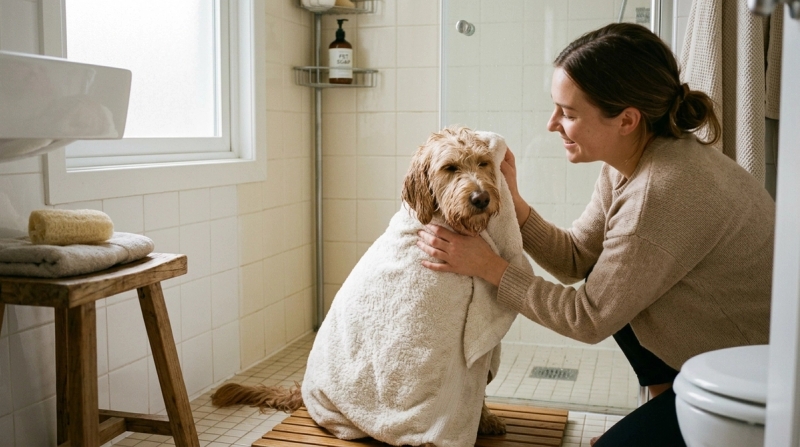
#Pat the coat with a towel instead of rubbing hard. Rubbing can irritate already sore skin.
If your dog has thick fur, skin folds, a dense undercoat, or long hair, towel drying may not be enough. Use a dryer on a cool or low-heat setting if your dog tolerates it. Keep the dryer moving and don’t hold it too close to the skin.
During monsoon season, drying can take much longer than expected. Don’t assume the coat is dry just because the top layer feels fluffy. Check closer to the skin, especially around the belly, paws, underarms, and tail area.
What Shampoo Should You Use for an Itchy Dog?
#The best shampoo for an itchy dog depends on why your dog is itching.
That’s the tricky part.
Many skin problems look similar from the outside. Red skin, paw chewing, flakes, smell, hair loss, and scratching can happen with several different conditions. So it’s better not to diagnose your dog’s skin problem at home.
Good options to discuss with your vet
#Gentle dog shampoo for sensitive skinA mild, soap-free dog shampoo is often a safer choice for dogs with occasional itch or mild dryness.
Oatmeal dog shampooOatmeal dog shampoo can be soothing for some dogs with mild dryness or sensitivity. Choose a dog-specific product, not human shampoo or a homemade mix. If the itching is frequent, getting worse, smelly, or linked with redness, ask your vet before relying on oatmeal shampoo.
Hypoallergenic or fragrance-light shampooSome dogs react badly to strong scents or harsh cleansers. A hypoallergenic or lightly scented dog shampoo may be a better fit.
Medicated dog shampooUse medicated shampoo only when your veterinarian recommends it. Medicated dog shampoo frequency depends on your dog’s diagnosis, the product, contact time, and how your dog responds. Don’t start one just because it worked for another dog.
What to Avoid on an Itchy Dog
#Some quick fixes can make itchy skin worse, even if they seem harmless.
Avoid:
- Human shampoo, including baby shampoo
- Dish soap, unless your vet specifically tells you to use it
- Strong perfumes or heavily scented shampoos
- Essential oils on the skin
- Harsh flea or tick washes without veterinary advice
- Scrubbing brushes on irritated skin
- Bathing again and again just because your dog is scratching
Dogs have different skin needs from humans. A product that feels gentle to you can still be too harsh for your dog.
India Monsoon and Apartment Drying Tips
#Monsoon dog care needs extra patience because humidity makes drying harder. This is especially true in apartments with less sunlight, limited airflow, or no open drying area.
After a rainy walk, your dog usually does not need a full bath every time. A full bath after every wet walk can be too much for the skin.
Instead, wipe the paws, belly, and legs with a clean damp cloth. Then dry them properly.
Be extra careful with:
- Paws and between the toes
- Underarms
- Groin area
- Skin folds
- Ears, especially floppy ears
- Thick undercoats
- Long hair around the belly and tail
Don’t let your dog stay damp for hours. Damp fur can make itchy skin more uncomfortable and may create the kind of moist environment where skin problems can worsen.
If you bathe your dog during monsoon weather, do it only when you have enough time to dry the coat properly.
A cool or low-heat dryer can help, but go slowly. Keep it moving, give breaks, and stop if your dog is getting too stressed. Some dogs need time to get used to the sound and feel of a dryer.
When Bathing Is Not Enough
#Bathing can help your dog feel cleaner and more comfortable, but it cannot tell you why your dog is itching.
If the itching keeps coming back, your dog needs a vet check.
Please don’t try to diagnose skin conditions at home. Fleas, allergies, yeast, bacterial infections, mites, ear problems, and other skin issues can overlap a lot.
Book a vet visit if you notice:
- Constant scratching, licking, chewing, or rubbing
- Red, inflamed, or hot-looking skin
- Open sores, bleeding, or scabs
- Hair loss or bald patches
- Bad smell from the skin or ears
- Greasy, flaky, or thickened skin
- Ear shaking, scratching, or discharge
- Paw chewing that keeps returning
- Itching that affects sleep or daily comfort
- Symptoms that get worse after bathing
If your vet prescribes a medicated shampoo, follow the plan exactly. Don’t increase the frequency, mix products, or stop early without checking back with them.
Simple Between-Bath Tips for Itchy Dogs
#You don’t always need a full bath to help your dog feel a little better.
Try these habits between baths:
- Wipe paws after walks
- Dry paws well during monsoon
- Wash bedding regularly
- Brush gently to remove loose hair and dust
- Keep the coat free of mats
- Use only dog-safe grooming products
- Notice when itching gets worse, such as after rain, walks, food changes, grooming, or a new shampoo
These small details can really help your vet. A pattern is often more useful than a guess.