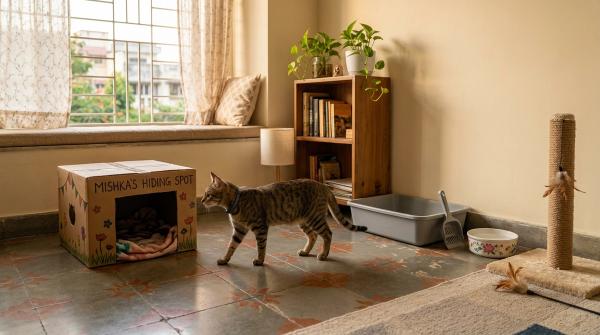
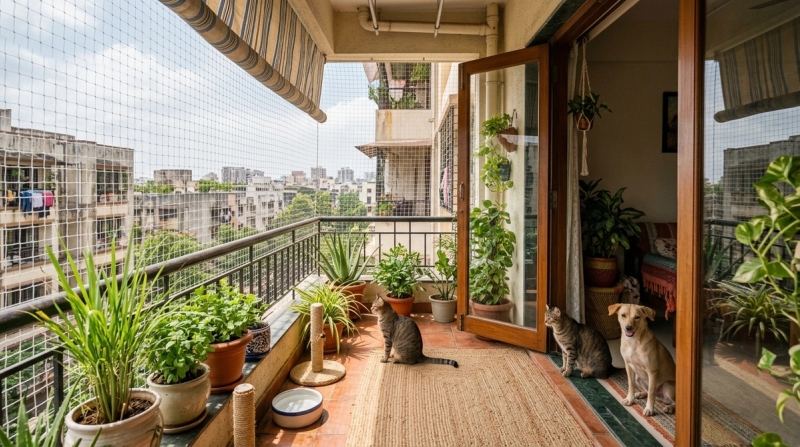
A pet-safe balcony India setup begins with the boring but most important job: closing every gap properly. Railings, side corners, floor gaps, drain areas, spaces near pipes, and any open edge should be covered with strong pet safety netting or mesh. Once that is done, check your plants, move furniture away from ledges, keep shade and water ready, and avoid leaving your pet alone outside.
Balconies in Indian homes are never just balconies. They are for morning chai, drying clothes, tulsi pots, pigeon drama, monsoon breeze, traffic noise, and sometimes one very curious cat or dog who wants to inspect the entire world from the railing.
It sounds cute, and honestly, it is. But balconies can also be risky. Cats may slip or jump while chasing birds. Dogs may leap or panic because of loud noises. Puppies and kittens can squeeze through gaps that look impossible to us. And some common balcony plants can irritate the mouth, upset the stomach, or even be toxic if chewed.
The good news is that you do not need a fancy renovation. A safer balcony mostly needs stronger barriers, regular checks, safer plants, basic weather planning, and a routine you can actually keep up with.
Balcony Risk Checklist for Cats and Dogs
#Before buying nets, mesh, mats, or new plants, stand in your balcony and look at it from your pet’s height. It may feel silly, but it really helps. What looks like a normal railing to us may look like a climbing frame to a cat or a lookout point to a dog.
For cats and kittens
#Cats do not always treat balcony edges with the caution we expect. A railing can look like a nice perch. A chair becomes a step. A pigeon flies past, and suddenly your calm cat is making very poor life choices.
Check for:
- Railing gaps: If your cat can push its head into a gap, it is not safe.
- Side gaps: Corners near walls, pipes, drain outlets, and AC outdoor units are easy to miss.
- Climbable furniture: Chairs, stools, boxes, and plant stands can help cats reach risky spots.
- Loose netting: Cats may paw, bite, or push through weak edges.
- Open top areas: If the balcony is not secured from top to bottom, a determined cat may try to climb out.
- Toxic plants: Cats often nibble leaves, especially dangling or grass-like ones.
Many vets remind pet parents not to rely on the idea that cats “always land on their feet.” Falls from balconies and windows can cause fractures, internal injuries, shock, or trauma, even if the cat looks okay at first.
For dogs and puppies
#Dogs may not climb like cats, but balcony risks are still very real. Excitement, fear, body weight, and strength can change everything in a second.
Check for:
- Low railings: Medium and large dogs may put their front paws up and tip forward.
- Wide grill bars: Puppies and small dogs can squeeze through regular apartment railings.
- Weak push points: A dog leaning hard on loose netting can pull it open.
- Slippery tiles: Wet monsoon tiles are a serious slip risk, especially for active dogs.
- Noise triggers: Firecrackers, traffic horns, construction, and barking dogs can cause sudden panic.
- Chewing hazards: Puppies may chew zip ties, plastic mesh, plant leaves, pots, or wires.
A simple rule: if your pet can climb it, chew it, push it, squeeze through it, or slip on it, fix it before balcony time.
Netting, Mesh, Railing and Gap Checks
#The most important part of apartment pet safety is the balcony boundary. Indian balconies can have iron grills, half walls, concrete ledges, decorative railings, or a mix of all of these. Each type has its own weak points.
Choose pet safety netting, not just pigeon netting
#A balcony safety net for pets should be stronger than basic pigeon netting. Pigeon nets are made mainly to keep birds away. They may not stop a cat that claws, a puppy that chews, or a dog that leans into the net with full body weight.
Look for:
- Reinforced or bite-resistant netting, if available
- Strong mesh with small openings
- Weather-resistant material for sun and rain
- Secure fastening around all edges
- Full-height coverage, including sides, bottom gaps, and top openings
No net is “install once and forget.” Sun, rain, dust, rust, and chewing can weaken it over time. So the regular check is just as important as the first installation.
Check railing gaps properly
#For a cat proof balcony India setup, do not check only the front railing. Go around the entire balcony slowly.
Pay attention to:
- Gaps between the railing and floor
- Corners where the railing meets the wall
- Spaces around pipes, drain holes, and AC units
- Top edges of half walls
- Decorative grill patterns with wider openings
- Spaces behind large planters
- Any ledge your pet can step on
Use your hand to gently push the mesh. If it lifts, bends, sags, or opens, your pet may eventually find that weak point.
Keep furniture away from ledges
#Even good netting cannot do its job properly if furniture creates a climbing route. Move these away from the railing:
- Chairs
- Stools
- Foldable tables
- Storage boxes
- Plant stands
- Shoe racks
- Buckets and large pots
For dogs, this reduces the chance of leaning, jumping, or tipping over the railing. For cats, it removes the staircase to dangerous spots.
Renter-Friendly Balcony Setup
#If you live in a rented flat, drilling into walls or railings may not be allowed. Many housing societies and RWAs also have rules about balcony nets, grills, and outside-facing changes.
Renter-friendly options may include:
- Heavy-duty zip ties fixed to existing grills
- Removable mesh panels
- Tension rod frames, where suitable
- Freestanding pet barriers placed inside the balcony
- Acrylic or mesh sheets attached to the lower railing
- Planters used only as a second layer, never as the main safety barrier
If you use zip ties, place them close enough so the net does not sag. Loose pockets can trap paws, heads, or collars.
If you use tension rods, check them often. Heat, rain, dust, and daily vibration can loosen fittings over time.
If you place planters near gaps, make sure they are heavy and stable. A light plastic pot is not a safety barrier. It can shift easily. Also check that the plant, soil, fertiliser, and any pest spray are safe for pets.
Pet-Safe Plants Balcony Guide
#Indian balconies often have money plants, aloe vera, palms, tulsi, flowering pots, herbs, and seasonal plants. Some are safe around pets, and some are not. Many of us only realise this after a pet starts chewing leaves.
ASPCA plant toxicity lists and veterinary guidance usually recommend checking every plant before keeping it within pet reach. This matters especially for cats, who may chew leaves and then groom sap or pollen from their fur.
Toxic plant cautions
#Avoid these plants, or keep them completely out of pet access:
- Lilies: Very dangerous for cats. Even small exposure can be serious.
- Money plant, pothos, or devil’s ivy: Common in Indian homes, but chewing can irritate the mouth and stomach.
- Aloe vera: Useful for humans, but not safe for pets to eat.
- Sago palm: Highly toxic if eaten.
- Oleander: Toxic and unsafe around pets.
- Ivy: Can cause irritation and digestive upset.
If your pet chews an unknown plant, do not wait for online confirmation. Take a photo of the plant and call your vet.
Pet-safe plant options
#For a pet-safe plants balcony, you can consider commonly listed pet-safer options such as:
- Spider plant
- Boston fern
- Areca palm
- Basil
- Mint
- Marigold
Even pet-safe plants can cause vomiting or loose motions if your pet eats too much. Keep pots stable, avoid chemical sprays where pets can lick them, and do not let the balcony turn into an all-day salad bar.
Heat, Monsoon, Shade and Water Setup
#Indian weather can make a balcony unsafe even when the railing is fully covered. Heat, humidity, rain, slippery tiles, and strong wind all matter.
Summer safety
#Balcony tiles and concrete can become extremely hot. Pets can overheat faster than we expect, especially flat-faced breeds, senior pets, overweight pets, puppies, and kittens.
Set up:
- A shaded corner that stays cool during the hottest part of the day
- A heavy water bowl that does not tip easily
- Easy access back indoors at all times
- A mat or resting spot that does not heat up quickly
- Short, supervised balcony visits during harsh weather
Do not lock a pet outside on the balcony. Even with water, heat can become dangerous very quickly.
Monsoon safety
#Rain changes the balcony completely. Smooth tiles become slippery, nets loosen, drains clog, and mosquitoes increase.
During monsoon, check:
- Anti-slip mats or textured flooring
- Drainage, so water does not collect
- Net and tie strength after heavy rain or wind
- Pots and saucers for stagnant water
- Mud, moss, or algae on tiles
- Rusted railing sections
For dog balcony safety, grip is very important. Dogs that run, turn suddenly, or jump at noises can slip badly on wet tiles.
Cleaning Routine for a Pet-Safe Balcony
#A simple cleaning routine keeps the balcony safer without making it feel like another huge chore.
Daily or every few days
#- Remove fallen leaves, chewed plant bits, and soil spills
- Empty stagnant water from saucers, buckets, and trays
- Wipe muddy paw areas
- Check that the water bowl is clean
- Look for pigeon droppings before pets go out
Weekly
#- Sweep and mop the floor
- Inspect netting, mesh, rods, hooks, and zip ties
- Gently tug corners to check for looseness
- Wash mats and let them dry fully
- Move pots and clean behind them
- Check for chewing damage
Cleaning products to be careful with
#Avoid leaving strong chemical residue where pets walk, sit, and lick their paws. Phenol-based cleaners, harsh disinfectants, and bleach-heavy cleaning can be unsafe if pets inhale fumes or lick wet surfaces.
Use pet-safe cleaners as directed. If you use mild vinegar and water, let the floor dry before your pet comes back to the balcony.
Supervision Still Matters
#A secure setup lowers the risk, but it does not replace supervision.
Stay nearby when your pet is on the balcony, especially if:
- You have a kitten or puppy
- Your pet is new to the home
- There are pigeons, monkeys, or other animals nearby
- Firecrackers or construction sounds are happening
- The weather is windy or rainy
- Your pet has a habit of chewing or climbing
A balcony should feel calm and safe, not like a daily test of your pet’s self-control.
When to Call a Vet After a Fall or Injury
#If your pet falls from a balcony, gets trapped in netting, hits the railing, chews a toxic plant, or seems injured after balcony time, call a vet quickly.
Pet first-aid guidance usually recommends careful handling and fast professional help after falls or trauma. Do not assume your pet is fine just because they are walking or not crying.
Call a vet urgently if you notice:
- A fall from any height
- Limping or difficulty standing
- Bleeding
- Swelling
- Trouble breathing
- Pale gums
- Unusual quietness or collapse
- Vomiting after injury or plant chewing
- Crying, hiding, or sudden aggression
- A trapped limb, tail, or collar injury
If a fall happens, move your pet gently into a carrier or onto a firm surface if needed. Avoid twisting the neck, spine, or limbs. Do not give human painkillers. Call ahead so the clinic can guide you on safe transport.
For plant chewing, take a photo of the plant. If possible, carry a small sample in a bag. It can help the vet identify the risk faster.
Final Balcony Safety Checklist
#Use this before allowing regular balcony access:
- All railing gaps are blocked
- Bottom gaps are sealed
- Side corners are secure
- Netting or mesh is tight and checked regularly
- Furniture is away from ledges
- No toxic plants are within reach
- Water and shade are available
- Tiles are not slippery
- Cleaning products are pet-safe
- Balcony access is supervised
- Vet contact details are easy to find
A pet-safe balcony India setup is not about being scared all the time. It is about making your home match your pet’s curiosity. Because they will explore. That is what pets do.