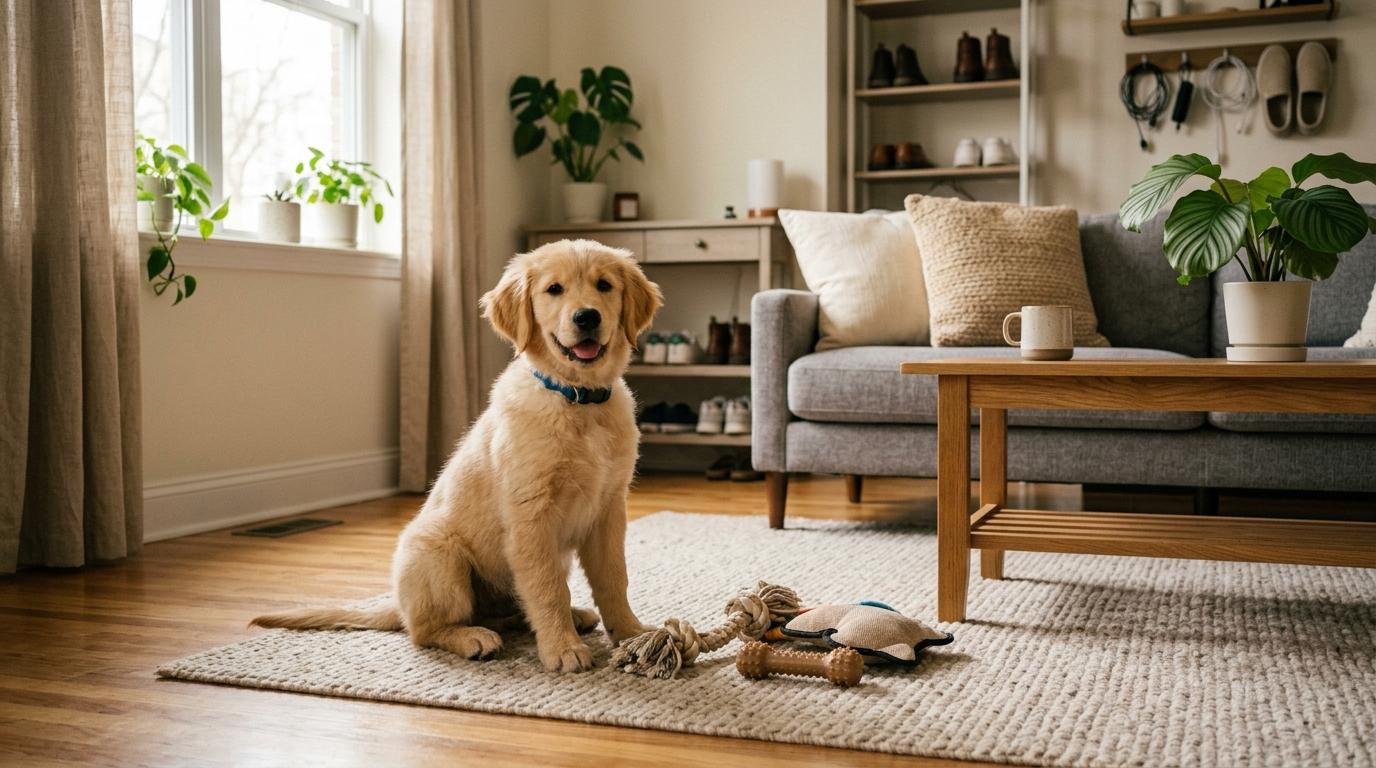
If your puppy is chewing your slippers, table legs, charger cables, rug corners, and possibly your fingers too, take a breath. You are not failing. Puppies chew because they explore with their mouths, get bored, get excited, and may feel sore while teething.
The goal is not to stop chewing completely. Teach your puppy what they can chew, and quietly prevent access to what they cannot. That means puppy-proofing your apartment, offering safe chew toys, redirecting calmly, and avoiding punishment.
First, Why Is Your Puppy Chewing Everything?
#Puppies chew because they are learning about the world. Chewing can also increase during teething as baby teeth fall out and adult teeth come in.
Your puppy may chew more when they are teething, curious, bored, overtired, overexcited, under-supervised, given too much freedom too soon, left without enough safe chew options, or stressed.
So if your puppy is chewing everything, ask: How do I make the right choice easy and the wrong choice impossible?
Apartment Puppy-Proofing Checklist
#A puppy-proof apartment is one of the best training tools you have. Most chewing problems get easier when your puppy cannot reach tempting things.
In a small apartment, use baby gates, a puppy playpen, closed doors, a crate if your puppy is crate-trained, short supervised roaming sessions, and one safe puppy zone for busy moments.
Give Your Puppy Better Things to Chew
#If your puppy does not have legal chewing options, they will find illegal ones. Safe chew toys should be the right size, gentle enough for developing teeth, and durable enough that they do not break into swallowable pieces.
Good options include soft rubber puppy chew toys, puppy teething rings, hollow rubber toys that can be stuffed with puppy-safe food, supervised rope toys, durable plush toys for gentle chewers, a clean chilled wet washcloth under supervision, puppy-safe puzzle feeders, and treat-dispensing toys made for young dogs.
If you use peanut butter inside a toy, check that it is xylitol-free, because xylitol is dangerous for dogs. Introduce rich or new foods slowly.
Avoid old shoes, old slippers, socks, old clothes, cooked bones, very hard bones, antlers, hooves, hard plastic items, tiny toys, toys with loose parts, and household objects such as bottles, remotes, pens, hair ties, or children’s toys.
Puppy Teething Station: What to Keep Ready
#A small chew station can save your furniture and your patience. Keep 2 to 3 soft rubber chew toys, 1 chilled teething option, 1 food-stuffable toy, 1 supervised rope or tug toy, and a few extra toys to rotate every few days.
Toy rotation helps. If every toy is available all the time, your puppy may get bored and look for something more exciting, like your sandal.
How to Stop Puppy Chewing Furniture
#If your puppy starts chewing furniture, stay calm and act early.
- Interrupt calmly.
- Offer an approved chew.
- Praise when your puppy takes it.
- Prevent access next time.
For example, if your puppy is chewing the sofa corner, say their name softly or make a neutral sound. Do not shout. Place a safe chew near their mouth. When they switch to the chew toy, praise them warmly.
Then fix the setup. Was your puppy unsupervised? Is this area too tempting? Do you need a playpen or baby gate? Does your puppy need a nap? Are there enough chew toys nearby?
Some pet parents use pet-safe bitter sprays on furniture legs. These can help in some cases, but they work best with supervision, redirection, and better chew options.
What to Do When Your Puppy Bites Hands, Clothes, or Ankles
#Puppy biting and chewing often show up during play. Your puppy may bite hands, sleeves, ankles, dupatta, pyjamas, or trouser legs because movement is exciting.
Teach: Human skin and clothing are not chew toys.
- Freeze for a moment instead of waving your hands.
- Pause the fun and keep your voice calm.
- Offer a longer toy so puppy teeth stay away from fingers.
- Praise the switch when your puppy bites the toy.
- Give a calm break if biting continues.
If your puppy keeps biting, they may be overstimulated or overtired. Calmly guide them to a puppy-safe pen, crate, or quiet area with a safe chew. This is not punishment; it is a reset.
The Trade Method for Stolen Objects
#If your puppy grabs a sock, do not chase. Chasing can turn the stolen item into a game.
Use this method:
- Pick up a treat or high-value approved toy.
- Show it calmly.
- Say “drop” or “trade” in a friendly voice.
- When your puppy releases the item, give the reward.
- Quietly remove the stolen object.
Do not force your puppy’s mouth open unless it is a true emergency. Practise trading with low-value toys before it matters.
What Not to Do
#Avoid hitting, tapping, smacking, holding your puppy’s mouth shut, shouting repeatedly, punishing after damage is done, giving old shoes or clothes, or leaving tempting things out “just for a minute.”
Punishment does not teach your puppy what to chew instead. Calm prevention and redirection are safer and more useful.
A Simple Daily Routine for Apartment Puppies
#Puppies usually chew less destructively when their day has rhythm: toilet breaks, gentle play, short training, supervised chew time, naps, age-appropriate walks or indoor enrichment, and a calm bedtime routine.
An overtired puppy may look naughty, bitey, and impossible to manage. Often, they do not need more play. They need a quiet place, a chew, and a nap.
When to Call a Veterinarian or Trainer
#Call a veterinarian if your puppy swallowed part of a toy, cloth, plastic, bone, plant, or household item; is vomiting; refuses food; seems unusually tired or unwell; chewed an electrical cord; has heavy mouth bleeding; has a broken-looking tooth; or suddenly chews more along with signs of illness or distress.
Call a positive-reinforcement trainer or qualified behaviour professional if your puppy growls, stiffens, snaps, guards objects, bites intensely, cannot settle, becomes constantly destructive, mainly chews when left alone, panics when alone, or you feel overwhelmed.
This article is educational. It is not a veterinary diagnosis, treatment plan, or replacement for professional care.
Quick Checklist: What to Do Today
#- Put shoes, laundry, chargers, remotes, and small objects away
- Block access to wires and furniture legs
- Roll up tempting rugs for now
- Set up a puppy pen or gated safe zone
- Offer 3 to 5 safe chew toys with different textures
- Rotate toys every few days
- Use the trade method for stolen objects
- Redirect furniture chewing immediately
- Pause play when teeth touch skin
- Give nap breaks when your puppy gets bitey
- Avoid shouting, punishment, and old shoes
- Call a vet if your puppy swallows something unsafe