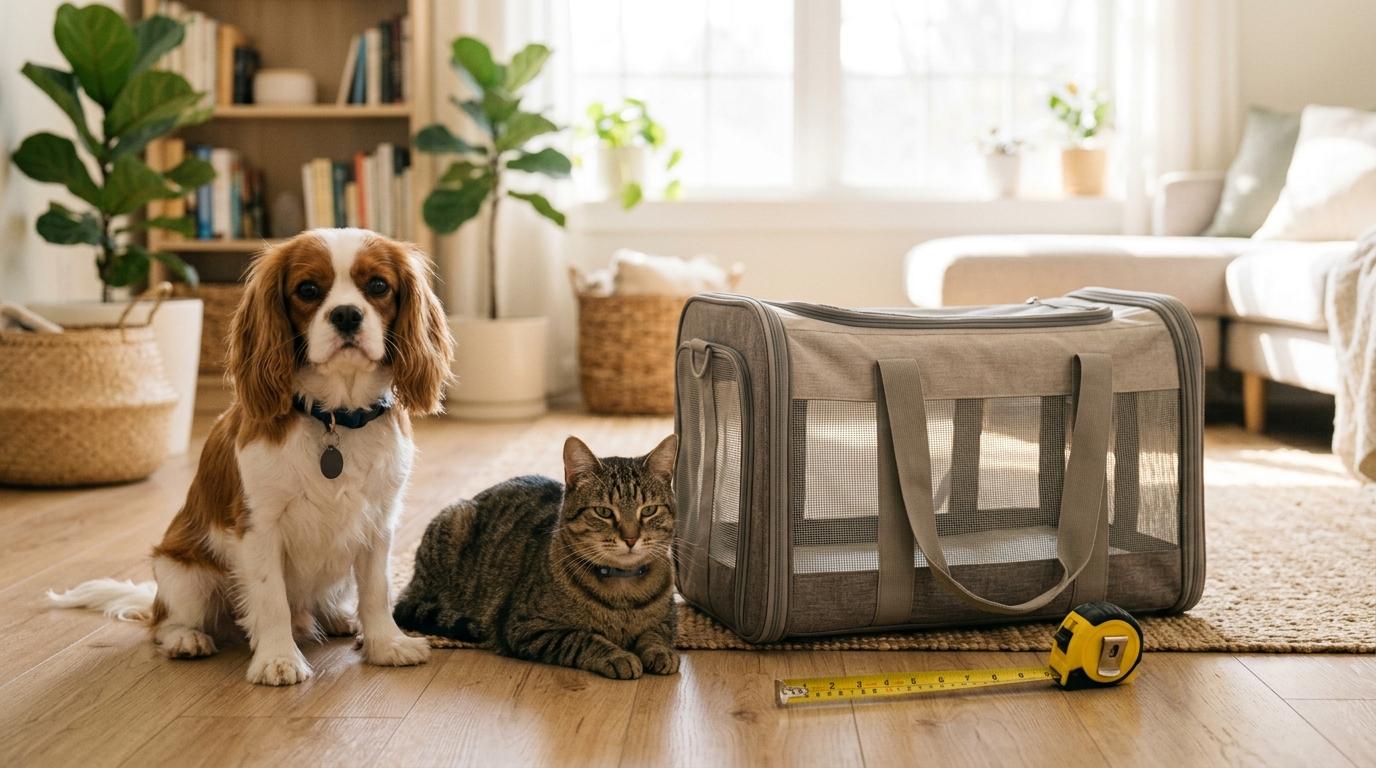
Buying a pet carrier for flights sounds simple until you actually start doing it. Then suddenly you’re measuring your dog’s ears, comparing airline PDFs, and wondering why every carrier online says “airline approved” but looks completely different.
The short answer is this: the best carrier is the one that fits your pet properly, matches your airline’s latest rules, and keeps your dog or cat safe and comfortable through the journey.
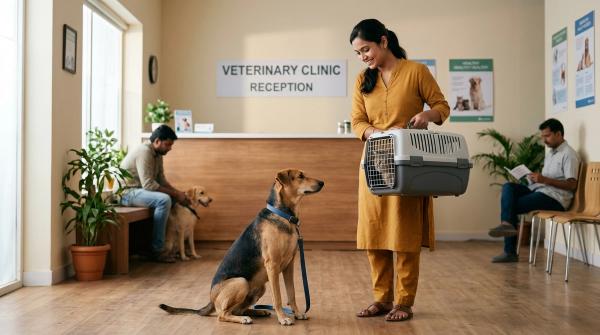
For cabin travel, many pet parents use a soft-sided in cabin pet carrier. For pets travelling in the hold or as cargo, airlines usually require a hard, rigid crate. But don’t buy based on guesswork. Measure your pet, check directly with the airline, and speak with your vet before travel.
If you’re flying within India or planning an international move, the carrier is not just another travel accessory. It is your pet’s little room for the journey. It needs to be safe, breathable, escape-resistant, and roomy enough for your pet to stand, turn around, and lie down normally.
This guide walks you through how to choose a dog carrier for flight or cat carrier for flight without getting lost in confusing labels, size charts, and airline wording.
Start here: fit first, airline rules second, comfort always
#Before you order the cutest carrier you find online, pause and check three things:
- Your pet’s actual measurements, not just their weight.
- Your airline’s current pet travel rules, including cabin, checked baggage, or cargo requirements.
- The carrier’s safety and comfort features, such as ventilation, strong closures, a stable base, and enough usable space inside.
Product labels can be misleading. A carrier may be sold as an airline approved pet carrier, but that does not automatically mean your airline will accept it on your route, aircraft, or booking type.
Think of the label as a starting point, not a guarantee.
Soft-sided carrier or hard crate: which one should you buy?
#The big question is simple: will your pet travel in the cabin with you, or separately in the hold or cargo area?
Once you know that, choosing the carrier becomes much easier.
Choose a soft-sided carrier for cabin travel
#If your pet is travelling in the cabin, a soft-sided pet travel carrier is often the most practical option. These carriers are easier to carry, lighter in weight, and may fit better under the seat in front of you.
Look for:
- Strong mesh panels for airflow.
- A base that feels firm, not floppy.
- Zippers your pet cannot easily push open from inside.
- A leak-resistant or washable bottom.
- Secure handles or shoulder straps.
- Enough space for your pet to sit, turn, and lie down naturally.
One thing to watch closely: the carrier should not collapse onto your pet. Some soft carriers look convenient because they fold down neatly, but if the sides cave in too much when lifted, your pet may feel trapped or uncomfortable.
A good soft carrier should feel flexible, but still supportive.
Choose a hard crate for hold or cargo travel
#If your pet is travelling in the aircraft hold or as cargo, airlines generally expect a rigid crate rather than a soft bag. This is where hard-sided crates come in.
You may see products marketed as an IATA pet crate. That usually means the crate is designed with IATA-style animal transport guidance in mind, but you still need to confirm your airline’s exact requirements.
When comparing hard crates, check for:
- Strong, rigid construction.
- A secure metal door or reliable door mechanism.
- Proper ventilation.
- Fasteners that firmly connect the top and bottom parts.
- No sharp edges inside.
- Enough space for your pet to stand, turn, and lie down normally.
- Food and water attachments, if your airline requires them.
Pick up the crate, shake it gently, check the door, and look at the clips. If it feels weak at home, it will not magically become stronger at the airport.
Your pet’s crate should feel sturdy enough for the full journey, not just good enough for a product photo.
How to measure your dog or cat for a flight carrier
#Please don’t guess this part. A carrier that looks “almost okay” in your living room can become a big problem at check-in if your pet cannot move properly inside it.
Use a soft measuring tape and measure your pet while they are standing naturally.
1. Measure your pet’s length
#Measure from the tip of the nose to the base of the tail.
You usually do not include the full tail length unless your airline or crate instructions specifically ask for it.
2. Measure your pet’s height
#Measure from the floor to the top of the head or ears, whichever is higher when your pet is standing normally.
This matters a lot for dogs with upright ears and cats with tall ears. If their ears are pressed against the top, the carrier is too short.
3. Measure your pet’s width
#Measure across the widest part of the shoulders or body.
Your dog or cat should not have to squeeze into the carrier like luggage into an overhead bin.
4. Do the movement test
#Once your pet is inside the carrier or crate, check if they can:
- Stand without being pushed down.
- Turn around comfortably.
- Lie down in a natural resting position.
- Sit without their head or ears pressing hard against the top.
This is the simplest way to judge pet crate size. If your pet looks cramped at home, they will probably feel worse at the airport, where everything is louder, busier, and more stressful.
What “airline approved pet carrier” actually means
#You’ll see the phrase airline approved pet carrier everywhere. It sounds reassuring, but it needs a little unpacking.
In many cases, it simply means the manufacturer designed the carrier with air travel in mind. It does not mean every airline will accept it. It also does not mean that the carrier is approved for your exact pet, aircraft, route, or country.
The same goes for an IATA pet crate label. IATA provides guidance for animal transport containers, but a product label does not mean IATA has personally approved that exact crate for your journey.
Airlines can have their own rules about:
- Whether pets are allowed in the cabin.
- Whether pets must travel in the hold or as cargo.
- Maximum carrier dimensions.
- Pet and carrier weight limits.
- Breed restrictions.
- Route or aircraft restrictions.
- Health and travel documents.
- Check-in timing and procedures.
And yes, these rules can change.
A safer way to shop is:
- Measure your pet properly.
- Shortlist carriers that fit your pet’s body, not just airline limits.
- Read your airline’s latest pet travel policy.
- Call or email the airline if anything is unclear.
- Buy the carrier only after you know what type and size they expect.
It may feel like extra work now, but it can save you from a very stressful airport surprise later.
Comfort features that genuinely matter
#A good flight carrier does not need to be fancy. It needs to be safe, comfortable, and practical.
Here are the features worth paying attention to.
Good ventilation
#Your pet needs steady airflow throughout the journey. For soft carriers, check the mesh panels and their placement. For hard crates, look for ventilation openings on more than one side.
Avoid blocking airflow with blankets, stickers, covers, or extra accessories. A carrier can look cosy and still be poorly ventilated.
Secure closures
#Cats can be escape artists. Some dogs are very good at pawing, scratching, or nosing their way through weak openings.
Check the zippers, locks, latches, and door mechanisms carefully. They should close smoothly and stay closed.
A stable base
#The bottom of the carrier should not sag badly when you lift it. A sagging base can make your pet feel unstable and may also reduce the usable space inside.
For cabin carriers, a firm base is especially helpful because you may be carrying your pet through a busy airport.
Absorbent lining
#Use an absorbent pad or liner at the bottom of the carrier, especially for longer journeys. It should lie flat and not bunch up under your pet.
Avoid thick bedding that reduces headroom or makes the carrier too warm.
A little privacy
#Airports are noisy. There are people, bags, announcements, trolleys, and unfamiliar smells everywhere. Some pets feel calmer when they cannot see everything at once.
A carrier with roll-down flaps or a breathable cover can help, as long as you do not block ventilation.
Easy cleaning
#Even well-trained pets can have accidents when they are stressed. Choose a carrier that can be wiped clean, opened easily, and relined without too much drama.
You’ll thank yourself later.
Vet and airline checks before you buy
#The carrier is only one part of safe pet travel. Your pet also needs to be fit for the journey, and your paperwork needs to match your route.
Speak with your vet early
#Talk to your veterinarian before flying with your pet. Your vet can help you understand whether your dog or cat is healthy enough for air travel and what documents may be needed.
This is especially important if your pet is:
- Very young.
- Elderly.
- Pregnant.
- Anxious.
- Recovering from illness or surgery.
- A snub-nosed breed.
- Dealing with breathing, heart, or other health issues.
Do not give sedatives, calming medication, or any other medicine unless your vet specifically recommends it for your pet. What worked for someone else’s dog or cat may not be safe for yours.
Confirm airline rules directly
#Do not rely only on marketplace listings, social media posts, old travel blogs, or what another pet parent did last year.
Before buying a carrier, confirm:
- Whether your pet can travel in the cabin.
- Whether your pet must travel in the hold or as cargo.
- Accepted carrier or crate type.
- Maximum carrier dimensions.
- Pet and carrier weight rules.
- Required health and travel documents.
- Check-in timing.
- Aircraft or route restrictions.
- Breed-specific rules, if any.
If the airline’s policy is unclear, contact them directly and keep a written record if possible.
Check route and country requirements
#For international travel, requirements can vary by departure country, arrival country, and transit point. Some routes may involve health certificates, vaccination records, import permits, export steps, or government approvals.
If your journey involves the United States, USDA/APHIS information may be relevant. For India or any other country, check the official rules for departure, arrival, and transit.
Your airline may also ask for documents based on these country-specific rules, so it is better to check early than scramble at the last minute.
Flight-day carrier checklist
#Before you leave for the airport, run through this list.
- The carrier or crate matches your airline’s current rules.
- Your pet can stand, turn around, and lie down naturally inside.
- Zippers, locks, latches, doors, and fasteners work properly.
- Ventilation panels or openings are not blocked.
- The base is lined with an absorbent pad.
- Spare pads or liners are packed.
- Your pet has spent time inside the carrier before travel day.
- Contact details are attached to the carrier or crate.
- Required documents are packed and easy to reach.
- A leash or harness is ready for security checks, if needed.
- Food and water accessories follow airline instructions, if required.
- Bedding is not too bulky and does not reduce headroom.
- No loose toy or object inside the carrier creates a safety risk.
- You have confirmed check-in timing with the airline.
A simple rule: if something reduces space, airflow, or safety, leave it out.
Common mistakes pet parents make when buying a flight carrier
#Buying by weight only
#Weight matters because airlines often set limits. But size matters just as much.
A 6 kg pet can still be tall, long, or broad. Always measure the body, not just the number on the scale.
Choosing the smallest possible carrier
#It is tempting to buy the smallest carrier that fits the airline’s limit, especially for cabin travel. But if your pet cannot move comfortably inside it, it is not the right carrier.
The carrier must work for both the airline and your pet.
Trusting the “airline approved” label blindly
#That label is not a boarding pass. Always check your airline’s actual pet policy before buying.
Waiting until the last week
#Your pet needs time to get used to the carrier. If the first time they sit inside it is on the way to the airport, the whole experience may feel scary.
Buy early. Let them sniff it, sit in it, nap near it, and slowly accept it as a normal thing.
Packing too much inside
#Extra blankets, cushions, and toys may feel comforting to us, but they can reduce airflow and usable space. Keep the inside simple, clean, and safe.
How to help your pet get used to the carrier
#Carrier training does not have to be complicated. It just needs patience.
Place the carrier at home with the door open. Let your pet explore it without forcing them inside. Add a familiar blanket or liner. Put treats near the entrance, then inside, if your pet seems relaxed.
Once they are comfortable going in and out, try closing the door for a few seconds. Open it before they panic. Slowly increase the time.
You can also carry the carrier around the house for a short period or try a short car ride if your pet handles car travel well.
The goal is not to make the carrier exciting. The goal is to make it familiar and safe.
For many pets, that familiarity makes a big difference on travel day.
Final takeaway
#The best pet carrier for flights is not necessarily the prettiest one, the cheapest one, or the one with the biggest “airline approved” badge.
It is the one that fits your pet properly, follows your airline’s latest rules, allows safe movement, provides good ventilation, and helps your dog or cat feel secure.
Measure your pet first. Check the airline next. Speak with your vet early. Then buy the carrier.
That order can save you stress at check-in and make the journey safer, calmer, and kinder for your pet.