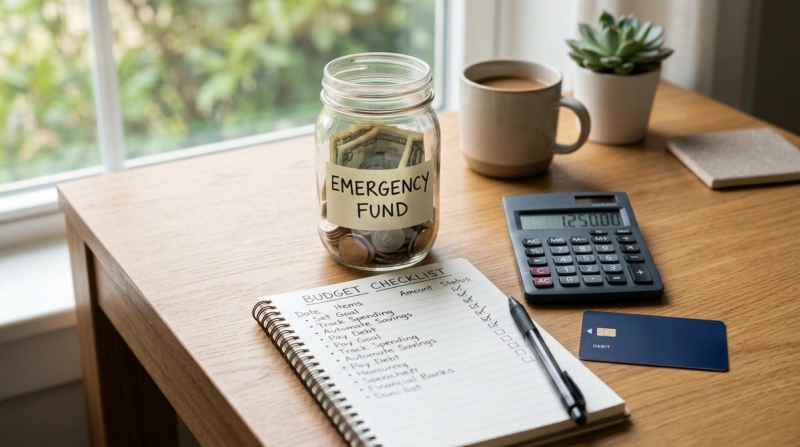
An emergency fund calculator does not have to be complicated. In its simplest form, you add up your essential monthly expenses, then multiply that number by 3 to 6.
That gives you a realistic savings target.
A 3 months emergency fund may be enough if your income is steady and your bills are predictable. A 6 months emergency fund is usually safer if you freelance, rely on one income, support dependents, or have income that goes up and down.
And if you are starting from zero, take a breath. You do not need to save thousands of dollars or rupees overnight. Start with a small starter fund, usually enough to cover one smaller surprise, and build from there.
An emergency fund is not there to make you wealthy. It is there to keep one bad week from turning into a financial crisis.
A flat tire. A broken phone. A medical bill. A job loss. A surprise home repair.
That is what this money is for.
This guide walks you through a simple emergency fund calculator formula, how much emergency fund you may need, where to keep the money, when to use it, and how to build it without feeling like you have to change your whole life overnight.
Quick Answer: How Much Emergency Fund Do You Need?
#Most people can think about emergency savings in three stages:
- Starter fund: a small first cushion for smaller surprises.
- Stable-income fund: 3 months of essential expenses.
- Variable-income fund: 6 months of essential expenses.
Your exact number depends on your life. Your bills, your job, your family situation, your health needs, and how quickly you could replace lost income all matter.
The key word is essential.
Your emergency fund is not based on your full paycheck. It is not based on your normal lifestyle, vacations, dinners out, or fun spending. It is based on the bills you would absolutely need to cover if life got difficult for a while.
What Is an Emergency Fund?
#An emergency fund is money you set aside for unexpected expenses or a sudden loss of income.
Consumer finance guidance commonly describes emergency savings as money kept for unplanned financial shocks, such as medical bills, car repairs, broken appliances, damaged phones, or losing income.
In plain English, it is your “something went wrong” money.
It is not vacation money.It is not investment money.It is not “I saw a sale and kind of want this” money.
It is the money that helps you say, “This is stressful, but I can handle it.”
That peace of mind is a big deal.
Emergency Fund Calculator: The Simple Formula
#You do not need a complicated spreadsheet to figure this out. Start with your essential monthly expenses, then choose how many months you want to cover.
Emergency Fund Formula
#Essential monthly expenses × number of months = emergency fund target
For example:
- Essential monthly expenses: $2,000, ₹50,000, or your local equivalent
- 3 months emergency fund: monthly essentials × 3
- 6 months emergency fund: monthly essentials × 6
So if your essential monthly expenses are $2,000, your 3-month target is $6,000 and your 6-month target is $12,000.
If your essential monthly expenses are ₹50,000, your 3-month target is ₹1,50,000 and your 6-month target is ₹3,00,000.
That range may sound big at first, but remember: you do not have to get there all at once.
Step 1: Add Up Your Essential Monthly Expenses
#Start by looking at your bank statements, bills, rent or mortgage payment, loan payments, and regular monthly costs.
Then ask yourself one honest question:
If I had a real emergency, what would I still need to pay for?
Those are your essentials.
Include essentials like:
#- Rent or mortgage payment
- Electricity, water, gas, and basic utilities
- Basic phone and internet service
- Groceries
- Transportation needed for work, school, or medical care
- Minimum required debt payments
- Insurance premiums
- Essential medicine and healthcare costs
- Childcare or dependent care you still need to pay for
Leave out non-essentials like:
#- Dining out
- Food delivery
- Streaming services
- Vacations
- Hobbies
- Extra shopping
- Upgrades and luxury purchases
- Entertainment subscriptions you could pause
This is where a lot of people accidentally scare themselves. They calculate three to six months of their full lifestyle, then feel like the goal is impossible.
But your emergency fund is not meant to protect every single comfort. It is meant to protect your basics.
You are not saving for three to six months of normal life. You are saving for three to six months of “let’s keep the important things covered.”
Step 2: Choose Your Target, 3 Months or 6 Months
#Once you know your essential monthly number, choose a target that fits your real life.
There is no perfect answer for everyone. A single person with a stable salary may need a different cushion than a freelancer with two kids. That is normal.
3 Months Emergency Fund
#A 3 months emergency fund may be enough if:
- Your income is steady
- You live in a two-income household
- Your job feels fairly stable
- You have few or no dependents
- Your monthly bills are predictable
- You could likely find new income fairly quickly if needed
For example, if your essential expenses are $2,500 per month:
$2,500 × 3 = $7,500
Your 3-month emergency fund target would be $7,500.
For many people, this is a solid goal. It can cover a short job gap, a major repair, or a rough stretch without immediately relying on credit cards or loans.
6 Months Emergency Fund
#A 6 months emergency fund may be a better goal if:
- You are a freelancer or gig worker
- Your income changes from month to month
- You are the only earner in your household
- You have children or dependents
- Your industry has layoffs or slow hiring periods
- You have health needs or other ongoing responsibilities
- It could take a while to replace your income
For example, if your essential expenses are $2,500 per month:
$2,500 × 6 = $15,000
Your 6-month emergency fund target would be $15,000.
This larger cushion gives you more breathing room. It can be especially helpful when income is unpredictable or when other people depend on your paycheck.
Starter vs Stable vs Variable-Income Emergency Fund Targets
#You can build your emergency fund in stages.
You do not need to jump straight to six months.
A simple path could look like this:
- Save your first small milestone.
- Build to one starter cushion.
- Save one month of essentials.
- Save three months of essentials.
- Move toward six months if your situation calls for it.
That is much less overwhelming than staring at a huge number from day one.
Example Emergency Fund Calculator
#Let’s say your monthly essentials look like this:
Now use the emergency fund formula:
So your emergency fund range would be:
- Starter goal: $500 to $1,000
- Stronger goal: $8,400
- More protective goal: $16,800
If $16,800 feels far away, that does not mean you are failing. It just means your first goal should be smaller.
Start with a small first cushion.
Then one month.
Then three months.
Small progress is still progress. And honestly, small progress is how most people actually build savings.
Where to Keep Emergency Savings
#Your emergency savings should be safe, easy to access, and separate from your everyday spending money.
You want the money available when you truly need it. But you also do not want it sitting so close to your checking account that you accidentally spend it on groceries, takeout, or random online shopping.
The goal is simple:
Easy to reach in an emergency, but not too easy to spend casually.
Checklist: Where to Keep Emergency Savings
#- Keep it in cash or a cash-like savings account.
- Keep it separate from your daily checking account.
- Keep it somewhere you can access quickly in a real emergency.
- Use a bank protected by the relevant deposit insurance system in your country where available.
- Avoid accounts that make withdrawals difficult or slow.
- Avoid putting it somewhere that can lose value when markets move.
- Name the account “Emergency Fund” if that helps you leave it alone.
For example, the FDIC helps protect insured deposits at covered banks in the United States, within its rules and limits. Other countries have their own deposit protection systems. The main idea is straightforward: safety matters.
This money should not depend on stock market timing, crypto prices, or whether an investment is up or down that week.
If you need the money, you need the money.
What Not to Use Your Emergency Fund For
#A good emergency fund needs boundaries.
If everything counts as an emergency, the money will disappear quickly. So it helps to decide ahead of time what the fund is actually for.
Use it for true emergencies, such as:
#- Job loss or a sudden drop in income
- Urgent medical or dental costs
- Necessary car repairs
- Critical home repairs
- Emergency travel for a serious family situation
- Replacing an essential phone or appliance if you truly need it
Do not use it for:
#- Holidays
- Gifts
- Vacations
- Shopping
- Dining out
- New gadgets you simply want
- Home upgrades that are not urgent
- Regular annual bills you knew were coming
- Investing
- A car or house down payment
Predictable expenses should usually be saved for separately.
If you know an annual insurance bill is coming, that is not really an emergency. If you know the holidays happen every year, that is not a surprise. If you know school fees, property taxes, or car registration are due later, those are future bills.
Your emergency fund is for the stuff you did not see coming, or income you suddenly lose.
How to Build an Emergency Fund Without Panic
#A full emergency fund can sound huge. That is why the first step should feel doable.
Consumer finance education sources often recommend building the habit with small, regular savings. You do not need one dramatic financial makeover. You need a habit you can repeat.
Here are a few realistic ways to start.
1. Start With a Small First Goal
#If you have nothing saved, do not begin by obsessing over a six-month target.
That can feel discouraging before you even start.
Begin with smaller milestones:
- First goal: one small emergency cushion
- Next goal: one week of essentials
- Next goal: one month of essentials
- Longer goal: three to six months of essentials
Each milestone gives you a little more protection.
Even a small amount can help. It may not solve every problem, but it can keep a small surprise from turning into a bigger one.
2. Automate a Small Transfer
#If your budget allows it, set up an automatic transfer to savings on payday.
It does not have to be large.
Examples:
- A small weekly transfer
- A fixed amount per paycheck
- A monthly transfer after rent and bills are paid
The amount matters less than the habit.
Small automatic savings are easy to overlook, and that is actually the point. You are building your emergency fund quietly in the background without having to make a new decision every time.
3. Save Part of Irregular Money
#When extra money comes in, move part of it to your emergency fund before it disappears into everyday spending.
This could include:
- A work bonus
- A tax refund
- A cash gift
- Overtime pay
- Extra income from a side job
- Money from selling something you no longer need
You do not have to save every dollar.
Even saving part of it can move your emergency fund forward faster than regular monthly savings alone.
4. Cut One Temporary Expense
#You do not have to cut everything fun from your life. That usually does not last, and it can make saving feel like punishment.
Instead, pick one temporary change.
For example:
- Pause one subscription
- Eat out one fewer time per week
- Delay a non-urgent purchase
- Use a cheaper option for a month
- Make coffee at home a few extra days
Then send that money directly to your emergency fund.
The key is to make the cut specific and temporary. That feels much more manageable than saying, “I am never spending money again.”
5. Refill It After You Use It
#If you use your emergency fund for a real emergency, that is not a failure.
That is the fund doing exactly what it was built to do.
You may feel frustrated watching the balance drop, but try to remember: the money protected you. It helped you avoid debt, late fees, stress, or a bigger financial mess.
After the emergency passes, go back to your savings habit and rebuild it.
It may take time. That is okay.
How Much Emergency Fund Is Too Much?
#For most people, a common target is three to six months of essential expenses.
Could you keep more than that? Yes. Some people feel better with a larger cushion, especially if they have irregular income, dependents, health concerns, or a job that would be hard to replace quickly.
But there is also a point where too much cash may sit idle when it could be used for other financial goals, such as paying down high-interest debt, investing, or saving for retirement.
A practical way to think about it is in layers:
- Starter fund
- One month of essentials
- Three months of essentials
- Six months of essentials
- Extra cushion if your life genuinely calls for it
This keeps the process grounded. You do not have to solve every financial goal at once.
Build the cushion first, then decide what comes next.
Source Notes
#This article uses general education concepts reflected in consumer finance guidance from the Consumer Financial Protection Bureau, Federal Deposit Insurance Corporation, and Federal Reserve education/research resources.
Key source-aware principles used here: emergency savings are a cash reserve for unexpected expenses or financial emergencies, small automatic savings can help build the habit, and emergency money should generally be kept liquid, safe, and separate from everyday spending.
General Education Disclaimer
#This article is for general education and informational purposes only. It is not investment, tax, legal, loan, or personalized financial advice. Your situation may be different, so consider speaking with a qualified professional before making major financial decisions.