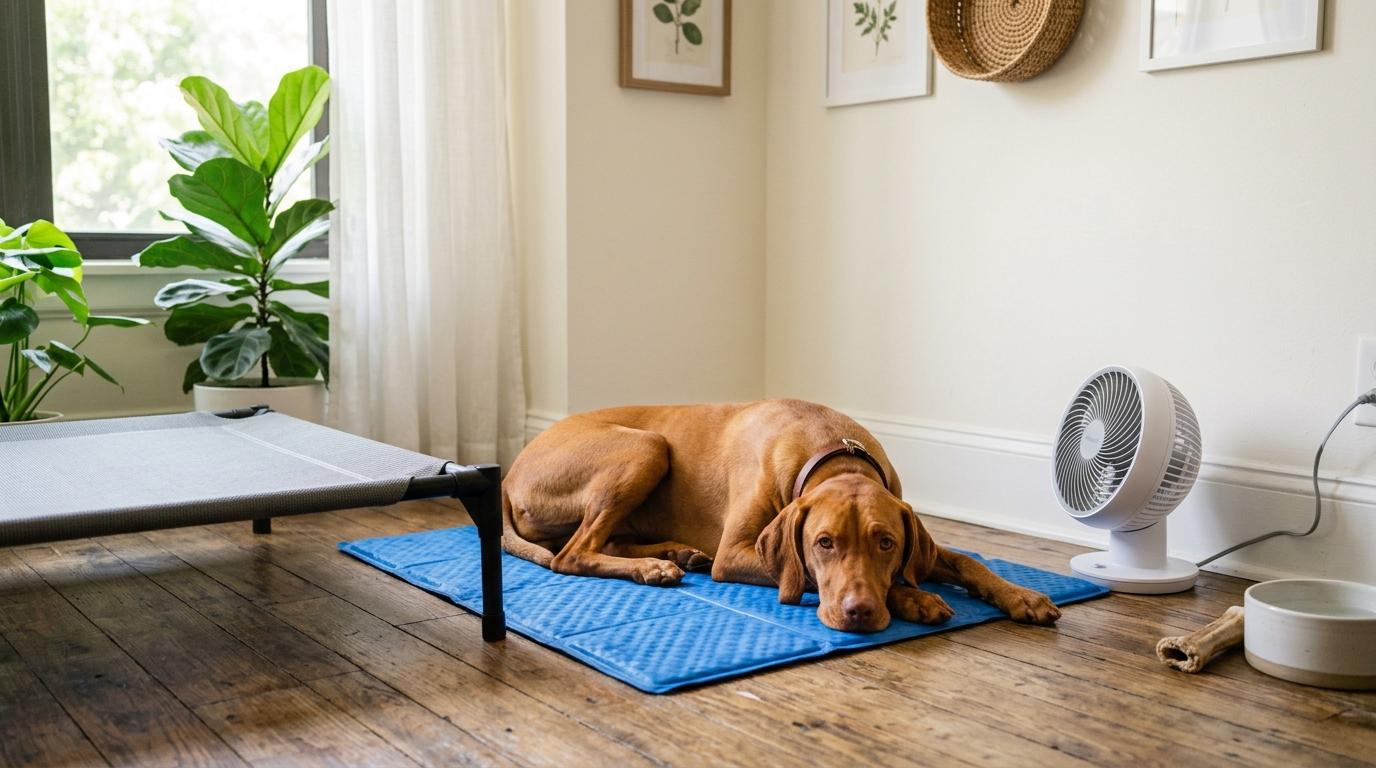
If your dog spends summer hunting for cold tiles, a dog cooling mat is probably worth trying. If they avoid thick beds and flop on hard floors instead, an elevated bed may help by letting air move underneath them. And if the whole room feels still and stuffy, a fan can make the space more comfortable — as long as it is moving cooler air, not just pushing hot air around.
For most apartments and small homes, you do not need a complicated summer setup. You need a shaded cool spot, fresh water, decent ventilation, and one cooling aid your dog actually wants to use.
Cooling mats, elevated beds, and fans can all help, but they are not magic. They do not replace water, shade, rest, air conditioning or ventilation, cooler walk times, or veterinary care if your dog is overheating.
Hot weather can become dangerous quickly, especially in upper-floor flats, humid cities, small rooms, and homes that trap afternoon sun. This guide will help you choose the right option without buying every summer dog product you see — and it will also help you spot when your dog needs urgent help.
This advice follows the kind of cautious guidance commonly shared by veterinary and animal welfare resources, including AVMA warm-weather pet safety, AKC cooling mat guidance, AAHA heatstroke education, RSPCA summer dog care, and Cornell heat safety resources.
The Simple Rule: Watch What Your Dog Already Does
#Before buying a dog cooling bed, spend a little time watching where your dog naturally chooses to rest.
Dogs do not cool down the same way we do. Humans sweat over much of the body. Dogs mainly cool themselves by panting, changing blood flow, and sweating a small amount through their paw pads. So the best product is usually the one that fits your dog’s existing habits.
Look for these clues:
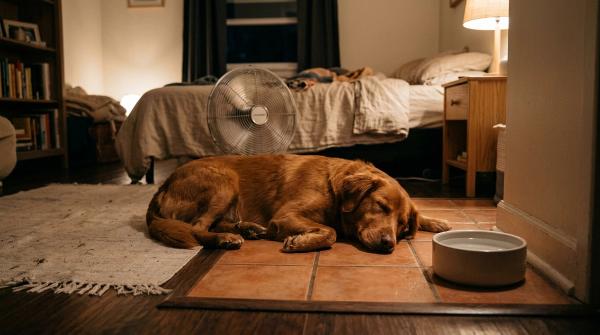
- If your dog presses their belly against bathroom tiles, they may enjoy a cooling mat for dogs.
- If they avoid soft bedding in summer, they may need a cooler surface or better airflow.
- If they sleep near a doorway, window, balcony breeze, or fan, they may like moving air.
- If they keep changing spots and cannot settle, the room itself may be too warm.
The big thing is this: a cooling product only helps if your dog willingly uses it.
Some dogs love cooling mats immediately. Others step around them like you have placed a suspicious object from space in the living room. That is normal. Let your dog explore at their own pace, and never force them to stay on a mat, bed, or in front of a fan.
Cooling Mat vs Elevated Bed vs Fan: Quick Comparison
#Option 1: Dog Cooling Mat
#A dog cooling mat gives your dog a cooler surface to lie on. For apartment living, it is often the easiest first choice because it is compact, portable, and simple to place in your dog’s usual resting area.
Most cooling mats are either gel-based or water-filled.
Gel Cooling Mats
#Many gel mats are pressure-activated. When your dog lies on the mat, the gel absorbs body heat and gives them a cooler surface.
They are popular because they are easy to move, easy to wipe clean, and usually thin enough to place in a crate, under a table, beside the sofa, or against a shaded wall.
But they do have limits. A gel mat can warm up after your dog has been lying on it for a while. It usually needs a break before it feels cool again.
Also, if your dog chews, digs, scratches, or likes to “rearrange” bedding with enthusiasm, inspect the mat often. Stop using it if you see tears, leaks, punctures, or damaged seams.
Water Cooling Mats
#Water mats or water-filled cooling beds can feel soft, squishy, and cool. Some dogs prefer them because they offer a bit more cushioning than a thin gel mat.
The downside is that they can be heavy once filled, and they are not ideal for dogs who chew or puncture bedding. They also need enough floor space and regular checks for leaks.
When a Dog Cooling Mat Makes Sense
#A cooling mat for dogs is a good option if:
- Your dog already chooses tiles or bare floors.
- You live in a small apartment or have limited space.
- You want something portable.
- Your dog is not a strong chewer or digger.
- You can keep the mat in a shaded, ventilated area.
A cooling mat is a comfort aid, not a heat emergency treatment. If your dog is showing signs of heatstroke, do not wait to see if the mat helps. Call a veterinarian immediately.
Option 2: Elevated Bed
#An elevated bed, sometimes called a cot-style dog bed, lifts your dog off the floor. Instead of sinking into a thick cushion that traps heat, your dog lies on a fabric surface with space underneath for air to move.
This can be especially helpful in humid weather, where airflow makes a big difference. It is also a good option if you want to avoid gels, water-filled products, or electrical items.
When an Elevated Bed Makes Sense
#Choose an elevated bed if:
- Your dog dislikes cooling mats but likes stretching out.
- Your home has warm floors, carpets, or thick rugs.
- Your dog overheats on plush bedding.
- You have a shaded balcony, indoor corner, or ventilated room.
- Your dog can step on and off comfortably.
For senior dogs or dogs with joint issues, choose a low, stable design. The bed should not wobble, tip, or require a big step up.
What to Watch For
#Some dogs need time to trust an elevated bed. The fabric can feel springy or unfamiliar at first.
Place it somewhere your dog already likes to rest. Do not put it in a random corner and expect them to suddenly change their routine. Add a familiar blanket nearby if needed, offer gentle encouragement, and let them investigate without pressure.
Also check the size before buying. In a small home, an oversized cot can become one of those annoying things everyone has to step around — and then nobody uses it, including the dog.
Option 3: Dog Fan
#A dog fan can make a room feel more comfortable by moving air, but it is important to understand what it can and cannot do.
Fans cool humans well because sweat evaporates from our skin. Dogs do not sweat over most of their body, so a fan may not cool them as dramatically as it cools us.
That said, a fan can still help in the right conditions. It can improve airflow in a shaded, ventilated room, especially when the air is cooler than your dog’s body and the room is not sealed up and baking hot.
When a Fan Makes Sense
#Use a fan if:
- Your apartment feels still, humid, or stuffy.
- Your dog naturally rests near airflow.
- You can keep cords safely away from chewing.
- The fan is moving cooler or ventilated air.
- You are also providing shade, water, and a safe room temperature.
If the room itself is dangerously hot, a fan alone is not enough. In that situation, focus on cooling the environment: use AC if available, improve cross-ventilation, move your dog to a cooler room, block direct sun, or contact your veterinarian if your dog seems unwell.
Best Setup for Apartments and Small Homes
#You really do not need to buy every cooling product on the market.
For many dog parents, the best summer setup looks like this:
- A shaded cool zone indoors.
- Fresh water nearby.
- One cooling aid your dog likes, such as a dog cooling mat or elevated bed.
- A fan if it actually improves airflow.
- Walks moved to cooler parts of the day.
The location matters as much as the product.
A cooling mat on a sunny balcony is not safe just because the mat says “cooling” on the label. An elevated bed in a closed, hot room is not enough. A fan in trapped hot air may only move the heat around.
Think of cooling products as one layer of dog heat safety, not the whole plan.
Hot-Weather Safety Checklist
#Use this checklist during summer, heatwaves, and humid days.
- Keep fresh, cool drinking water available at all times.
- Place water bowls in more than one spot if you can.
- Create a shaded cool zone indoors.
- Block harsh afternoon sun with curtains or blinds.
- Keep the dog cooling mat or bed out of direct sunlight.
- Avoid thick winter bedding during hot weather.
- Walk early in the morning or later in the evening.
- Test pavement with the back of your hand. If it is too hot to hold there for 5 seconds, it is too hot for paws.
- Keep outdoor toilet breaks short during peak heat.
- Make sure your dog can move away from a mat, bed, or fan whenever they want.
- Keep fan cords away from chewers.
- Do not leave your dog in a sealed, unventilated, uncooled room.
- Watch flat-faced breeds, senior dogs, puppies, overweight dogs, and dogs with health conditions more closely.
- If your dog seems distressed, stop activity and move them to a cooler, shaded area.
- Do not wait for collapse before calling a veterinarian.
When to Call a Veterinarian
#Call a veterinarian or emergency animal hospital immediately if your dog shows signs of heatstroke or heat distress.
Warning signs can include:
- Heavy, frantic panting that does not settle with rest.
- Thick drool.
- Bright red, very pale, or bluish gums or tongue.
- Vomiting or diarrhea.
- Weakness or unusual tiredness.
- Confusion, glassy eyes, or acting “not right.”
- Stumbling or poor coordination.
- Collapse.
- Inability to stand.
- Seizure-like activity.
If you see these signs, do not spend time comparing products, searching for a better dog cooling bed, or waiting to see if the mat works.
Cooling products are not medical care.
Call the vet, explain what you are seeing, and follow their instructions. If they tell you to come in, go promptly.
How to Choose Without Overbuying
#Here is the simplest way to decide.
Buy a Dog Cooling Mat If:
#- Your dog loves tiles.
- You need something compact.
- You want an easy first option.
- Your dog is calm with bedding and does not chew.
Buy an Elevated Bed If:
#- Your dog avoids plush beds in summer.
- Your home is humid or airflow is poor.
- You have a fixed shaded resting area.
- Your dog can step onto it comfortably.
Use a Dog Fan If:
#- The room is stuffy but not dangerously hot.
- You can improve airflow safely.
- Your dog chooses breezy spots.
- You are also using water, shade, and safe ventilation.
Skip the Extra Purchases If:
#- Your dog already rests comfortably on cool tile.
- Your home has reliable cooling and shade.
- Your dog refuses the product after a gentle introduction.
- The product creates a chewing, tripping, or cord hazard.
The best cooling tool is not necessarily the fanciest or most expensive one. It is the one your dog uses safely and comfortably.
Final Takeaway
#A dog cooling mat is usually best for dogs who seek cold surfaces. An elevated bed is better for dogs who need airflow. A fan can help move air, but it does not replace a safe room temperature.
For hot, humid apartments and small homes, keep the setup simple: fresh water, shade, ventilation, cooler walk times, and one cooling aid your dog actually likes.
And if your dog shows signs of heatstroke, skip the products and call a veterinarian immediately.