If you have a dog or cat at home, the safest pet-safe mosquito repellent is usually not a strong spray, coil, or plug-in liquid. It is the simple, boring stuff that actually works: window mesh, balcony screens, mosquito nets, fans, and getting rid of stagnant water before mosquitoes get a chance to breed.
And one very important rule: do not use human mosquito repellents on pets.
Products with DEET, permethrin, pyrethroids, essential oils, mosquito coils, and even plug-in vaporizers need caution around dogs and cats, especially in closed rooms. If your pet is exposed to something and starts drooling, vomiting, shaking, coughing, or behaving strangely, call your vet quickly.
When it comes to pets and mosquito products, it is always better to be overcautious than too late.
Why mosquito control becomes tricky when you have pets
#In many Indian homes, mosquito season arrives with the monsoon and then refuses to leave.
Windows stay open because the house feels stuffy. Balconies collect rainwater. Plant saucers quietly fill up. Bathroom buckets remain half-full. By evening, mosquitoes appear from everywhere.
Normally, many people just spray the room, light a coil, or switch on a vaporizer. But when you have pets, that quick-fix approach needs a rethink.
Dogs and cats are not tiny humans. They spend a lot of time close to the floor, where spray droplets, smoke, and fumes can settle. They lick their paws, fur, bedding, toys, and sometimes the floor too. Cats are even more sensitive to many chemicals and oils because their bodies do not process certain substances the same way humans or dogs do.
At the same time, ignoring mosquitoes is not a great idea either. Mosquito bites are irritating, and mosquitoes can also be linked to health risks in pets, including heartworm.
So the goal is not panic. The goal is safer mosquito control.
For most Indian homes, a sensible plan looks like this:
- Stop mosquitoes from entering
- Stop mosquitoes from breeding
- Use fans and mosquito nets
- Avoid strong fumes and sprays around pets
- Speak to your vet about pet-specific parasite prevention
It sounds simple, but honestly, this layered approach is much safer than depending on one strong chemical product.
Quick comparison: mosquito control options around dogs and cats
#Here is a practical look at common mosquito-control methods used in Indian homes.
The safest strategy: use layers, not heavy fumes
#A good pet-safe mosquito control India plan does not depend on one product.
It works better when you combine small, everyday habits:
- Block mosquitoes from entering your home.
- Remove places where they can breed.
- Use fans and nets to reduce bites.
- Keep strong repellents away from pets.
- Ask your vet about mosquito-related health risks, especially heartworm.
This matters even more in Indian apartments, where rooms may be small, ventilation may be limited, and monsoon humidity keeps balconies, windows, and damp corners in constant use.
Safer mosquito-control options for Indian homes with pets
#1. Window mesh and balcony screens
#If you want a mosquito repellent safe for dogs and cats, start with mesh.
It may not sound exciting, but it is one of the safest and most effective options. Screens do not release fumes. They do not leave chemical residue on the floor. They are suitable for puppies, kittens, senior pets, cats, and flat-faced breeds who may already be sensitive to smoke or strong smells.
For rented flats, magnetic mesh or Velcro mesh can work well. For owned homes, fixed aluminium or fibre mesh is usually stronger and lasts longer.
Balcony doors are especially important. Mosquitoes often enter in the evening when balcony doors are opened again and again.
Check for:
- Gaps near sliding windows
- Torn or loose mesh
- Open corners near balcony doors
- Bottom gaps where mosquitoes can slip in
- Mesh that cats can push open
- Areas where rain or wind has damaged the fitting
Yes, it is a boring solution. But it is one of the safest ones.
2. Mosquito nets for sleeping areas
#Mosquito nets are useful if your pet sleeps in a fixed spot, such as beside your bed, inside a crate, or on a mat in the corner.
They are also helpful if you keep windows open at night for airflow. A net gives one more layer of protection without using smoke, spray, or fumes.
With cats, be a little careful. Some cats see netting as a toy, climbing wall, or chew object. Loose netting can become risky if they get tangled in it.
Use nets only if they are properly tucked and your pet is comfortable around them. If your cat keeps clawing, chewing, or getting stuck, remove the net and try another option.
3. Fans where your pet rests
#Fans are not a complete mosquito solution, but they help more than many people realise.
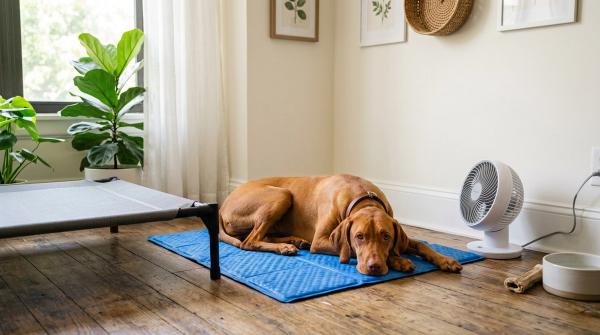
Mosquitoes are not strong flyers. Air movement from a ceiling fan or pedestal fan makes it harder for them to settle and bite. This is especially useful during humid monsoon evenings, when mosquitoes seem to become extra active.
If you use a table fan or pedestal fan:
- Keep it stable
- Keep wires away from chewers
- Do not place it where a dog can knock it over
- Do not keep it on a shelf where a cat may jump and push it down
- Make sure your pet can move away if the airflow feels too strong
A fan is simple, low-risk, and useful when combined with mesh and nets.
4. Removing stagnant water
#This is the part many of us forget.
Mosquito control at home often comes down to tiny water sources. You may not notice them, but mosquitoes will.
During monsoon, check:
- Balcony plant saucers
- Money plant bottles
- Bathroom buckets and mugs
- AC trays and drainage areas
- Floor drains
- Pet water bowls
- Terrace corners
- Open containers near washing areas
- Old bowls, tubs, or trays left outside
- Decorative water bowls or fountains
Change your pet’s water bowl regularly. Wash it, refill it, and do not let old water sit for long. It helps with mosquito control and is better hygiene for your pet anyway.
Products and ingredients pet parents should avoid or handle carefully
#DEET: do not apply human repellent to pets
#Many human mosquito repellents contain DEET. These products are made for people, not for dogs or cats.
Do not rub DEET creams on your dog’s belly, paws, ears, or collar area. Do not spray it on your cat. Do not apply it to pet bedding thinking it will protect them.
Pets can lick the product from their fur, paws, bedding, or your hands. That can be dangerous.
Possible warning signs after exposure include:
- Drooling
- Vomiting
- Weakness
- Tremors
- Seizures
- Skin irritation
- Paw licking
- Face rubbing
- Strange or unusual behaviour
If your pet is exposed, call your veterinarian. Do not wait too long to “see if it settles,” especially if symptoms have already started.
Permethrin and pyrethroids: be extra careful with cats
#Permethrin and related pyrethroids are found in some insect-control products. Some dog tick and flea products may also contain these ingredients.
But this does not mean they are safe for cats.
Cats are especially vulnerable to permethrin toxicity. Even small exposures can become serious.
A cat may be exposed if:
- A dog-only product is used on the cat by mistake
- The cat rubs against a recently treated dog
- A room spray settles on the cat’s fur
- The cat walks on treated floors and later licks its paws
- Bedding, blankets, or sofas have chemical residue
- A household insecticide is sprayed in areas where the cat rests
Never use dog-only mosquito, tick, or flea products on cats.
If you have both dogs and cats at home, ask your vet how long they should be kept apart after any treatment used on the dog.
Essential oils: “natural” does not always mean safe
#Essential oils feel safer because they smell natural. But for pets, especially cats, they can be a real problem.
Oils often used for mosquito control include:
- Citronella
- Eucalyptus
- Peppermint
- Lemongrass
- Tea tree
These oils can irritate the skin, nose, throat, and lungs. When diffused in a small room, tiny droplets can settle on your pet’s fur. Later, your pet grooms and may swallow it.
Avoid applying essential oils directly to your pet. Avoid strong diffusers in rooms where pets sleep or spend a lot of time. This is especially important in small apartments with poor air circulation.
Also, do not assume something is safe just because the label says herbal, natural, plant-based, or chemical-free. Labels can be confusing, and “natural” does not always mean pet-safe.
Mosquito coils: smoke is the main issue
#Many Indian homes still use mosquito coils because they are cheap, familiar, and easy to find.
But a mosquito coil safe for pets is not something you should assume.
The issue is not only the active ingredient. The smoke itself can be a problem. Pets breathe closer to the floor and may remain in the same room for hours. Smoke can irritate their eyes, nose, throat, and lungs.
Avoid mosquito coils in rooms where pets sleep or spend time.
Also avoid coils in:
- Closed balconies
- Small bedrooms
- Kitchens
- Bathrooms
- Rooms with poor ventilation
- Areas near pet beds, crates, litter boxes, or food bowls
Be even more careful if your pet is a puppy, kitten, senior, flat-faced breed, or already has coughing, wheezing, or breathing trouble.
Plug-in vaporizers: common, but not automatically safe
#Liquid vaporizers are used in many Indian homes every evening. So it is natural to ask, “Is a mosquito vaporizer safe for pets?”
The honest answer is: use caution.
A vaporizer in a sealed AC bedroom is very different from a vaporizer in a large, well-ventilated room. Small bedrooms can trap fumes. Pets may sleep near plug points, under beds, close to the floor, or in corners where air movement is poor.
If you use a vaporizer:
- Do not place it near pet beds, bowls, crates, litter boxes, or toys
- Do not use it in a closed room with a pet inside
- Keep a window or door partly open when possible
- Do not let pets lick, chew, or touch the device
- Store refill bottles safely in a closed cabinet
- Stop using it if your pet seems uncomfortable
- Watch for coughing, drooling, vomiting, weakness, or unusual behaviour
If your pet acts strange every time the vaporizer is switched on, take that seriously. Turn it off and speak to your vet.
A practical checklist for safer mosquito control at home
#Use this as a simple monsoon routine if you have dogs, cats, or both.
Daily
#- Empty stagnant water from balcony corners, plant trays, buckets, and bathroom mugs
- Rinse and refill your pet’s water bowl
- Keep balcony doors screened, especially at dusk
- Run a fan in the room where your pet rests
- Check that no spray residue is on floors
- Keep human mosquito creams, sprays, and roll-ons out of reach
- Watch if your pet is scratching, licking, or biting more than usual
Weekly
#- Inspect window screens and balcony mesh for gaps
- Repair torn or loose mesh
- Clean floor drains and damp corners
- Wash pet bedding
- Check under furniture for hidden water collection
- Look at plant saucers and decorative water containers
- Review where plug-ins are placed, if you use them
Always
#- Never apply human mosquito repellent to dogs or cats
- Never use dog-only products on cats
- Avoid mosquito coils around pets
- Avoid essential oil diffusers in closed pet areas
- Use nets, screens, and fans before chemical options
- Ask your veterinarian about pet-specific parasite prevention
What to do if your pet is exposed
#Accidents happen.
A dog may lick mosquito cream from someone’s hand. A cat may walk across a freshly sprayed floor. A puppy may chew a vaporizer unit. A pet may sit in a smoky room before anyone realises.
First, move your pet away from the source.
If smoke or fumes are involved, take your pet to fresh air. If there is product on the fur or paws, prevent more licking and call your vet for advice.
Contact your veterinarian or a veterinary emergency clinic if you notice:
- Drooling or foaming at the mouth
- Vomiting or diarrhoea
- Tremors or muscle twitching
- Weakness or stumbling
- Seizures
- Coughing, wheezing, or laboured breathing
- Excessive sleepiness
- Sudden restlessness
- Skin redness or paw irritation
- Face rubbing
- Any unusual behaviour after exposure
Do not try home remedies. Do not force milk, oil, food, or water unless your vet tells you to.
If possible, keep the product label or a photo of it ready when you call the vet. This helps them understand what your pet may have been exposed to.
What about heartworm and mosquito bites?
#Mosquito control at home can reduce bites, but it does not replace veterinary prevention.
Mosquitoes can transmit heartworm disease to dogs and cats. The right prevention plan depends on your pet’s age, health, location, lifestyle, and risk level.
This is something your vet should guide you on. Do not guess based on a mosquito repellent label.
If your dog or cat is not on a vet-recommended parasite prevention plan and mosquitoes are common around your home, ask your veterinarian what is suitable.
Simple pet-safe setup for a typical Indian apartment
#If you live in a 1BHK or 2BHK flat, this is a good starting point:
- Mesh on bedroom and living room windows
- Balcony screen or magnetic net door
- No open water in plant plates or bathroom buckets
- Fan running where your pet sleeps
- Mosquito net if your pet sleeps near you
- No mosquito coils indoors
- No essential oil diffuser in pet rooms
- Vaporizers only with caution and ventilation
- Human sprays stored in a closed cabinet
- Vet discussion for parasite prevention
It is not fancy. It is not dramatic. But it is safer, practical, and easier to maintain through the monsoon.