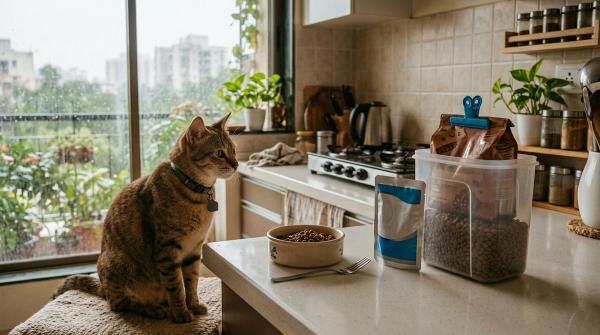
Quick answer: You don’t need a huge home, a giant cat tree, or a living room full of toys to keep an indoor cat happy. In a small apartment, enrichment means giving your cat simple ways to climb, hide, scratch, hunt, sniff, play, and rest. Start with one good scratching post, one cozy hiding spot, one window or climbing perch, a little daily play, and an easy food puzzle.
Indoor cats don’t need a mansion. They need a space that feels safe, interesting, and predictable.
If your cat tears around the apartment at 3 AM, scratches the sofa, begs for food even though they just ate, or follows you from room to room yelling like they have urgent business, it’s easy to blame the apartment.
Maybe the flat is small. But often the issue is not just floor area. From your cat’s point of view, the apartment may be too flat, too quiet, too routine, or simply missing enough cat things to do.
Most cat enrichment advice comes back to a few core needs often discussed by feline veterinary and welfare groups:
- A safe place to hide and rest
- Easy access to food, water, litter, scratching areas and resting spots
- Chances to play, hunt, climb and explore
- Calm, predictable interaction with people
- An environment that respects how important scent is to cats
Here’s how to make those ideas work in a real apartment without filling every corner with cat stuff.
15 Small-Apartment Indoor Cat Enrichment Ideas
#You do not need to try all of these at once. Pick two or three ideas, try them for a week, and watch what your cat actually uses.
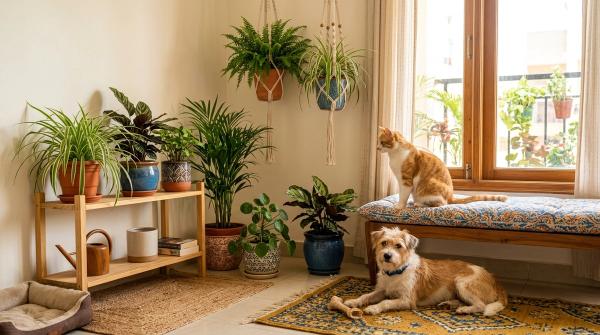
1. Add a cat window perch
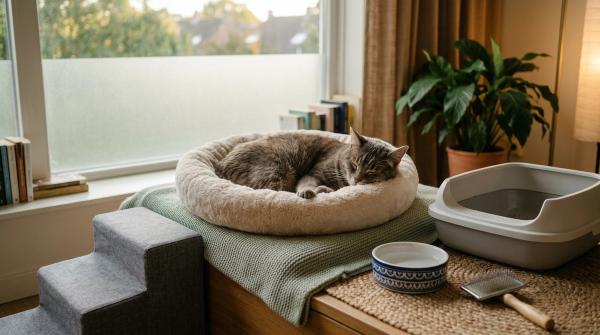
#A window perch is one of the easiest ways to give your cat more “space” without using floor space. For many indoor cats, a window is basically television: birds, people, cars, moving leaves and everyday street activity all count.
Choose a sturdy perch and make sure it is properly attached before your cat uses it. If your cat is nervous about new things, don’t place them on it. Put a treat nearby and let them investigate when they are ready.
2. Clear the top of one safe piece of furniture
#You may already have good vertical space. The top of a bookshelf, dresser, cabinet or sturdy storage unit can become a cat lookout spot.
Clear away breakables, make sure the furniture cannot tip, and add a folded blanket or small mat. Many cats feel safer up high because they can observe the household without being in the middle of it.
3. Use one tall, sturdy scratching post
#A scratching post is not only about protecting your couch. Scratching helps cats stretch, shed old claw layers, mark territory and release energy.
In a small apartment, one good scratching post is usually better than several flimsy little ones that slide around. Look for something tall enough for your cat to fully stretch on. Put it near a spot they already like, such as beside the couch, near a doorway or close to a favorite nap area.
If your cat is scratching furniture, place the post near that furniture first. You can slowly move it later if needed.
4. Keep a little sprint lane open
#Cats need room for sudden nonsense. You do not need a big hallway. Even a clear path from the living room to the bedroom can help.
Before playtime, move shoes, bags, cords and clutter out of the way. This gives your cat a safer place to chase toys, pounce and skid without crashing into things.
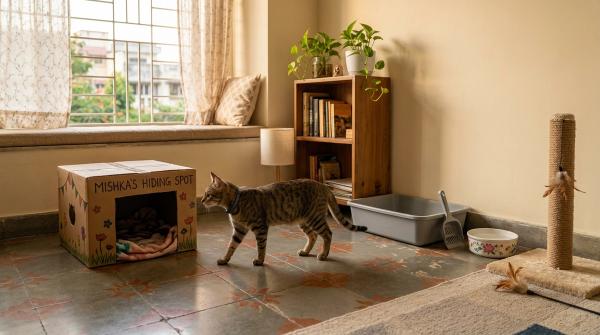
5. Leave out a cardboard box hideaway
#A cardboard box is cheap, easy and often more exciting than bought toys. Put one box in a quiet corner, beside the couch or under a table.
Your cat may use it for hiding, napping, ambushing or simply sitting inside. If your apartment starts to feel cluttered, rotate boxes instead of keeping several out forever.
6. Make a toilet paper roll puzzle feeder
#For a simple DIY cat puzzle feeder, save a few empty toilet paper rolls. Tape them together in a small stack or stand them upright in a shallow box. Drop a few pieces of dry food inside and let your cat fish them out with their paws.
Start easy. Leave some food partly visible at first so your cat understands the game.
7. Try a towel snuffle game
#Lay a towel flat, sprinkle a small amount of dry food on it, then gently scrunch the towel so the food gets tucked into the folds.
Your cat has to sniff and search instead of eating everything from a bowl. This is simple, washable and easy to put away. It can also work well for cats who like food but are not very toy-motivated.
8. Use scatter feeding
#Instead of putting all dry food in one bowl, hide tiny portions around your apartment. Start very easy: a few pieces near the scratching post, by the window perch, next to a bed or on a cat-safe shelf.
Once your cat figures out the game, you can make it slightly harder. The goal is not frustration. The goal is to make mealtime feel a little more like foraging.
9. Turn an ice cube tray into a food puzzle
#An empty ice cube tray can become a quick slow-feeding puzzle. Put a little wet food, dry food or a cat-safe lickable treat into the sections.
Your cat has to work through each little space instead of eating everything in seconds. Wash the tray well after use, especially if you use wet food.
10. Play the hunt, catch, eat game
#This is one of the best routines for indoor cats, especially cats who get restless in the evening.
Use a wand toy like prey. Do not just wiggle it directly in your cat’s face. Make it hide behind furniture, pause, creep along the floor, dart away, disappear around a corner and slow down when your cat is ready to pounce.
Most importantly, let your cat catch it sometimes. A game they can never win gets frustrating.
After play, offer part of their meal. This follows a natural cat pattern: hunt, catch, eat, groom, rest.
11. Rotate indoor cat toys weekly
#Cats get bored when the same toys sit out every day. Keep two or three toys out and store the rest.
Once a week, swap them. A toy your cat ignored last month may feel interesting again when it returns after a break.
12. Make a paper bag play cave
#Take a paper grocery bag, remove the handles for safety, and lay it on its side. Toss a soft toy or a few treats inside.
Many cats enjoy the crinkly sound, the hiding space and the chance to pounce from inside. Put the bag away once it gets ripped, damp or unsafe.
13. Create a window-watching station
#If your apartment rules and window setup allow it, you can add something interesting outside the window, such as a bird feeder placed safely outside the glass.
If that is not possible, a simple window view still helps. The point is to give your cat a calm place to observe movement from indoors.
14. Offer safe scent enrichment
#Cats live in a scent-rich world. Every now and then, you can offer a safe natural object for sniffing, such as a clean dry leaf, a pinecone, a small piece of untreated wood or a paper bag from a safe non-food shop.
Avoid anything treated with pesticides, chemicals, fragrance, essential oils, cleaners or unknown substances. Take the item away if your cat chews it heavily, swallows pieces or if it starts falling apart.
15. Grow a small pot of cat grass
#Cat grass, usually oat grass or wheatgrass, can add scent, texture and safe nibbling interest to your cat’s day.
Keep the pot small so it does not take over your apartment. Put it somewhere easy to clean, because some cats delicately nibble grass and others treat it like an excavation site.
Indoor Cat Enrichment Options Compared
#A Simple 10-Minute Daily Indoor Cat Enrichment Routine
#A short routine you can actually do is much better than an elaborate plan that lasts three days and then disappears.
Try this once a day, ideally when your cat is already awake and interested.
- Minute 1: Clear the space — Move shoes, bags, cords and anything your cat might crash into.
- Minute 2: Pick one toy — Use a wand toy, soft ball, paper bag or whatever your cat currently cares about.
- Minutes 3 to 7: Move the toy like prey — Let it hide, pause, creep and dart away. Give your cat chances to stalk, chase, pounce and catch.
- Minute 8: Offer food — Give part of their meal in a bowl, puzzle feeder, towel game or scatter-feeding setup.
- Minute 9: Let them settle — Step back. Let your cat eat, groom or wander off.
- Minute 10: Put things away — Store wand toys, string toys, ribbons, cords and anything that could be unsafe without supervision.
If your cat is older, shy, overweight, recovering from illness or easily frustrated, keep play short and gentle. The goal is engagement, not exhaustion.
How to Keep Enrichment Low-Clutter
#Small apartments can get messy quickly. The answer is not buying more and more cat stuff. It is rotating what you have.
Try this:
- Keep one good scratching post out all the time
- Keep one vertical resting spot available
- Keep one box or paper bag out for a few days, then recycle or replace it
- Keep two or three toys out and store the rest
- Use food puzzles at mealtimes, then wash and put them away
- Rotate toys before buying new ones
- Avoid leaving string, ribbon or wand toys out unsupervised
If you are just getting started, begin with only three things: a sturdy scratching post, a wand toy and a simple DIY puzzle feeder.
Common Cat Boredom Signs
#Cat boredom can look like a lot of things, but it can also overlap with stress, pain, illness, anxiety or normal cat weirdness. Do not judge based on one behavior alone.
Possible boredom signs include:
- More attention-seeking than usual
- Excessive nighttime activity
- Destructive scratching when good scratching options are missing
- Chasing, swatting or pestering other pets
- Begging for food soon after eating
- Losing interest in the same old toys
- Restlessness when you are home
- Following you around and meowing more than normal
- Getting into cabinets, shelves or off-limits areas more often
That said, do not assume every behavior issue is boredom. Sudden changes deserve attention.
Veterinary Disclaimer and Red Flags
#This article is for general education only. It is not a substitute for veterinary advice, diagnosis or treatment.
Enrichment can support your cat’s wellbeing, but it should not be used to explain away sudden behavior or health changes.
Contact your veterinarian if you notice sudden appetite changes, litter-box changes, straining to urinate, frequent litter-box trips, vomiting, diarrhea, weakness, obvious pain, sudden hiding, sudden aggression, over-grooming, bald patches, suddenly stopping grooming, or major changes in drinking, eating, weight or activity level.
If something feels off, it is better to ask your vet. You know your cat’s normal better than anyone.
Related AllBlogs Guides
#If you are improving your cat’s apartment setup, these related AllBlogs guides may help next:
- How to Stop Cat Scratching Furniture: Humane Apartment Fixes
- Cat Litter Smell in Small Apartments: Monsoon Guide for Indian Cat Parents
- Monsoon Pet Care India: Walks, Paws, Smell, Vet Tips