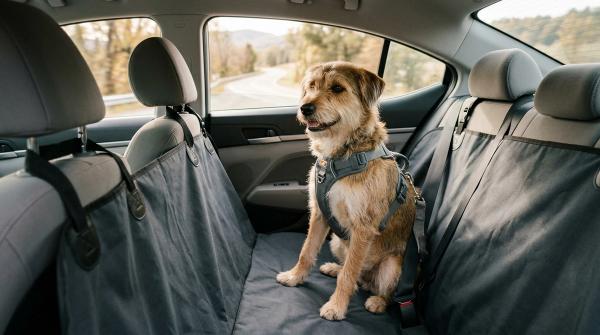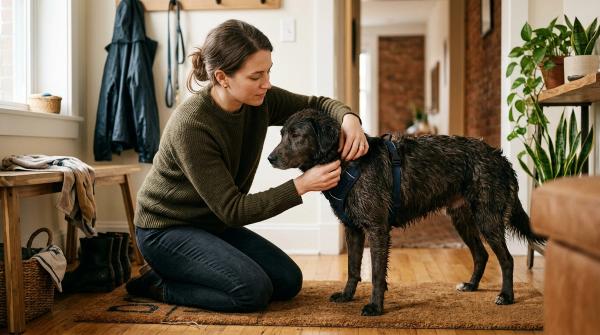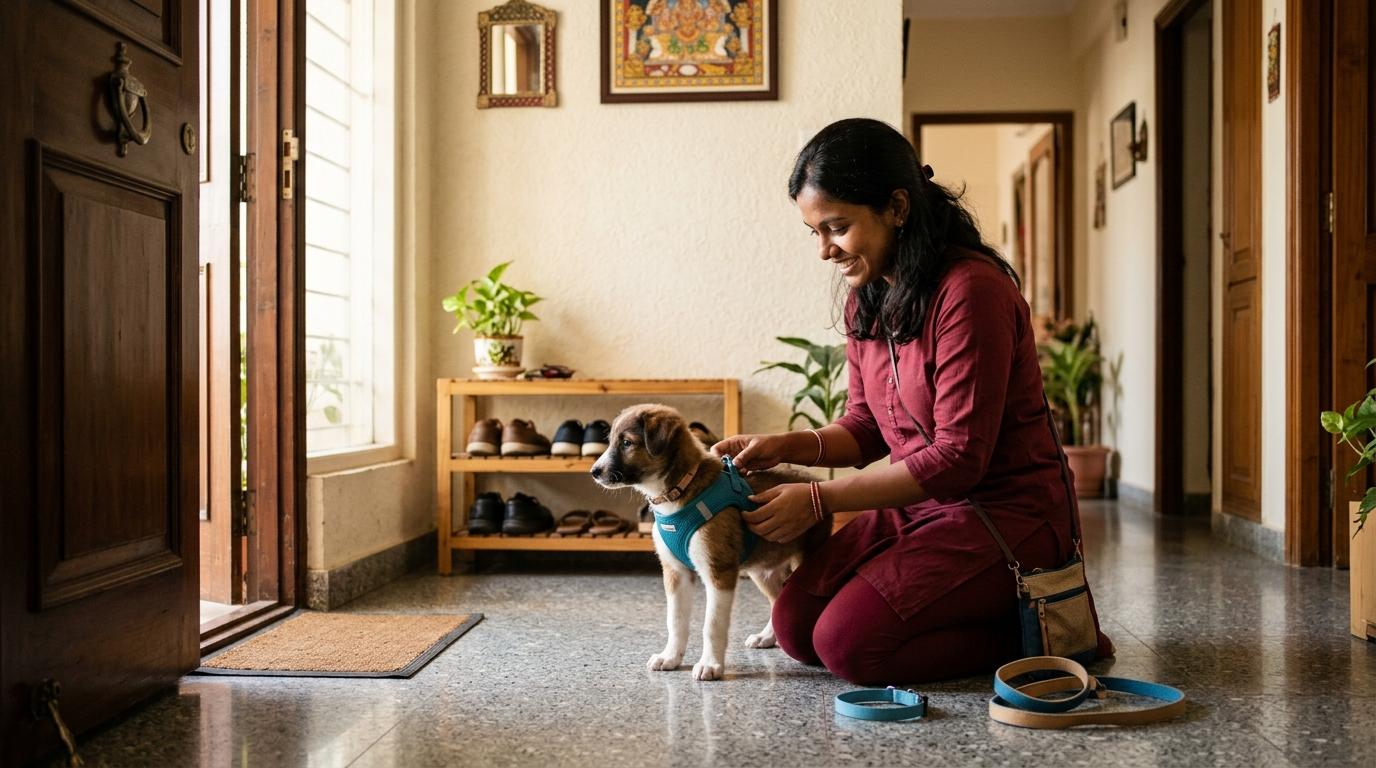
If you’ve just brought home a puppy and you’re staring at collars, harnesses, and leashes online wondering what you actually need, here’s the simple answer: buy both. Use the collar for your dog’s ID tag. Use the harness for walks, potty breaks, and outdoor training.
For most new dog parents, especially if you live in an apartment or a busy city, a harness is the safer choice for walking. Puppies are unpredictable. They pull, jump, sit down in the middle of the road, chase leaves, panic at bike horns, and suddenly decide the lift lobby is terrifying.
A harness gives you better control without putting all that pressure on the neck.
Collars still matter. In fact, every dog should have some kind of identification. But for a young, excited, untrained dog, the collar shouldn’t be your main walking tool.
So before you buy five cute collars, three leashes, and a “training kit” you may never use, start with the basics:
- One light, comfortable flat collar
- One adjustable harness
- One strong leash
You can always upgrade later when your puppy is bigger, calmer, and easier to measure.
Dog Harness vs Collar: Quick Comparison
#What Should New Dog Parents Buy First?
#Your first walking setup should be simple:
- A lightweight flat collar for ID
- A properly fitted adjustable harness for walks
- A sturdy leash with a secure clip
That’s enough to start safely.
The collar should carry your dog’s name and your phone number. Even if you live in a gated society or apartment complex, things happen. Doors open. Guests come in. Delivery people leave gates ajar. Lifts arrive. Puppies slip out in seconds.
A dog collar for ID tag is a small thing, but it can make a huge difference.
The harness is for walking. Puppies don’t arrive knowing how to behave on leash. They zigzag, pull toward strangers, freeze near traffic, try to eat random things from the ground, and sometimes get scared for no obvious reason.
If the leash is attached to a collar, every sudden pull goes straight to the neck. If the leash is attached to a harness, the pressure is spread more safely across the chest and body.
So the real answer to dog harness vs collar is not one or the other.
It’s:
Collar for ID. Harness for walks.
Why a Harness Is Usually Safer for Puppies
#When people ask, “Should I get a puppy harness or collar?”, they’re usually trying to keep things simple. Fair enough. Puppies grow fast, and nobody wants to spend too much on something that may not fit next month.
But for walking, a harness is still usually the better first choice.
A puppy’s body is still growing. Their leash manners are also basically non-existent in the beginning. Pulling, jumping, running in circles, stopping suddenly, and lunging at birds are all normal puppy behaviours.
A collar sits around the neck, close to the throat. A sudden jerk there can be uncomfortable and, for some dogs, risky. This is especially true for small puppies, toy breeds, flat-faced dogs, and dogs with breathing or neck issues.
A harness sits around the chest and torso. When it fits properly, it lets you guide your puppy without putting direct pressure on the throat.
The best dog harness for puppies is not necessarily the most expensive one. It’s the one that:
- Fits snugly without rubbing
- Has adjustable straps
- Feels light enough for daily use
- Doesn’t block shoulder movement
- Doesn’t sit too close to the armpits
- Has strong clips and stitching
- Doesn’t twist around while your puppy walks
For very young puppies, a simple adjustable harness is usually enough. You can buy a more padded or premium one later, once your dog is closer to adult size.
Apartment Puppy Walking: Why the Right Gear Matters
#If you live in an apartment, your puppy’s “walk” starts long before you reach the road.
First, there’s the front door. Then the corridor. Then the lift. Then the lobby. Then maybe a parking area, security gate, delivery bikes, children running around, other dogs, traffic, construction sounds, slippery tiles, puddles, and food scraps on the pavement.
That’s a lot for a puppy.
For many Indian pet parents, apartment dog walking is not always a peaceful stroll. Sometimes it’s a short potty break where you’re just trying to stop your puppy from licking rainwater, jumping on neighbours, or panicking at a scooter.
A harness helps because it gives you more control without pulling on the neck.
It’s especially useful in:
- Crowded lifts
- Narrow corridors
- Busy footpaths
- Parking areas
- Roads with fast traffic
- Slippery monsoon entrances
- Places where stray dogs may appear suddenly
- Apartment gates with people and vehicles moving in and out
A collar with an ID tag is still important. But when it comes to attaching the leash, a harness gives most new dog parents a safer margin for mistakes.
What If My Puppy Pulls?
#Pulling is one of the most common puppy walking problems.
It doesn’t mean your puppy is stubborn, naughty, dominant, or “trying to be the boss.” Most of the time, the outside world is just too exciting or too overwhelming.
For leash training puppy routines, start with short walks and use a harness. Reward your puppy when the leash is loose. If they pull, stop walking. When the leash relaxes, move again.
This teaches your puppy a simple lesson:
Pulling doesn’t get me there faster. Calm walking does.
If your puppy pulls very hard, you can consider a no-pull harness, also called a front-clip harness.
A regular back-clip harness has the leash attachment on the dog’s back. This works well for many puppies. But for strong pullers, it can sometimes make it easier for them to lean forward and pull with more force.
A front-clip harness has the leash attachment on the chest. When your dog pulls, the harness gently turns their body back toward you instead of letting them charge straight ahead.
It’s not magic. Your puppy will still need training. But it can make walks much easier while they’re learning.
Try to avoid yanking the leash or using harsh collar corrections, especially with puppies. Calm, repeated practice works better in the long run, even if it feels slow at first.
When Is a Collar Enough for Walking?
#A collar may be enough for walking only when all of these are true:
- Your dog is fully grown
- Your dog walks calmly on leash
- Your dog doesn’t pull, lunge, jump, or panic
- Your dog has no neck, throat, breathing, or trachea concerns
- You’re walking in a calm, low-risk area
For many new dog parents, this stage comes much later.
A collar is still useful every day for identification. A flat collar with an ID tag is one of the simplest pieces of dog walking gear India pet parents can buy.
Choose something light, adjustable, and comfortable. Avoid heavy collars for small puppies. They don’t need anything bulky around their neck all day.
When Is a Harness Safer?
#A harness is usually safer for walking when:
- Your dog is a puppy
- Your dog pulls on leash
- Your dog gets startled easily
- You live in an apartment
- You walk near traffic
- Your dog is small or delicate
- Your dog is flat-faced, like a Pug or Bulldog type
- Your dog has neck, throat, breathing, or trachea concerns
- You’re still working on leash manners
If your dog coughs, gags, wheezes, has trouble breathing, or has a known injury or trachea-related issue, speak to your vet before choosing walking gear.
A qualified, positive trainer can also help if your dog pulls, lunges, freezes, or gets scared on walks.
Fit and Safety Checklist
#The right gear only works if it fits properly. A loose harness can slip off. A tight one can rub. And puppies grow so quickly that something that fit last week may suddenly be uncomfortable.
Check the fit regularly, especially during the first year.
1. Use the two-finger rule
#You should be able to slide two fingers between the collar or harness and your dog’s body.
If you can’t fit two fingers, it’s too tight. If you can fit much more than two fingers, it may be too loose.
2. Check the collar fit
#A collar should sit comfortably around the neck. It shouldn’t slide over your dog’s head, but it also shouldn’t press into the skin.
If your puppy pulls, avoid attaching the leash to the collar for walks.
3. Check the chest and shoulders
#A harness should sit securely around the chest without blocking natural movement. Your puppy should be able to walk normally, not take short, restricted steps.
4. Watch the armpits
#Harness straps should not rub directly behind the front legs. Armpit rubbing can cause soreness, especially on longer walks or when the harness is wet.
5. Test for slipping
#Before going outside, gently pull the harness in different directions. Your puppy should not be able to back out of it.
This is especially important for nervous dogs who may panic at sudden sounds.
6. Remove the harness indoors
#A harness is walking gear, not all-day clothing.
Take it off after walks to reduce rubbing, matting, and discomfort. A collar can stay on for ID if it’s comfortable and safe for your home setup.
7. Think about monsoon weather
#Wet gear can stay damp for hours, especially during monsoon. If possible, choose quick-drying materials and dry the harness properly between walks.
Damp straps can irritate the skin and can start smelling bad too.
Vet and Trainer Caution: Neck or Breathing Issues
#If your dog coughs, gags, wheezes, struggles to breathe, or seems uncomfortable during walks, don’t ignore it.
Stop using the collar for leash control and speak to a veterinarian.
Be extra careful with dogs who already have breathing, neck, throat, or trachea-related concerns. Flat-faced breeds and very small dogs may need more careful gear choices.
A well-fitted harness is often preferred for walking, but if there is any medical concern, your vet should guide you.
For training issues like pulling, lunging, barking, or fear on walks, a positive trainer can help you use the harness correctly instead of relying on force.
Simple Buying Guide for New Dog Parents
#If you’re shopping for your puppy’s first walking set, keep it practical.
Buy first
#- Flat adjustable collar for ID tag
- Adjustable harness for walks
- Standard leash with a secure clip
Wait before buying
#- Expensive adult-size harnesses
- Multiple fashion collars
- Heavy chains
- Complicated training tools
- Gear your puppy may outgrow in a few weeks
Look for
#- Soft but durable material
- Strong stitching
- Smooth buckles
- Easy adjustment
- Secure leash attachment
- Lightweight design
- Quick-drying fabric if you live in a rainy city
The goal is not to buy the most gear. The goal is to buy the right basic gear and use it properly.
Final Verdict
#For most new dog parents, the best first choice is not harness instead of collar.
It’s both.
Use the collar for ID. Use the harness for walks.
This setup is especially helpful for puppies, pullers, small dogs, and apartment dogs dealing with lifts, traffic, narrow paths, and sudden distractions.
Start simple. Check the fit often. Keep walks short in the beginning. And remember, good leash manners don’t come from gear alone. They come from the right gear, patient training, and lots of calm practice.