If you are wondering about dog rain boots vs paw balm, the most practical answer is this: look at where your dog actually walks.
For a quick toilet break inside the apartment compound, a little paw balm and a proper clean-up after the walk may be enough. But if your dog has to step through flooded roads, muddy patches, construction dust, hidden stones, or suspicious puddles near the gate, dog rain boots make much more sense.
Paw balm and boots are not doing the same job.
Paw balm helps dry, rough, or slightly irritated paw pads. It adds a light protective layer and can reduce friction. But it cannot stop a piece of glass, metal, thorn, or sharp stone from cutting the paw.
Boots, on the other hand, create a real barrier between your dog’s paws and the ground. They can help with mud, dirty water, and hidden debris. But they need to fit properly, and your dog needs time to get used to them.
And honestly, some dogs need neither for daily short walks. A towel, clean water, and a little patience after every walk can go a long way.
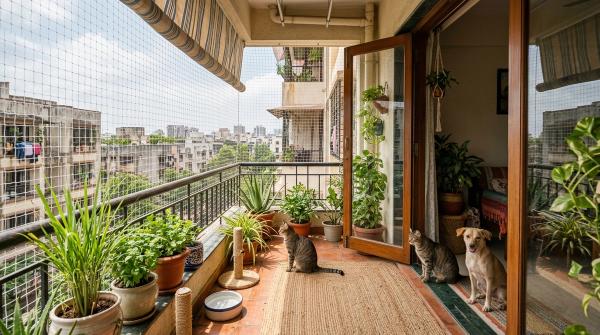
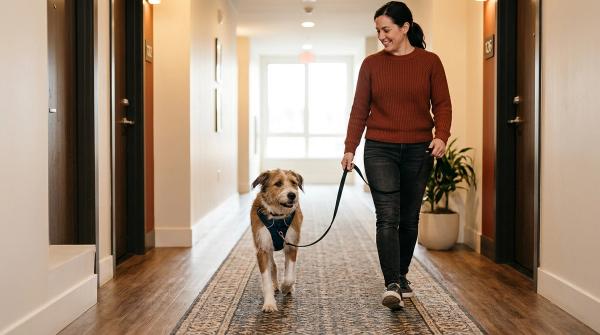
If you live in an Indian apartment, you already know monsoon dog walks are never just “a little rain.” Your dog may pass through wet corridors, slippery lobby tiles, basement parking, muddy society roads, puddles outside the gate, and damp staircases, all for one small pee break.
So yes, rainy season dog care can feel confusing. One neighbour will swear by boots. Another will say their dog wore boots once and then walked like a baby giraffe. Someone else will recommend paw balm every day. And meanwhile, your dog just wants to sniff the same wet pole for five minutes.
Let’s make the choice easier.
Dog Rain Boots vs Paw Balm: What’s the Real Difference?
#Dog boots for rain give physical protection
#Dog boots for rain work like shoes. They cover the paw and reduce direct contact with the ground.
This is useful in the monsoon because rainwater often hides things you cannot see clearly, such as:
- Broken glass
- Small stones
- Sharp twigs
- Construction debris
- Rusty bits of metal
- Old wires
- Muddy potholes
- Oil or grime in basement parking
For Indian apartment dogs, boots can be helpful if your regular walking route includes waterlogged streets, muddy compounds, basement parking with grime or standing water, rough wet concrete, construction areas, longer rainy walks, or a history of paw cuts.
Boots can also reduce direct paw contact with stagnant water. That matters because dirty water and wet soil can carry germs, especially during heavy rain.
But boots are not perfect. If water enters from the top, it can sit inside the boot. Then the boot becomes a damp, warm pocket around the paw, which is exactly what you do not want in humid weather. Wet paws trapped inside wet boots can cause irritation.
Fit is another big thing. Tight boots can rub. Loose boots can twist, slip off, or make your dog walk awkwardly. Most dogs need practice before they stop doing that funny high-step walk.
So think of boots as protective gear for messy or risky walks, not as something every dog needs for every drizzle.
Paw balm for dogs supports the pads
#Paw balm for dogs is usually a thick, pet-safe balm or wax applied to the paw pads. It helps with dryness, roughness, and mild friction. It can also create a light moisture-resistant layer before a walk.
During the monsoon, wet dog paws can become softer than usual. Soft pads may get irritated more easily on concrete, tiles, gravel, and damp outdoor surfaces. The constant wet-dry-wet-dry cycle can also make some dogs’ paw pads look dry, pale, rough, or slightly cracked.
Paw balm is useful if your dog has dry paw pads, rough pads, mild cracks, short walks on damp surfaces, slight discomfort on slippery floors, or a complete refusal to wear boots.
But paw balm has limits. It will not protect against sharp objects, ticks, deep mud, or dirty puddles. It can also wash off in heavy rain or deep water.
Use a thin layer. Too much balm can make paws greasy, attract dirt, and leave marks indoors.
Boots vs Paw Balm vs Towel-Only: Quick Comparison
#So, What Should You Choose?
#Choose paw balm if your walks are short and fairly clean
#If your dog mostly walks inside the apartment compound, on tiled corridors, clean concrete, or short damp paths, paw balm may be enough.
This is probably the most common situation for apartment dogs in India. They are going downstairs, sniffing three corners, doing their business, and coming back up before the lift gets crowded.
Paw balm is also a good choice if your dog has dry pads or simply refuses to wear boots. Pair it with a proper post-walk clean and dry routine.
Choose dog rain boots if the route is messy or risky
#Use dog rain boots if your dog has to walk through muddy compounds, flooded streets, construction-heavy areas, rough concrete, waterlogged patches where you cannot see the ground, or places where your dog has had paw injuries before.
Boots are especially useful when you cannot trust what is under the water.
But introduce them slowly. Do not put boots on your dog for the first time five minutes before a thunderstorm walk. Start indoors. Put on one boot. Reward your dog. Remove it. Repeat. Slowly build up to all four boots.
Choose both if your dog has sensitive paws and the route is bad
#Some dogs benefit from both.
A thin layer of balm may reduce rubbing, while boots provide physical protection from mud, water, stones, and debris. This can help during longer rainy walks or on rough routes.
But for a two-minute pee break downstairs, both may be overkill.
Choose neither if the walk is very short and clean
#If your dog’s paws are healthy, the route is clean, and the walk is extremely short, you may not need boots or balm every time.
But “neither” does not mean “do nothing.” It means your main routine is washing, checking, and drying the paws properly after the walk.
The Post-Walk Paw Cleaning Routine That Actually Matters
#Whether you use boots, balm, both, or nothing, wet dog paws need attention after monsoon walks.
In humid weather, moisture between the toes can cause irritation. Mud can hide tiny stones. Wet fur can make ticks harder to spot. And small cuts can go unnoticed until your dog starts licking or limping.
1. Keep everything ready before the walk
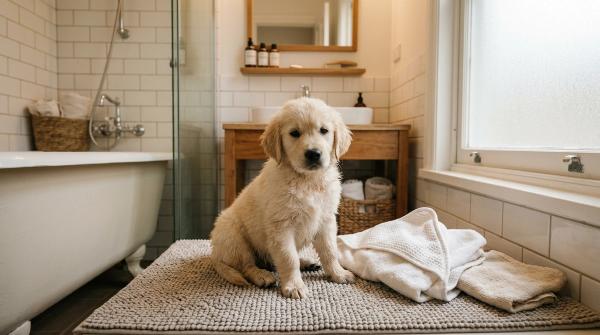
#Before you leave, keep a small bowl or mug of clean water, a soft cloth, a dry towel, and paw balm if you use it near the door.
2. Remove boots as soon as you come back
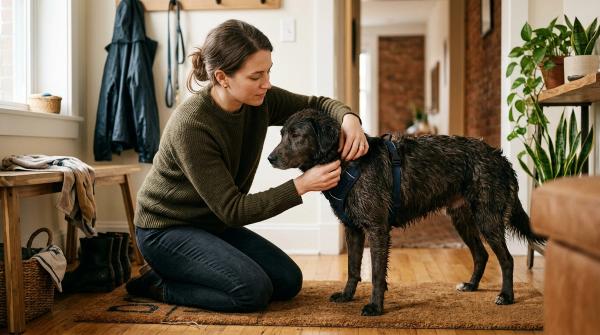
#If your dog wore boots, take them off immediately after the walk. Check whether water got inside. If the paw is damp, clean and dry it fully.
3. Rinse or wipe each paw gently
#Use clean water, preferably lukewarm if your dog is comfortable with it. You do not need to scrub aggressively. A gentle dip and wipe is usually enough to remove mud, grit, and sand.
4. Clean between the toes
#Mud, tiny stones, moisture, and ticks can get stuck between the toes. Use a soft damp cloth and gently separate the toes. Do not poke or dig.
5. Check the paw pads
#Look for cuts, redness, swelling, peeling, cracks, torn nails, bleeding, or small stones or debris stuck in the pad.
6. Dry properly, especially between the toes
#Use a dry towel and absorb moisture from paw pads, nails, fur between the toes, and lower legs if wet. Damp paws should not stay damp for long, especially in humid Indian weather.
7. Apply paw balm only when needed
#If the pads look dry, rough, or slightly cracked, apply a very thin layer of paw balm after cleaning and drying. If the paws look red, swollen, soggy, or irritated, do not keep applying balm again and again. First check what is causing the problem.
8. Watch for licking later
#A little grooming is normal. Constant licking, chewing, or focusing on one paw is not normal. It may mean irritation, a cut, a tick, a thorn, allergy, or pain.
Vet-Aware Monsoon Paw Safety Checks
#Most rainy-season paw issues can be managed with simple care: avoid bad routes, clean the paws, dry them well, and inspect after walks. But some signs need a vet’s attention.
Cuts, swelling, and limping
#Speak to your vet if you notice a deep cut, bleeding that does not stop, swelling between the toes, a torn nail, sudden limping, your dog refusing to put weight on one paw, or pain when you touch the paw.
Constant licking, chewing, or scratching
#The AVMA advises pet parents to consult a veterinarian if pets are scratching, chewing, or licking. In monsoon paw care, repeated licking may point to irritation, allergy, infection, pain, or something stuck in the paw.
Ticks and fleas
#The AVMA recommends checking pets for fleas and ticks. During the rainy season, check between the toes, around the nails, under the paw, up the legs, and around the ears and neck, especially after grassy walks.
Stagnant water and leptospirosis risk
#The CDC says leptospirosis bacteria can contaminate water or soil through urine from infected animals and may survive there for weeks to months.
This is one reason to avoid letting dogs drink from puddles or walk through stagnant water when possible. Boots can reduce direct paw contact on risky routes, but they do not make dirty water safe. If your dog has open cuts or irritated paws, be extra careful around standing water. Ask your vet about local leptospirosis risk and prevention.
Slippery tiles and indoor falls
#A lot of apartment dogs do not slip outside. They slip inside the building. Wet lobby floors, vitrified tiles, staircases, and corridors can be tricky, especially for puppies, senior dogs, and excited dogs. Keep your dog on leash in wet common areas. Walk slowly. Dry paws before letting your dog run indoors.
Common Monsoon Paw Care Mistakes
#Buying boots without measuring the paws
#Dog boots need to fit properly. Too tight, and they can rub. Too loose, and they can twist, fall off, or make your dog walk awkwardly. Measure your dog’s paws according to the brand’s guide.
Applying too much balm
#A thin layer is enough. Too much balm can make paws greasy, attract dirt, and leave marks on the floor.
Skipping drying because the walk was short
#Even a two-minute toilet break can leave moisture between the toes. In humid monsoon weather, that moisture matters.
Using human moisturiser on dog paws
#Use a dog-safe paw balm. Dogs lick their paws, and human moisturisers may contain fragrances, chemicals, or ingredients that are not suitable for pets. If you are not sure whether a product is safe, ask your vet.
Thinking boots replace cleaning
#Boots help, but they do not replace post-walk checks. Water can enter the boot. Dirt can collect near the opening. A boot can rub if it shifts during the walk.
Final Takeaway
#The dog rain boots vs paw balm decision is not about which product is better for every dog. It depends on your dog’s route, paw condition, comfort, and how messy your monsoon walks really are.
For most Indian apartment dogs, start simple: keep walks short during heavy rain, avoid stagnant water, clean paws after every wet walk, dry between the toes properly, and use paw balm if the pads look dry or rough.
Add dog boots for rain when the route is flooded, muddy, sharp, or unpredictable.
The best rainy season dog care routine is the one you can actually repeat every day. Because in the monsoon, consistency protects paws better than panic buying.