The thing nobody told me about being vegetarian in Tbilisi
#I landed in Tbilisi thinking I’d be doing the usual vegetarian traveler dance: eating bread, pointing nervously at menus, and asking waiters if “no meat” really means no meat. And yeah, there was a little of that. But mostly? Tbilisi fed me ridiculously well. Like, I still think about the walnut sauces and those hot bean breads when I’m supposed to be answering emails.
Georgia has this big reputation for grilled meat, khinkali dumplings, supra feasts, and wine that appears before you’ve even taken your jacket off. Fair. But the vegetarian side of Georgian food is not some tiny sad corner of the menu. It’s everywhere, especially if you know what to look for. Beans, eggplant, mushrooms, herbs, walnuts, cheese, pickles, corn bread, fresh bread from basement bakeries... honestly, it’s a dangerous place if you believe you’re “just going to snack.” You won’t. You’ll have a whole second lunch by mistake.
The main thing is knowing what to eat, and what to check before you get too comfortable. Because a dish can look vegetarian and still have meat broth, animal fat, or cheese made with rennet if you’re strict about that. Also, Georgian hospitality is warm and wonderful, but sometimes people interpret vegetarian differently. “No beef” might still mean chicken is fine. “No meat” might mean there’s only a tiny bit of ham, so it doesn’t count. I learned that one the awkward way in another country, and now I ask twice, smiling like an idiot.
First walk, first bakery smell, first food panic
#My first evening in Tbilisi was one of those travel moments where your body is tired but your brain is acting like a golden retriever. I had dropped my bag in a little guesthouse near Sololaki, walked downhill through streets with crooked balconies and grapevines hanging like they owned the place, and then the smell hit me. Fresh bread. Not fancy sourdough cafe bread. Proper hot, slightly smoky, chewy Georgian bread from a tone oven.
There are basement bakeries all over the city, often with a small window or stairs going down, and you’ll see long canoe-shaped loaves called shotis puri stuck to the inside walls of the round oven. I bought one so hot it nearly burned my fingers, then ate half of it walking toward Liberty Square. No plate. No plan. Just bread and jet lag and that weird travel happiness where everything feels cinematic even though you probably look sweaty.
For vegetarians, bread is your first friend in Tbilisi. But not your only friend, which is the important bit. Georgian cuisine has a whole fasting food tradition connected with Orthodox fasting periods, and dishes labeled “samarkhvo” are generally made without meat, dairy, or eggs. That word became my little safety blanket. It doesn’t solve every ingredient question, but it’s a useful thing to look for or ask about, especially if you’re vegan or avoiding dairy.
What to eat first: the vegetarian Georgian classics
#If you only have two or three days in Tbilisi, don’t waste them trying to eat like you’re at home. I mean, sure, get a falafel if you need one. I did. But the vegetarian Georgian dishes are the whole reason to be excited. They’re bold without being fussy, and so many of them are based on walnuts, herbs, garlic, vinegar, beans, and seasonal vegetables. It’s food that feels old in the best way.
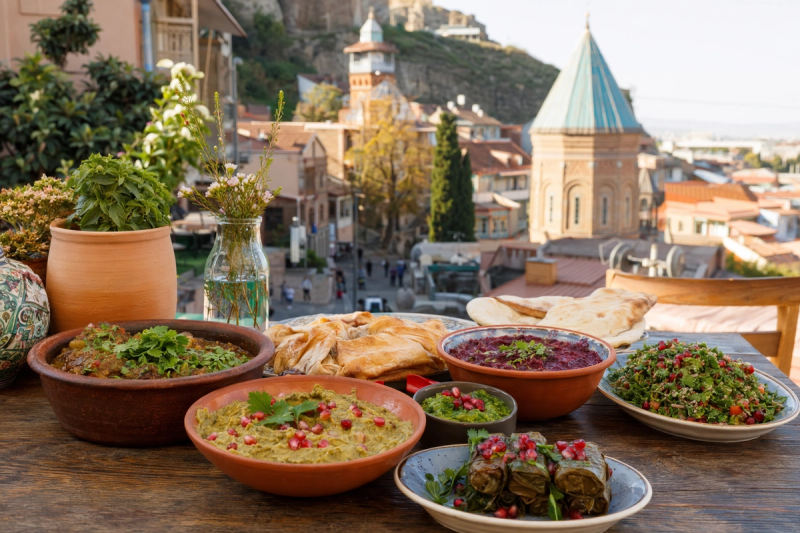
- Badrijani nigvzit: fried eggplant rolls stuffed with walnut paste, garlic, herbs, and spices. I ordered this almost every day, which is not an exaggeration I’m proud of. The texture is soft and rich, and the walnut filling is kind of creamy without dairy. Sometimes it comes with pomegranate seeds on top and looks like someone actually cared about your happiness.
- Pkhali: vegetable and walnut pâté, usually made with spinach, beetroot, cabbage, or other greens. It looks small on the plate, but the flavor is huge. Nutty, tangy, garlicky. Eat it with bread and don’t be polite about taking the last piece.
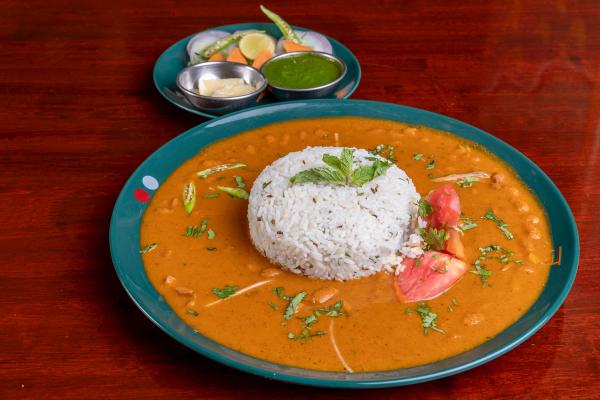
- Lobio: bean stew, often served in a clay pot, with coriander, onions, spices, and sometimes pickles on the side. It can be vegan, but check whether it’s cooked with meat or served with any non-veg additions. In a good version, it’s smoky and comforting and makes rainy weather feel intentional.
- Lobiani: bread stuffed with mashed beans. It’s basically Georgian bean pie, and I say that with deep respect. Ask if it’s made with butter or animal fat if that matters to you.
- Ajapsandali: a vegetable stew with eggplant, peppers, tomatoes, onions, and herbs. It’s usually vegetarian and often vegan, but still ask. Served warm or cold, and honestly it tastes better after a few minutes when you stop trying to compare it to ratatouille.
- Mushrooms on ketsi: mushrooms baked or fried in a clay pan. Sometimes they come with sulguni cheese, sometimes plain. Both are good if you eat dairy, but check what fat they cook it in.
The khachapuri situation, because yes, you need a plan
#Khachapuri is the famous Georgian cheese bread, and if you eat dairy, Tbilisi is going to test your self-control. There are regional styles: Imeruli is round and stuffed with cheese, Megruli has cheese inside and on top, and Adjaruli is the boat-shaped one with cheese, butter, and a runny egg. That last one is dramatic. It arrives looking like breakfast and dinner got married in a bread canoe.
Vegetarian? Usually yes, if dairy and egg are okay for you. Vegan? No, unless you find a plant-based version at a specialist café. Strict vegetarian who avoids animal rennet? You’ll need to ask more carefully, and the answer may not always be clear because cheese-making traditions vary and staff may not know the detail. This is one of those moments where your personal line matters. I’m not here to police anybody’s plate. I’m just saying don’t assume.
I had my favorite khachapuri after walking down from Narikala Fortress. My knees were complaining, the sunset had gone all pink over the river, and I found a place with a small terrace where everyone seemed to be eating too much cheese and pretending it was normal. The bread came blistered at the edges, salty cheese inside, steam rising when I tore it open. Was it subtle? Absolutely not. Was I happy? Embarrassingly happy.
Khinkali for vegetarians: possible, but ask properly
#Khinkali are Georgia’s famous dumplings, and the classic ones are meat-filled with broth inside. But many Tbilisi restaurants offer mushroom, potato, or cheese khinkali. Mushroom khinkali were my favorite when done right, earthy and juicy and peppery. Potato ones are safer-feeling but can be a little plain unless there’s good seasoning. Cheese ones are heavy in a way that makes you either delighted or sleepy.
The check here is important. Ask if the vegetarian khinkali are boiled in the same water as meat khinkali, if cross-contact matters to you. Also ask whether broth or meat stock is used in mushroom versions. In casual places, the answer may be “same kitchen, same pot,” and then you decide. Tbilisi is not always built for hyper-specific dietary separation, so being clear and kind helps a lot.
And please eat khinkali with your hands. Hold the top knot, bite a little hole, sip or catch the juices, then eat the dumpling. The top knot usually gets left on the plate. I watched tourists cut them open with forks on my first night and felt smug for about five seconds, until I spilled mushroom juice on my shirt. Travel keeps you humble.
Restaurants and neighborhoods I’d check as a vegetarian
#Tbilisi’s food scene changes, so I’m careful about promising that any restaurant will be exactly the same when you go. Hours shift, menus get updated, small cafés close for renovations or move, and sometimes a place that was brilliant one year is just... fine the next. Still, there are areas and styles of places that made vegetarian eating easier for me.
Old Tbilisi and the streets around Freedom Square are convenient for classic Georgian food, especially if you’re staying nearby. Look for menus with pkhali, lobio, badrijani, ajapsandali, mushroom khinkali, and salads with walnut dressing. Cafe Leila, near the old town area, has long been known by travelers as a vegetarian-friendly Georgian spot, especially useful if you want traditional flavors without scanning every line of the menu in panic. Still check the current menu before going, because that’s just smart travel.
Sololaki is great when you want a more atmospheric dinner. It has those moody courtyards, old staircases, wine bars, and restaurants that feel like they’re hiding behind heavy doors. I had one of my best slow meals there: pkhali, tomato-cucumber salad with walnut dressing, mushrooms, bread, and amber wine. Nothing complicated, but everything tasted alive. Georgian tomatoes, when they’re good, make you realize how rude supermarket tomatoes have been to us.
Fabrika and the Marjanishvili side can be easier if you want international options mixed with local food. This is where I’d go if I was tired, wanted a coffee, needed Wi-Fi, or had a friend who was vegan and nervous about traditional menus. You’ll find more casual places, bars, and younger crowds. Not every menu is vegetarian heaven, but the vibe is more flexible.
Markets: where Tbilisi tastes loudest
#If restaurants are the comfortable version of Tbilisi food, markets are the noisy, sticky, colorful version. Dezerter Bazaar is the big one people talk about, and it’s worth going if you like seeing the ingredients behind the dishes: heaps of herbs, churchkhela hanging like edible candles, walnuts, pickles, fruit, spices, cheeses, and more kinds of beans than I knew what to do with.
I went in the morning and immediately wished I had skipped breakfast. Vendors were slicing fruit, people were bargaining, taxi drivers were honking nearby, and every few steps there was something I wanted to buy even though I had no kitchen. I ended up with churchkhela, a packet of blue fenugreek spice, and way too many walnuts. Churchkhela is usually walnuts or hazelnuts threaded on a string and dipped in thickened grape must. It looks like a candle, eats like a chewy energy bar, and travels well if you don’t squash it under your camera.
Vegetarian travelers should also try tkemali, the sour plum sauce, and adjika, the spicy paste or sauce that can vary from mild-ish to “why did I do that.” These sauces turn simple bread, potatoes, beans, and vegetables into a real meal. I bought a little jar of tkemali and ate it with bread in my room one night because I was too tired to go out. Not glamorous. Very satisfying.
The ordering checks that saved me
#I’m a big believer in eating locally, but I’m also a big believer in not spending your holiday feeling confused or accidentally eating something you avoid. Tbilisi is pretty manageable for vegetarians, but the checks matter.
- Ask about meat stock. Soups, beans, mushrooms, and stews may look vegetarian but sometimes have stock or drippings. A simple “no meat, no meat broth?” gets the point across better than a speech.
- Check dairy and egg if you’re vegan. The word “samarkhvo” can help because fasting dishes are generally prepared without meat, dairy, or eggs, though you should still confirm if you’re strict.
- Ask about cooking fat. Some breads or bean dishes may use butter, oil, or animal fat depending on the place.
- Don’t assume all cheese is okay for strict vegetarians. If rennet matters to you, ask, but be prepared that staff may not know the cheesemaking details.
- For khinkali, ask about shared boiling water if cross-contact matters. This one is easy to forget when you’re hungry and everyone else already ordered.
I usually wrote a little note on my phone with the basics: “I don’t eat meat or fish. No meat broth, please.” Translation apps are useful, but I’ve learned not to trust them blindly for food words. They can turn dietary preferences into poetry or nonsense. If you’re the kind of traveler who likes practical pre-trip checklists, the same mindset applies anywhere with unfamiliar menus. I wrote about that in this Hong Kong Disneyland Vegetarian Food Guide: What to Eat, Pack, and Check Before You Go, and honestly the “ask, check, carry backup snacks” rule works from theme parks to Tbilisi taverns.
Wine, walnuts, and the Georgian supra feeling
#You can’t talk about eating in Tbilisi without talking about wine, even if you don’t drink much. Georgia’s wine culture is ancient, and qvevri wines, made in large clay vessels buried underground, are part of the food experience. Amber wines especially became my thing there. They can be tannic, textured, slightly wild, sometimes funky in a way that makes you pause before deciding you love it.
At a Georgian table, food doesn’t arrive in neat individual courses. It lands in waves. Plates cover the table until there’s no room for your glass, someone orders more bread, somebody makes a toast, and then more food appears like the kitchen is playing a prank. This is great for vegetarians because you can build a feast from sides and starters: pkhali, eggplant, salads, mushrooms, lobio, pickles, cheese, bread, sauces. But you do need to speak up early, especially in group meals, because meat dishes often dominate the center.
One night I joined a small food walk with a few other travelers, and the guide ordered what she called “a light table.” Reader, it was not light. It was a landscape. There were herbs tucked into everything, walnuts everywhere, and so many pickled things that my mouth was basically doing gymnastics. I remember thinking that Georgian food doesn’t try to be delicate. It wants to wake you up.
Breakfast, coffee, and the morning hunt
#Breakfast in Tbilisi can be whatever you make of it. Some guesthouses serve bread, cheese, jam, fruit, eggs, and tea. Cafés around central neighborhoods offer the more global stuff: avocado toast, granola, omelets, pancakes. But I liked doing a very Tbilisi breakfast, which was basically fresh bread, cheese or lobiani, fruit from a corner shop, and coffee strong enough to reorganize my personality.
If you’re vegan, breakfast is trickier but not impossible. Look for fruit, bread, jams, nuts, churchkhela, and cafés that offer plant milk. Ask whether pastries contain butter or egg. I carried nuts and bananas more often than I expected, partly because I walk a lot when I travel and become dramatic when hungry. There’s no shame in emergency snacks. None.
The first morning in any food city is always a learning curve, isn’t it? You don’t know portion sizes, you don’t know which places open early, and you don’t know if the thing in the bakery window is sweet, salty, cheesy, or secretly full of meat. I use the same approach I use in breakfast cultures I don’t fully know: watch what locals buy, ask one simple question, then try something small before committing. It’s the same kind of ordering bravery I talk about in the Malaysian Kopitiam Breakfast Guide: Kaya Toast, Roti Canai and What to Order, just with more walnuts and less kaya.
Late-night eating after sulfur baths or a delayed flight
#Tbilisi at night has that soft golden glow, especially around the old town balconies and the river. After the sulfur baths, when your bones feel like steamed dumplings, you might not want a giant formal dinner. You might want something easy: lobiani from a bakery, mushroom khinkali, a simple salad, fries with tkemali, or a casual food hall meal if you’re near one.
Late-night vegetarian eating is when mistakes happen, though. You’re tired, menus are shorter, staff are busy, and suddenly you’re saying yes to something you didn’t really understand. If I arrive late in a city, I try to keep it boring on purpose: bread, beans, potatoes, yogurt if I eat dairy, fruit, bottled water. Save the complicated ordering for tomorrow when your brain is online. This is also why I like having a general travel food strategy, like the one in Late-Night Food Court Meals While Traveling: What to Order, Split, and Skip, because midnight hunger has made fools of all of us.
A very honest mini-list of what I’d order again
#If a friend texted me from Tbilisi right now and said, “I’m vegetarian, I have one day, what do I eat?” I’d probably send this slightly bossy list.
- Start with hot shotis puri from a tone bakery. Eat it immediately, even if you tell yourself you’ll save it. You won’t.
- Order badrijani nigvzit and pkhali together, because the walnut-herb-garlic combination is basically the flavor postcard of Georgia.
- Get lobio with mchadi, the corn bread. Add pickles. Add tkemali if available. This is the meal that makes you feel fed, not just entertained.
- Try mushroom khinkali, but ask about broth and shared cooking water if that matters to you.
- Eat khachapuri if you do dairy. Maybe split it, though I never follow my own advice.
- Buy churchkhela for the train, the airport, or your bag. It’s not candy exactly, not a snack exactly, just its own chewy little travel companion.
What I’d skip, or at least be careful with
#I don’t like making scary food rules, because half the joy of travel is being surprised. But there are a few things I’d treat carefully as a vegetarian in Tbilisi. Soups are the big one. Even vegetable-looking soups can have meat stock. Rice dishes and stews can also hide broth or bits of meat. Shared platters at traditional restaurants may include meat near vegetarian dishes, which is fine for some people and not fine for others.
Also, don’t assume English menus always explain everything. Sometimes the English menu says “beans” and the Georgian version has more detail. Sometimes staff are helpful but busy. Sometimes you ask a question and get a confident answer that feels... too fast. I usually ask again in a different way if it matters. Not aggressively. Just, “No meat broth, yes?” with the apologetic tourist smile.
One more thing: portions can be big. Georgian food is built for sharing, and if you order like each dish is one personal serving, your table may become a small architectural problem. I did this. More than once. The upside is leftovers, if your room has a fridge. The downside is walking uphill to your hotel while full of cheese bread, which should be considered an extreme sport.
Little food phrases and habits that help
#I’m not fluent in Georgian, not even close, and the script is beautiful but humbling. Still, a few words and habits helped. “Vegetarian” is often understood in central restaurants, especially in touristy areas, but don’t rely on that alone. “No meat” is the key idea. If you’re vegan, ask for fasting food or say no meat, no dairy, no eggs. Translation apps help, and hotel staff can write a note for you in Georgian if you’re worried.
I also learned to mention fish separately. In some places around the world, fish doesn’t get mentally filed under meat. Same with chicken stock. So I say, “No meat, no fish, no chicken, no broth.” It sounds repetitive, but it works. And I try to do it before ordering, not when the food arrives and everyone gets stressed.
The best habit, though, is curiosity. Ask what the dish is made from. Ask what’s local. Ask what they recommend without meat. I had servers light up when I asked about walnut sauces or pickles. Food questions can be annoying if you act entitled, but they can also open doors if you’re genuinely interested.
My final Tbilisi vegetarian verdict
#Tbilisi is one of those cities where vegetarian travel feels less like restriction and more like a scavenger hunt, in a good way. You’re not just removing meat from the meal. You’re leaning into the parts of Georgian cooking that are already rich and generous: beans, walnuts, herbs, vegetables, bread, cheese, wine, pickles, sauces. It’s not perfect for every diet, and vegans especially need to ask more questions, but it’s absolutely doable and often delicious.
What I loved most wasn’t one dish, though badrijani came close. It was the rhythm of eating there. Walking up a steep street and rewarding yourself with bread. Sharing too many plates in a cellar restaurant. Buying fruit at a market from someone who insists you taste first. Sitting with amber wine while the city gets dark and the balconies turn into silhouettes. Food in Tbilisi feels attached to place in a way that makes travel better.
So if you’re vegetarian and wondering whether Tbilisi is worth it, go hungry and go curious. Check the broth, check the fat, check the cheese if you need to, but don’t overthink yourself out of the fun. Some of the best meals are the messy ones where the table is crowded, your fingers smell like garlic, and you’re already planning what to eat tomorrow. And if you want more casual food-travel rambles like this, I usually end up browsing AllBlogs.in when I’m supposed to be planning only one trip and accidentally start planning three.