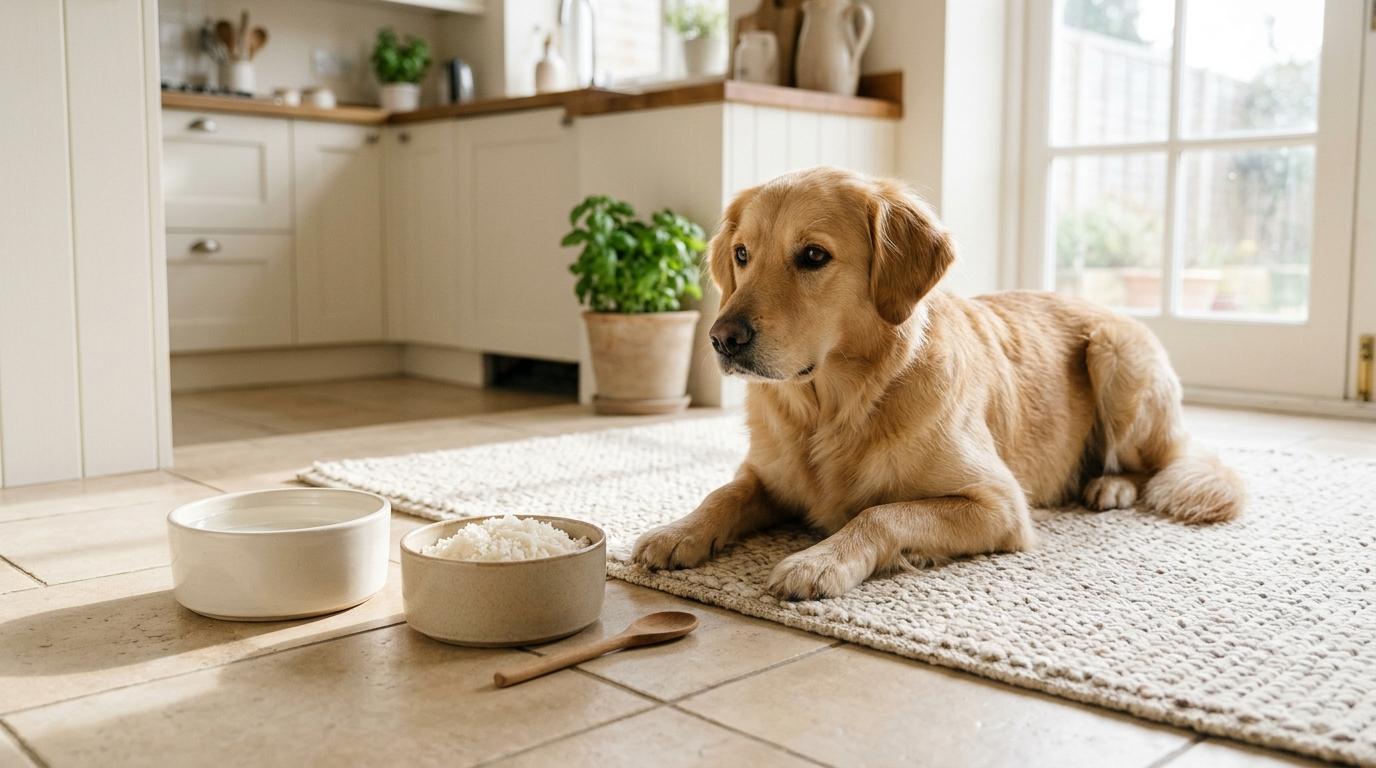
Your dog wakes you up at 3 AM scratching at the back door, bolts out into the yard, and passes sudden watery diarrhea. Five minutes later you are standing in the kitchen squinting at the pantry trying to figure out whether you should skip breakfast, boil rice right now, scoop pumpkin out of a can, or drive straight to an emergency animal clinic.
Start by checking your dog's energy, gums, and stool before touching a cooking pot. A temporary bland diet—roughly 2 parts plain well-cooked white rice to 1 part plain boiled skinless chicken breast—is only safe for mild, uncomplicated diarrhea in bright, alert, hydrated adult dogs. If you see blood, black tarry stool, repeated vomiting, a swollen sore belly, heavy lethargy, or if the dog is a puppy, skip home cooking completely and call a veterinarian right away.
Why split those two tracks right at the start? Because plain stomach upset from street scraps or rich table food normally calms down inside a day or two on gentle food—whereas parvovirus, pancreatitis, intestinal parasites, or a swallowed sock can turn dangerous fast if owners wait three days hoping chicken and rice fixes everything. Let's walk straight through the urgent vet red flags first, how to cook a safe bland meal without accidental toxic spices, thirty-second hydration checks anyone can do at home, and the slow switchback so normal kibble doesn't restart diarrhea all over again.
Stop and Check Vet Red Flags Before Cooking Anything
#Guidance from Cornell Richard P. Riney Canine Health Center and VCA Animal Hospitals draws one very simple line: bland food supports mild stomach irritation, never genuine medical emergencies. Check these signs carefully before reaching for a pot:
| What You See on Your Dog | Safe Home Care Candidate? | Correct Next Step |
|---|---|---|
| Bright, playful adult dog, 1 to 3 loose stools, drinking water normally | Often yes (watch closely) | Offer small bland meals and check hydration; re-evaluate in 24 hours |
| Bright, foamy red blood in stool or thick black, tarry stool | Never safe at home | Call emergency vet immediately (signs of GI bleeding) |
| Repeated vomiting alongside diarrhea, or can't keep water down | Never safe at home | Call vet promptly for fluid check and obstruction ruling |
| Puppy under 6 months, frail senior, or tiny toy-breed dog | Never fast or delay | Call vet right away; dehydration and low blood sugar hit fast |
| Swollen, tight belly, pacing, dry heaving, or obvious pain | Medical emergency | Go straight to nearest veterinary clinic immediately |
| Pale, white, or dry tacky gums plus sunk eyes or collapsing weakness | Moderate to severe shock risk | Urgent veterinary exam and IV/subcutaneous fluids needed |
| Mild loose stool showing zero improvement after 24 to 48 hours | Stop waiting at home | Schedule veterinary stool check to rule out giardia or worms |
Pay extra attention to puppies. Young puppies carry tiny body fat and energy reserves compared to grown adult dogs. Trying to "rest a puppy's stomach" with an old-school 24-hour fast can crash their blood sugar dangerously low (hypoglycemia) or trigger severe dehydration within hours—especially if an infection like parvo sits behind that loose stool. Never hold back food from a puppy without direct veterinary advice.
If your dog also scoots across carpets or shows painful rear-end redness alongside loose poop, read our dog scooting and vet red-flag guide too, or check our pet clinic vs veterinary hospital comparison when deciding between a local vet office and a 24-hour fluid-equipped hospital.
When a Short-Term Bland Diet Actually Makes Sense
#Say your healthy 3-year-old adult dog is still wagging his tail, nudging his leash, holding water down without throwing up, and just dropped soft stool after chewing an oily bone or gobbling random grass on a walk. In that calm situation, feeding plain low-fat, gentle carbs and lean protein lets the irritated gut take in simple calories without wrestling heavy fats or thick fiber.
You might still hear older advice online telling people to starve adult dogs for a full 24 hours first. Vets used to suggest resting the stomach that way years ago, though newer clinical guidance leans gently against routine fasting for bright, mildly affected adult dogs: tiny steady meals of easily digested food actually nourish the intestinal wall cells and help the lining bounce back faster. Still, if an adult dog walks away from plain bland chicken and rice and refuses to eat at all, dont force-feed—call your vet instead of pushing through lost appetite.
And one critical safety rule: never raid human medicine cabinets for Pepto-Bismol, Imodium, or ibuprofen. Human stomach pills and painkillers can mask real intestinal blockages, cause stomach ulcers, or poison certain dogs altogether (especially herding breeds carrying MDR1 sensitivity to loperamide).
How to Prepare a Plain Chicken-and-Rice Bland Diet Safely
#People accidentally make canine bland diets worse when they cook them like human dinner soup. Even a tiny pinch of garlic powder, pan oil, salted chicken bouillon, or fatty chicken skin can keep diarrhea flaring—or trigger painful acute pancreatitis from sudden fat!
Keep kitchen prep stripped completely down for an adult dog:
- Stick to the 2:1 carb-to-protein ratio: Mix 2 parts well-cooked plain white rice with 1 part plain boiled boneless, skinless chicken breast by volume. Use plain white rice (skip brown rice, wild rice, or flavored microwave packets) because taking off the outer bran layer lets white rice break down fast with almost zero tough roughage.
- Boil in plain water only: Poach skinless chicken breast thoroughly in unsalted water until cooked white all the way through—never pan-fry in butter, olive oil, coconut oil, or ghee, and skip fatty dark-meat thigh drippings.
- Zero spices, zero stock cubes, zero garlic or onions: Leave out salt, black pepper, stock seasoning, onion powder, and garlic completely—alliums like onions and garlic damage canine red blood cells, and oils keep gut spasms going.
- Overcook the rice slightly and cool everything down: Cooking white rice slightly softer than usual makes it gentler on inflamed bowels. Shred the boiled chicken into small bite-sized pieces, stir with cooled rice until room temperature or barely warm, and keep leftovers in a sealed fridge container for up to two to three days.
How Much and How Often to Feed
#Do not drop one giant full-day bowl on the floor at dinner time. One big heavy meal stretches an already touchy stomach and triggers another sprint outside twenty minutes later.
Split your dog's usual daily intake into 4 to 6 tiny snacks spread across the day:
- A toy or small adult dog (around 5 to 10 kg / 10 to 20 lbs) usually starts around 2 to 4 tablespoons per mini meal every few hours.
- A medium adult dog (around 15 to 25 kg / 30 to 55 lbs) generally handles around 1/2 to 3/4 cup per small feeding.
- A large breed dog (around 30 to 40+ kg / 65 to 90+ lbs) starts gently around 1 to 1.5 cups per mini meal.
Watch how the next stool looks before edging portions up slightly on day two. If eating even two spoons makes your dog vomit straight away, pull the bowl and phone your clinic immediately.
Pure Pumpkin and Hydration: What Helps and What Causes Trouble
#Watery diarrhea pulls fluids and electrolytes out of your dog way faster than most people expect—especially in warm bedrooms or humid summer weather (see our dog panting and cooling red-flag guide if heat seems linked).
Check hydration yourself in thirty seconds using two simple clinic tricks:
- The Gum Touch Check: Lift your dog's upper lip gently and touch their pink gum with a clean finger. Hydrated gums feel slick, wet, and shiny—if they feel sticky, tacky, pale, or dry like paper, fluid loss is catching up.
- The Skin Tent Check: Pinch up a loose fold of skin right between the shoulder blades and let go gently. On a well-hydrated dog, that skin snaps right back flat; if the fold sinks back slowly over two seconds or more, book a clinic visit promptly for fluids.
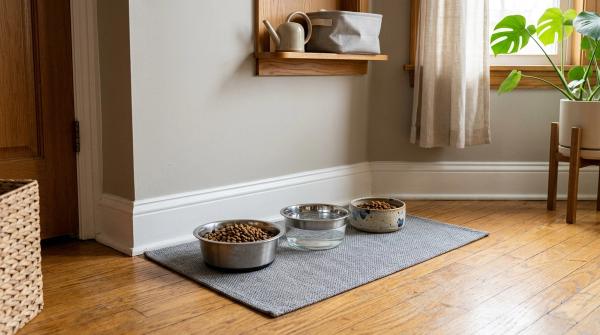
Keep fresh room-temperature water bowls in a couple spots around the house. If a picky dog ignores plain water, dropping in plain ice chips or a light splash of cooled, completely fat-skimmed plain chicken boiling water sometimes encourages gentle sipping—just keep separate plain water nearby too, and never offer salty broths or human sugary electrolyte drinks that may hide toxic xylitol sweeteners.
What About Canned Pumpkin?
#You hear people swear by canned pumpkin for every dog stomach issue online, and plain pumpkin can help mildly—as long as you grab the exact right can!
Read the ingredient panel carefully: use strictly 100 percent plain canned pumpkin puree (or freshly steamed plain pumpkin squash) with zero sugar, salt, cinnamon, nutmeg, cloves, or pie spice. Never use pumpkin pie filling—nutmeg and hidden sweeteners in baking mixes are toxic to dogs. Stirred into plain chicken and rice, gentle soluble fiber around 1 to 2 teaspoons for small dogs or 1 to 2 tablespoons for bigger adult dogs helps soak up extra colon water. Just remember piling in too much pumpkin backfires and makes gas worse, so start small.
How to Transition Back to Regular Food Without Triggering a Relapse
#Honestly, people defintely rush this part way too fast and undo two calm days of recovery overnight. Your dog drops one halfway decent firm stool on day two, you celebrate by dumping a full regular scoop of normal dry kibble down at 7 PM—and by 5 AM loose poop starts all over again because gut enzymes aren't ready yet.
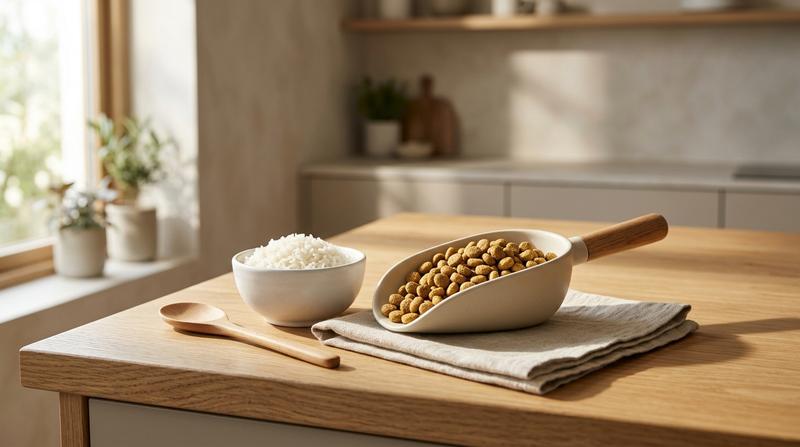
Wait until stools hold firm and well-formed for at least 24 to 48 hours on bland food before starting any switchback. Then take 5 to 7 slow blended days returning to normal food:
| Transition Step | Bland Mix vs Regular Food Share | What to Watch For |
|---|---|---|
| Step 1 (Days 1 and 2) | 75 percent bland chicken and rice, 25 percent regular food | Watch stool softness after introducing first small kibble scoop |
| Step 2 (Days 3 and 4) | 50 percent bland mix, 50 percent regular food | Keep meals split into 3 smaller daily portions if possible |
| Step 3 (Days 5 and 6) | 25 percent bland mix, 75 percent regular food | Confirm firm stools with zero mucous or straining |
| Step 4 (Day 7 onward) | 100 percent normal regular diet | Resume normal treats slowly only after 3 clean days back on regular food |
If soft stool returns on Step 2, stop climbing and drop back to Step 1 for another 24 hours. Keep rich chews, bully sticks, table scraps, peanut butter treats, and dairy completely put away untill a full week after normal poop settles in.
Why You Cannot Keep a Dog on Chicken and Rice Long Term
#One funny trap happens right around day four when dogs look energetic and lick the chicken-and-rice bowl spotless: owners start wondering why they even bother going back to regular dog food at all.
Never turn plain chicken and rice into a permanent dog diet. Veterinary nutrition specialists at VCA and Tufts point out clearly that plain chicken and white rice is missing essential calcium, fat-soluble vitamins, omega fatty acids, zinc, copper, and trace minerals dogs need every week for bone strength, heart rhythm, and skin repair. Keeping even a small adult dog on unbalanced chicken and rice for weeks slowly causes real nutrient shortages—and can actually keep food sensitivities flaring if chicken protein happens to be what triggered loose poop in the first place!
If your dog keeps getting mild diarrhea every few weeks whenever eating chicken and rice, talk with your veterinarian about checking whether chicken protein itself sits behind it—clinics often use hydrolyzed prescription diets or alternate low-fat proteins like plain boiled boneless white fish (cod or tilapia) or thoroughly fat-drained lean ground turkey instead.
Take a calm breath when midnight stomach trouble hits at home. Check those urgent vet red flags first, never fast a puppy, keep chicken and white rice completely plain at a 2:1 rice-to-meat ratio in small steady snacks, check gums and hydration twice a day, and step back onto normal food patiently over nearly a week. Whenever something feels off—blood, repeated throwing up, weak energy, or two stubborn days with zero change—get your vet involved right away instead of waiting it out.