Standing in front of a pile of melons at the grocery store can feel surprisingly high-pressure.
You pick one up. You sniff it. You give it a little press. Then you put it back and wonder if everyone around you somehow knows something you don’t.
Cantaloupe and honeydew are two of the most common summer melons, but they are not interchangeable. Cantaloupe is usually louder: more fragrant, more floral, more obviously sweet. Honeydew is quieter: crisp, clean, refreshing, and a little more subtle.
So when it comes to cantaloupe vs honeydew, which one should you buy?
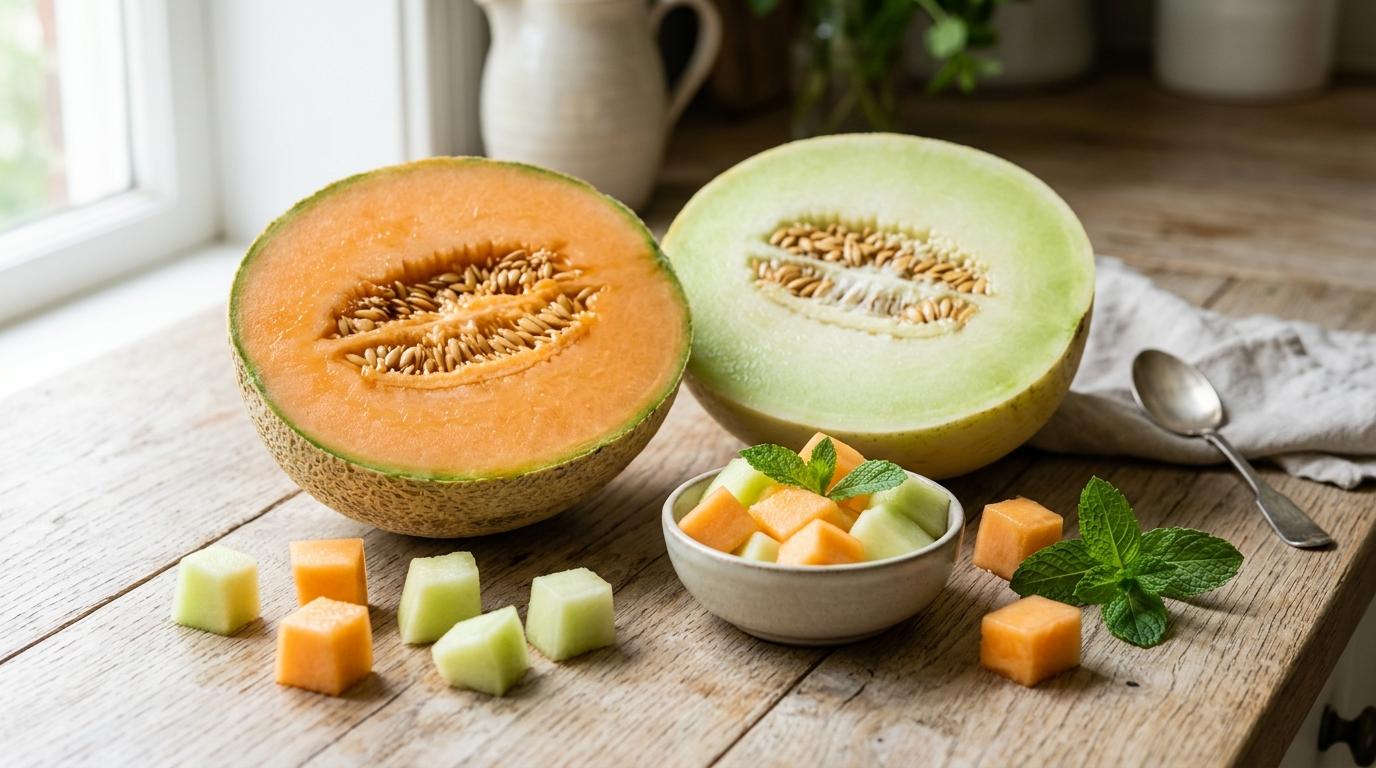
Here’s the simple version: choose cantaloupe if you want a softer, fragrant melon with orange flesh and a bolder flavor. Choose honeydew if you want a firmer, pale green melon with a crisp bite and a milder sweetness.
Both are great. They just shine in slightly different ways.
Quick Answer Summary
#If you are comparing honeydew vs cantaloupe at the store, here is the fast breakdown:
- Cantaloupe has a rough, netted rind and bright orange flesh. It is usually more fragrant, softer, and more floral or musky.
- Honeydew has a smoother rind that may be pale green, creamy white, ivory, or slightly yellow when ripe. The inside is usually pale green.
- For fruit salads: Honeydew usually holds up better because it is firmer.
- For savory pairings: Cantaloupe is excellent with salty foods like feta, mozzarella, and balsamic.
- For ripeness: Check weight, smell, rind color, texture, and the blossom end.
- For safety: Wash the outside before cutting, then refrigerate cut melon in an airtight container.
For a broader look at related melons, you may also like: Sakar Teti vs Muskmelon vs Cantaloupe.
Cantaloupe vs Honeydew: What Is the Difference?
#Cantaloupe and honeydew are closely related, and both are often grouped with muskmelons. But once you cut them open, the differences are pretty obvious.
Cantaloupe has that classic orange flesh and a strong sweet-melon smell. Honeydew is pale green inside, smoother on the outside, and usually more crisp than juicy-soft.
Here’s a practical side-by-side look:
Neither one is better in every situation. It really depends on what you want.
If you want a melon that smells sweet as soon as you slice it open, go with cantaloupe. If you want something cool, crisp, and not too perfumey, honeydew is usually the better pick.
Taste: Which Melon Is Sweeter?
#A ripe cantaloupe often tastes sweeter because it smells sweeter.
That strong floral aroma does a lot of work. Even if the actual sugar level is not dramatically higher, cantaloupe usually feels more intense because its flavor is so fragrant.
Honeydew can be wonderfully sweet too, but it is more understated. A good honeydew tastes clean, cool, and refreshing. It has a crisp bite and a smooth, mellow finish.
That is why cantaloupe often feels more dessert-like, while honeydew feels perfect in a fruit salad, lunchbox, or cold summer drink.
Appearance: How to Tell Them Apart
#Luckily, cantaloupe and honeydew are easy to tell apart once you know what to look for.
Cantaloupe
#Cantaloupe has a rough, netted rind. The outside looks tan or beige with raised webbing across the surface. Inside, the flesh is orange.
You may also see a lighter patch on one side. That is usually just where the melon rested on the ground while growing. It is normal and does not mean the melon is bad.
Honeydew
#Honeydew has a much smoother rind. Depending on the variety and ripeness, the outside may be pale green, creamy white, ivory, or slightly yellow.
Inside, honeydew is usually pale green.
If the rind is very dark green, shiny, and hard, the melon may not be ripe yet.
How to Pick Honeydew and Cantaloupe
#Picking a melon is part skill, part guesswork. You cannot see the inside until you cut it open, which is honestly a little rude of melons.
Still, there are some clues that help.
When choosing either cantaloupe or honeydew, check:
- weight
- smell
- rind color
- surface texture
- gentle pressure at the blossom end
Try not to rely on just one sign. A melon can smell good but be too soft. Another can look beautiful and taste like almost nothing.
The best melon usually passes a few tests at once.
How to Choose a Ripe Cantaloupe
#A good cantaloupe should feel heavy, smell pleasantly sweet, and have a well-developed rind.
1. Check the netting
#Look for raised, rough, corky netting across the rind. The pattern should look full and developed, not thin, flat, or barely there.
Avoid cantaloupes with large soft spots, cracks, mold, bruising, or wet-looking areas.
2. Smell the blossom end
#The blossom end is the end opposite the stem scar.
A ripe cantaloupe should smell sweet and fragrant there. You do not need to smell it from across the room, but you should notice a pleasant melon aroma when you bring it close.
If it has no smell at all, it may be underripe. If it smells sour, boozy, or fermented, it is probably overripe.
3. Press gently
#Press the blossom end lightly with your thumb. It should give just a little.
If it is rock hard, the melon may not be ripe. If it feels mushy or collapses under pressure, skip it.
4. Feel the weight
#Pick up a few cantaloupes that are roughly the same size. Choose one that feels heavy for its size.
That extra weight usually means more juice, which usually means a better eating experience.
For more melon-buying tips around similar varieties, read: How to Pick a Sweet Kharbuja.
How to Choose a Ripe Honeydew
#Honeydew can be trickier than cantaloupe because it does not always give off a strong smell. With honeydew, color and feel matter a lot.
1. Look at the rind color
#Avoid honeydew that is very dark green. A ripe honeydew usually turns creamy white, ivory, pale yellow, or light green.
You want the color to look mature and even, not harshly green or glossy in a raw-looking way.
2. Feel the surface
#A ripe honeydew may feel slightly waxy or faintly tacky on the outside. That is normal.
It should not feel slimy, sticky, or wet.
If the rind feels super slick, hard, and green, the melon may need more time.
3. Check the weight
#Like cantaloupe, honeydew should feel heavy for its size.
A light honeydew may be dry, underripe, or bland. If you are choosing between two similar-sized melons, the heavier one is often the better bet.
4. Press the blossom end
#Give the blossom end a gentle press. It should yield slightly.
If it feels rock-hard, it may be underripe. If it feels mushy, leave it behind.
Will Melons Ripen After Buying?
#This is the disappointing part.
Cantaloupe and honeydew do not become much sweeter after they are picked. The sugar level is mostly set when the melon comes off the vine.
A firm melon can soften a bit on the counter, though. It may become juicier and more pleasant to eat, but it will not go from bland to amazingly sweet.
So if flavor matters, try to choose the best melon you can at the store or farmers market. Waiting at home can help texture a little, but it cannot fix a melon that was picked too early.
Melon Storage Tips: Whole and Cut
#Good storage keeps melon tasting better, and it also helps keep it safe to eat.
Storing whole melon
#If your melon is whole and still a little firm, you can leave it at room temperature for a short time to soften slightly.
Once it seems ripe, or once you like the texture, move it to the refrigerator. Chilling slows down softening and helps preserve the melon longer.
If the melon is very fragrant, try to keep it away from foods that easily absorb smells.
Storing cut melon
#Once melon is cut, it belongs in the fridge.
Store cantaloupe or honeydew pieces in an airtight container. For the best quality, use cut melon within 3 to 4 days.
If it smells sour, feels slimy, looks discolored, or seems off in any way, do not eat it.
Food Safety: Wash Before You Cut
#This step is easy to skip, but it matters.
Melons grow close to the ground, and the rind can carry dirt or bacteria. Cantaloupe especially deserves a good scrub because its netted rind can trap debris in all those little grooves.
Always wash the outside before slicing.
Use running water and a clean produce brush. Then dry the melon with a clean towel before cutting. This helps keep your knife from dragging anything from the rind into the flesh.
Yes, even though you are not eating the rind.
It still matters.
For more on this habit, see: Should You Wash Kharbuja Before Cutting?.
Serving Ideas for Cantaloupe
#Cantaloupe has a bold, fragrant flavor, so it works beautifully with salty, tangy, creamy, and herbal ingredients.
Try cantaloupe with:
- feta
- fresh mozzarella
- basil
- mint
- lime juice
- balsamic glaze
- black pepper
- cucumber
- yogurt bowls
- fruit platters
Cantaloupe also works well in smoothies because it is soft, juicy, and easy to blend.
For a simple snack plate, cube cantaloupe and serve it with something salty and something creamy.
Serving Ideas for Honeydew
#Honeydew is crisp, cool, and gentle. It is the melon to use when you want freshness without a flavor that takes over the whole bowl.
Try honeydew with:
- fresh mint
- lime juice
- cucumber
- grapes
- berries
- melon balls
- chilled fruit salads
- sparkling water
- summer coolers
- yogurt
- mild cheeses
Honeydew is especially good for lunchboxes because the cubes tend to hold their shape better than softer fruit. Just keep them chilled and pack them in a sealed container.
It is also great in a mixed melon bowl with watermelon and cantaloupe. The colors look beautiful together, and the textures balance each other out.
For another summer comparison, read: Watermelon vs Muskmelon.
Cantaloupe or Honeydew for Fruit Salad?
#For fruit salad, honeydew usually has a slight advantage because it is firmer. It holds its shape well and does not break down as quickly as very ripe cantaloupe.
That said, the best fruit salads often use both.
Cantaloupe adds fragrance, sweetness, and bright orange color. Honeydew adds crunch, freshness, and a soft green color. Add watermelon, grapes, berries, citrus, or mint, and the whole bowl feels more balanced.
If you are making fruit salad ahead of time, cut the melon into even pieces and keep everything cold until serving.
Common Melon Buying Mistakes
#A few small mistakes can lead to a bland, mushy, or disappointing melon.
Buying only by looks
#A perfect-looking melon can still be underripe. Check the weight, smell, and feel too.
Ignoring the blossom end
#The blossom end tells you a lot. A little give is good. No give may mean underripe. Too much softness can mean overripe.
Cutting before washing
#The inside may be clean, but the outside is not something to ignore. Wash the rind first, then slice.
Expecting sweetness to improve later
#Melon can soften after buying, but it will not become much sweeter. Start with the ripest, best-smelling, heaviest melon you can find.
Final Bite
#The choice between cantaloupe vs honeydew mostly comes down to flavor and texture.
Pick cantaloupe when you want something fragrant, orange, soft, and boldly sweet. Pick honeydew when you want something crisp, pale green, refreshing, and mild.
Either way, choose a melon that feels heavy for its size, check the blossom end, wash the rind before cutting, and keep cut pieces chilled.
That is the easiest way to end up with better melon bowls, safer lunchboxes, and the kind of summer snack that actually tastes as good as it looked in the store.