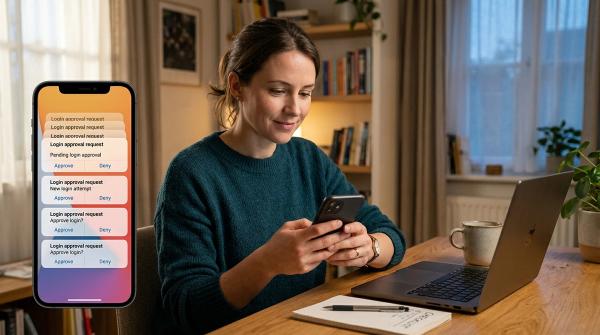

A fake job offer scam is when someone pretends to be a recruiter, HR executive, hiring manager, or job consultant and offers you a job so they can steal your money, documents, bank details, or personal information.
Here is the most important rule:
Never pay to get a job. Never share OTPs, UPI PINs, banking passwords, or card details. And do not send identity documents until you have verified the employer through official company channels.
Job hunting is much easier now. You can apply from your phone, speak to recruiters online, attend interviews from home, and find remote jobs that were harder to access earlier.
But that same convenience has also made life easier for scammers.
A fake recruiter can create a professional-looking LinkedIn profile, send a WhatsApp message with a company logo, or offer a “work from home” job that sounds simple, urgent, and exciting. And if you are a student, fresher, parent looking for flexible work, or someone urgently searching for a job, it is very easy to want to believe it.
This guide will help you pause, check the offer properly, and avoid handing money or sensitive information to the wrong person.
How Fake Job Offer Scams Usually Work
#Most job scams follow a familiar pattern.
Someone contacts you through WhatsApp, Telegram, LinkedIn, email, Instagram, Facebook, or a job portal. They say they are from a well-known company, or from a recruitment agency hiring for that company.
The job usually sounds attractive:
- Remote work
- Part-time work
- Flexible hours
- High salary
- Easy tasks
- Freshers welcome
- No experience required
- Immediate joining
At first, it may feel like a lucky break.
Then the requests begin.
They may ask you to pay a:
- Registration fee
- Training fee
- Background verification fee
- Laptop deposit
- Document processing charge
- Tax clearance amount
- Refundable security deposit
- Work-from-home activation fee
Sometimes they do not ask for money right away. Instead, they ask for Aadhaar, PAN, passport, bank details, selfies, signatures, OTPs, or access to your payment app.
That is when you need to stop.
The US Federal Trade Commission warns that scammers advertise fake jobs in the same places where real employers post genuine jobs, including job websites, social media, and online ads. So just because a job message came through LinkedIn or a job portal, it does not automatically mean it is genuine.
If you are in India, job-related cyber fraud can be reported on the National Cyber Crime Reporting Portal at cybercrime.gov.in or through the cyber fraud helpline 1930. The Indian Cybercrime Coordination Centre, also known as I4C, and the Ministry of Home Affairs also run awareness campaigns about online fraud, including job scams.
Common Fake Job Offer Examples
#Fake job offers do not all look the same, but many of them fall into a few common patterns.
1. The WhatsApp Job Scam
#You may receive a message like:
“Hello, I am HR from a leading company. Work from home job available. Salary ₹35,000 to ₹60,000 per month. No experience required. Reply YES to apply.”
It sounds simple. You reply. Then they ask you to join a WhatsApp or Telegram group. After that, they may ask for a small registration fee, or they may tell you to complete easy online tasks to start earning.
To be fair, real recruiters do contact candidates online sometimes. That does happen.
But a random WhatsApp job offer from an unknown number, especially one promising a high salary with no interview, should always be treated with caution.
2. The Work-from-Home Task Scam
#These scams usually promise easy money for very simple online tasks, such as:
- Liking videos
- Rating products
- Writing reviews
- Clicking links
- Completing data entry
- Following social media pages
- Submitting screenshots
In some cases, the scammer may even pay you a small amount at the beginning. This is not generosity. It is bait.
Once you trust them, they ask you to deposit money to unlock bigger tasks, upgrade your account, or withdraw your earnings. Then the amount keeps increasing. Eventually, the withdrawal fails, the recruiter stops replying, or the entire group disappears.
3. The LinkedIn Recruiter Scam
#A fake recruiter on LinkedIn can look surprisingly convincing.
They may use:
- A professional photo
- A company logo
- A polished job title
- Corporate language
- A profile that looks active at first glance
The conversation may also start normally. They may ask about your experience, your notice period, or your expected salary.
The red flags usually appear when they:
- Move the conversation quickly to WhatsApp or Telegram
- Avoid using an official company email
- Skip proper interviews
- Send an offer letter too quickly
- Ask for money for onboarding, documents, training, or equipment
- Refuse to verify their identity
Do not trust someone only because their LinkedIn profile looks professional. Fake profiles can look real enough to fool people, especially at first glance.
4. The Fake Offer Letter Scam
#Scammers often send offer letters with copied logos, fake HR signatures, salary details, joining dates, office addresses, and company stamps.
It may look official.
But an offer letter by itself proves nothing. Logos, signatures, and templates are very easy to copy.
Always verify the offer through:
- The company’s official website
- The official careers page
- A verified HR email address
- A phone number listed on the company website
- A known official recruiter channel
If the company cannot confirm the offer, do not move ahead.
Warning-Sign Table for Fake Job Offers
#Step-by-Step Job Offer Verification Checklist
#Before accepting a job offer, sending money, or sharing documents, go through these steps.
Step 1: Slow Down
#Scammers want you to act fast.
They want you excited, nervous, or afraid of missing out. If someone says you must pay within one hour, send documents immediately, or accept the offer without properly reading it, pause.
A genuine employer should give you reasonable time to verify the job.
If the opportunity is real, it will not disappear just because you asked basic questions.
Step 2: Check the Recruiter’s Identity
#Look carefully at the recruiter’s:
- Name
- Phone number
- Email address
- LinkedIn profile
- Work history
- Company connection
On LinkedIn, check whether the profile has a realistic work history, genuine-looking connections, and normal activity. Be careful with profiles that are newly created, have very little detail, or use company branding without proof.
If the person claims to work for a company, verify that through the company’s official website or HR channel. Do not rely only on the recruiter’s own profile.
Step 3: Check the Email Domain Carefully
#Scammers often use email addresses that look almost correct.
For example, if the real company website is:
company.com
A scammer may use:
company-careers.comcompanyindiahr.comcompany-recruitment.net[email protected]
Do not trust only the sender name shown in your inbox. Open the full email address and check what comes after the @ symbol.
If the domain does not match the company’s official website, be careful.
Step 4: Visit the Official Careers Page
#Go to the company’s website yourself. Do not only click links sent by the recruiter.
Search for the company name in your browser, open the official website, and look for sections such as:
- Careers
- Jobs
- Work with us
- Open positions
Check whether the same job title, location, and department are listed there.
If the role is not listed, it does not automatically mean it is fake. Some companies hire through agencies or internal referrals. But it does mean you should verify more carefully before sharing anything.
Step 5: Contact the Company Independently
#Do not use only the phone number or email address given by the recruiter.
Use the contact details listed on the company’s official website. Ask whether the recruiter, job ID, or offer letter is genuine.
You can write something simple like:
“I received a job offer claiming to be from your company. Can you please confirm whether this recruiter and job ID are genuine?”
This one step can save you money, documents, and a lot of stress.
Step 6: Search the Job Details Online
#Search online for:
- The recruiter’s phone number
- Their email address
- The UPI ID
- The company name plus “scam”
- Exact lines from the message
- The Telegram or WhatsApp group name
Sometimes you may find complaints from other job seekers.
This method is not perfect, because scammers keep changing numbers, accounts, and names. Still, it can give you useful warning signs.
In India, suspicious phone numbers, UPI IDs, websites, or bank details connected to fraud can be reported through cybercrime.gov.in.
Step 7: Question Any Request for Money
#This is one of the biggest warning signs.
Be extremely careful if you are asked to pay for:
- Registration
- Training
- Background verification
- Document processing
- Laptop or equipment deposit
- Uniform or onboarding kit
- Tax clearance
- Job confirmation
- Interview slot booking
- Work-from-home activation
- Withdrawal of salary or task earnings
A job is supposed to pay you. You should not have to pay first to get the job.
Even if they say the amount is refundable, do not assume it is safe.
Step 8: Read the Offer Letter Like a Detective
#Check the offer letter carefully.
Look for:
- Wrong company name
- Strange grammar
- Unrealistic salary
- No job ID
- No official address
- No clear role description
- Personal bank account or UPI payment request
- Pressure to pay before joining
- Email domain mismatch
- Fake-looking signature or stamp
A polished offer letter can still be fake. Always verify it through official company channels.
Step 9: Ask for a Video Call or Official Call
#Many scammers avoid real conversations.
If everything is happening only through text messages, that is not a good sign.
A genuine hiring process usually includes some form of interview, screening call, HR discussion, assignment, technical round, or official communication. Every company has its own process, of course, but instant selection without any real check should make you pause.
Step 10: Trust Your Discomfort
#If something feels wrong, listen to that feeling.
You do not need to prove it is a scam before stepping away.
You can simply say:
“I will verify this directly with the company before proceeding.”
A genuine recruiter should not be angry about that. If they become rude, threatening, or pushy, that tells you a lot.
What Not to Share With Recruiters Before Verification
#Until you have verified the employer and the job offer, do not share sensitive information.
Do Not Share Money
#Do not pay:
- Registration fees
- Processing fees
- Training fees
- Laptop deposits
- Background check charges
- Refundable security deposits
- Task unlocking fees
- Salary withdrawal fees
Even a small first payment can lead to bigger and bigger demands.
Do Not Share Banking Secrets
#Never share:
- OTPs
- UPI PIN
- ATM PIN
- Net banking password
- Card CVV
- Full card photos
- Remote access to your phone or computer
A recruiter does not need your OTP or PIN to hire you. Not for verification, not for salary processing, not for onboarding, not for anything.
Be Careful With Identity Documents
#Do not send these during early chats with an unverified recruiter:
- Aadhaar
- PAN
- Passport
- Driving licence
- Voter ID
- Social Security number or national ID
- Student ID
- Selfies holding documents
- Scanned signatures
Some employers do need identity and tax documents after hiring. That is normal. But those documents should be collected through secure and official HR channels after you have verified the employer.
Do Not Share Personal Data Casually
#Avoid sharing:
- Full date of birth
- Home address
- Family details
- Bank account details
- Salary slips
- Previous employer documents
- Education certificates
- Personal photos
Share only what is necessary, only after the employer is verified, and only through safe channels.
What to Do If You Shared Money or Documents
#If you think you have been tricked, act quickly.
And please do not feel embarrassed. These scams are designed to catch people when they are hopeful, stressed, or urgently looking for work. It can happen to anyone.
1. Stop Contact Immediately
#Do not send more money.
Scammers often say one final payment will release your salary, refund, joining letter, or task earnings. This is a common trick.
Before blocking them, save:
- Screenshots
- Chat history
- Phone numbers
- UPI IDs
- Bank account details
- Email addresses
- Transaction IDs
- Timestamps
These details may help your bank, payment app, or cybercrime authorities.
2. Contact Your Bank or Payment App
#If you sent money, contact your bank, card issuer, UPI app, wallet provider, or payment service immediately.
Ask whether the transaction can be stopped, reversed, disputed, or marked as fraud.
If you shared banking passwords, card details, PINs, or access to your account, change them immediately. If needed, ask the bank to block your card, freeze access, or secure the account.
3. Report Cyber Fraud in India
#If you are in India, report the fraud as soon as possible through official channels:
- Call the cyber fraud helpline: 1930
- File a complaint on the National Cyber Crime Reporting Portal: cybercrime.gov.in
Share all useful information, such as:
- Phone numbers
- WhatsApp numbers
- UPI IDs
- Bank account details
- Websites
- Email addresses
- Screenshots
- Transaction receipts
The sooner you report, the better the chance of action.
4. Report in Other Countries
#If you are outside India, report the scam to your local cybercrime authority, consumer protection agency, or police.
In the United States, fraud can be reported at:
- ReportFraud.ftc.gov
Also report the fake profile, group, or message to the platform where you found it, such as LinkedIn, WhatsApp, Telegram, Facebook, Instagram, or the job portal.
5. Protect Your Identity
#If you shared identity documents, stay alert.
Depending on your country, you may need to:
- Monitor bank accounts
- Check credit reports
- Alert your bank
- Watch for new loans or accounts in your name
- Change passwords on important accounts
- Enable two-factor authentication
- Report lost or misused documents if required
- Keep a written record of what you shared and when
If you shared Aadhaar, PAN, passport, SSN, or similar documents, do not ignore unknown loan messages, bank alerts, SIM activity, or account-opening notifications.
6. Warn Others
#If the scam came through a college group, family group, alumni network, or local job group, warn others.
You do not have to share your personal details. A simple message is enough:
“This job offer asked for money and looks suspicious. Please verify through official company channels before responding.”
That warning may stop someone else from losing money.
A Simple Rule for Parents, Students and First-Time Job Seekers
#If you remember only one thing, remember this:
Verify before you pay. Verify before you share documents. Verify before you trust the offer letter.
For parents helping children apply for jobs, ask these three questions:
- Did the company interview the candidate properly?
- Is the recruiter using official contact details?
- Is anyone asking for money or sensitive documents too early?
For students and freshers, be extra careful with offers that say things like “no experience, high salary, immediate joining.” Some entry-level jobs are real, of course. But scammers use this wording because it attracts people quickly.
For remote-work beginners, remember that real work-from-home jobs still have job descriptions, reporting managers, interviews, policies, and official onboarding. Remote work does not mean random, secretive, or informal.
Quick Fake Job Offer Scam Checklist
#Use this before replying to any recruiter.
- Did I apply for this job, or did it come suddenly from an unknown person?
- Is the recruiter using an official company email?
- Does the email domain match the company website?
- Is the job listed on the official careers page?
- Can the company confirm the recruiter or job ID?
- Did I have a real interview?
- Is the salary realistic for the work and experience required?
- Am I being asked to pay any fee?
- Am I being pushed to act urgently?
- Am I being asked for Aadhaar, PAN, passport, OTP, UPI PIN, or bank passwords?
- Is the conversation being moved only to WhatsApp or Telegram?
- Have I searched the phone number, email, UPI ID, and company name?
- Would I still trust this offer if the logo and big salary were removed?
If several answers feel wrong, stop and verify.
Final Takeaway
#A fake job offer scam works because it feels hopeful.
It often reaches someone at the exact moment they want a salary, flexibility, confidence, respect, or a fresh start. That is what makes these scams so painful.
The answer is not to become scared of every recruiter. Many recruiters are genuine. Many online jobs are real.
The answer is to build a calm habit of checking.
Do not rush. Do not pay. Do not share OTPs or sensitive documents. Verify the recruiter, verify the company, verify the role, and use official reporting channels if something goes wrong.
A real opportunity will survive verification. A scam usually will not.