Lentils are easy to cook once you decide what you want them to become. For a salad, choose a variety that stays distinct and stop when the centers are tender. For a soft soup or dal, choose split red lentils and let them break down. The common mistake is using one cooking time and one amount of water for every bag.
Start by reading the package name. “Lentils” can mean small whole green or brown seeds, black beluga lentils, French green lentils, or split red lentils. They behave differently in a saucepan. This guide gives you a practical method for each, then helps you adjust when the pot is too firm, watery or soft.
Pick the lentil for the texture you want
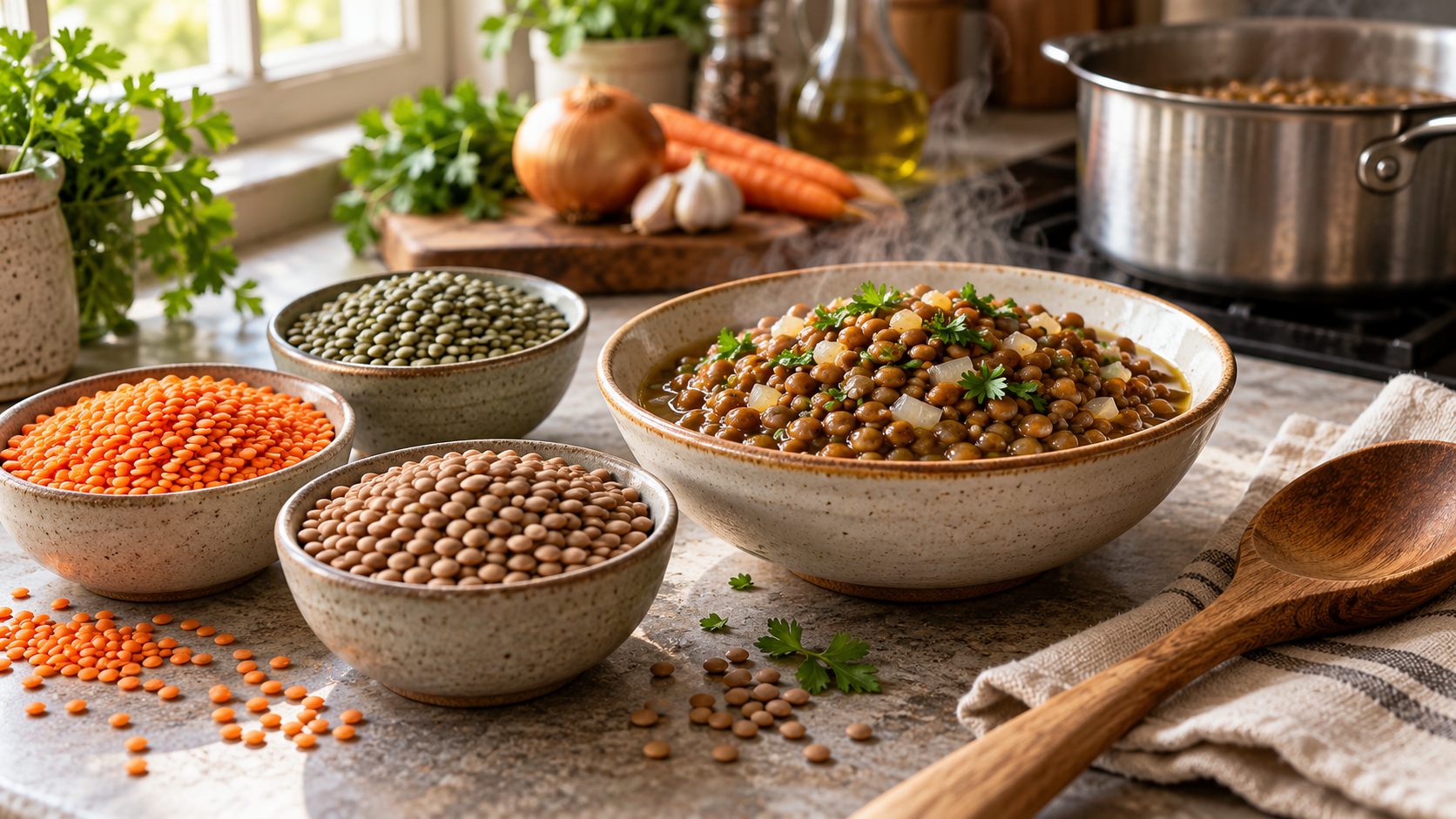
#If you want separate grains in a salad or grain bowl, whole green, brown, black or French green lentils are the useful starting point. Their skins help them keep some shape. Brown lentils usually become softer than French green or black lentils, so they also work in thick soups and vegetable stews.
Split red lentils are different. The outer skin has been removed and the seed is split. They cook quickly and tend to collapse into a creamy base. That is an advantage for a smooth soup, dal or sauce, but a disappointment if you expected a neat pile of lentils next to roasted vegetables.
| What you want | A sensible starting choice | Stop cooking when |
|---|---|---|
| Separate lentils for a salad | French green, black, or whole green | Tender inside, still holding shape |
| A soft but distinct soup ingredient | Brown or whole green | Tender with a little structure |
| A thick, creamy soup or dal | Split red | The pieces soften and begin to dissolve |
These are texture choices, not strict culinary rules. A cook can intentionally blend brown lentils or leave red lentils a little less broken down. The useful question is what the finished dish needs. If you are following a recipe, match its specific lentil type before changing the liquid or cooking time.
The basic method for whole lentils
#Pour the dry lentils onto a tray or into a wide bowl and look for small stones or damaged pieces. Rinse them in a fine sieve under cool running water. Lentils usually do not need an overnight soak, so you can go from rinsing to the pot.
Put the lentils in a saucepan and cover them generously with water or unsalted broth. For a drainable batch of whole lentils, think of the water as a cooking bath rather than a precisely absorbed amount. Keep extra liquid in the pan so the lentils remain submerged. Add an optional bay leaf or other mild aromatics if they suit the final dish.
Bring the pot to a boil, then turn it down to a gentle simmer. A hard rolling boil knocks the lentils around and can split their skins before the centers are tender. Stir occasionally and check that enough liquid remains. If the surface is drying while the centers are firm, add hot water a little at a time.
Begin tasting before the packet's upper time estimate, because age, size, variety and simmer strength change the result. A common range for whole brown or green lentils is roughly 20 to 30 minutes; smaller firm varieties can take longer. Use the range as a reminder to check, not a timer that overrides your mouth. Bite a few from different parts of the pot. A salad lentil should be tender without a hard core and should still hold together when stirred. A soup lentil can go slightly softer.
Drain the lentils when they reach that point if the dish needs separate grains. Leave them in their cooking liquid if they are going into a soup. Season to taste after you understand how salty any broth or sauce already is. There is no need to treat salt as a magic switch for texture: the more reliable control is the lentil variety, the simmer and the moment you stop cooking.
A worked example: lentils for a grain bowl
#Suppose dinner is a bowl with roasted vegetables, a dressing and lentils that you can toss without turning everything into paste. Choose whole green or black lentils, not split red. Rinse a small batch, simmer it gently in ample water and begin tasting while the seeds are still distinct. Once the centers are tender, drain promptly and spread the lentils briefly so residual heat does not keep softening them in a deep pile. Dress and combine them after they have stopped steaming heavily.
The exact minutes depend on the bag. The decision point is visible and edible: intact seeds, tender centers, and no chalky bite. If the first batch is a little softer than planned, it is still useful in soup or a thick sauce. Changing the dish is often better than trying to make already-soft lentils firm again.
The basic method for split red lentils
#Sort and rinse split red lentils too. Add them to a saucepan with enough water or broth to move freely as they simmer. A starting proportion around one part lentils to roughly one and a half to two parts liquid can produce a thick base, but packet directions and the dish matter more than a single universal ratio. Keep hot water nearby so you can loosen the pot without stopping the simmer.
Bring the mixture up to a boil and reduce to a gentle simmer. Stir more often than you would with whole lentils, especially as it thickens. Split red lentils can soften in roughly 5 to 20 minutes depending on size and the result you want. Some are ready quickly; a thick dal may continue cooking until the pieces almost disappear. Taste for a fully tender center instead of assuming the bright color tells you they are done.
For a spoonable soup, add liquid until it flows off the spoon. For a thick dal, allow it to become creamy, then adjust just before serving because it can thicken further as it cools. If using tomatoes or other strongly acidic ingredients, check tenderness before deciding that the lentils are “done.” Follow a tested recipe's order when a specific dish matters.
A worked example: a smooth weeknight soup
#If you want a quick soup base, split red lentils give you the texture without blending every spoonful. Simmer rinsed lentils with enough water to keep them moving, along with a mild aromatic if desired. When they are fully tender, add more hot liquid for a lighter soup or simmer a little longer for a thicker one. Only then decide how much salt, lemon or other seasoning the finished bowl needs. This is a method example, not a fixed recipe or a claim that every red lentil bag cooks at the same speed.
Do you need to soak lentils?
#Usually, no. Compared with many larger dried beans, lentils are small and cook relatively quickly without soaking. You may still soak them for a particular recipe or cooking preference, but it is not the default requirement. If you do soak, expect the cooking time to change and start checking earlier.
Do not confuse lentils with every product sold in a “dal” aisle. Split peas, chickpea pieces and whole beans have different structures and cooking needs. A package labelled chana dal, for example, should not be silently treated as split red lentils. Check the actual ingredient and its package instructions when the name is unfamiliar.
Make flavor decisions after the texture decision
#Water gives you a neutral batch you can use in several meals. Broth and aromatics build flavor during cooking but commit the batch to a direction and may add salt. If you are unsure whether the lentils will become salad, soup or a filling, cook them simply and add a dressing or sauce afterward.
For separate lentils, drain them before tossing with oil, herbs, vegetables or an acidic dressing. For creamy lentils, season the whole pot, then give it a final taste after adjusting thickness. A tablespoon of acid can make a finished dish taste brighter, but it does not repair undercooked centers. Likewise, extra spices cannot disguise a hard core. Fix texture first.
Some guides insist that salt always prevents lentils from softening; others recommend salted water. That disagreement should not make a first batch difficult. Use a gentle simmer, taste early and frequently, and season with awareness of the final dish. If you are using a salted broth, reduce later seasoning accordingly. The aim is edible lentils, not loyalty to one universal pot rule.
Fix a pot that is not going to plan
#Still hard after the expected time: Keep simmering, with enough hot liquid to cover the lentils. Check that the heat is producing a real simmer. Taste again after a short interval. Older lentils and firmer varieties can need more time. Do not serve a hard center just because a recipe's clock has run out.
Water is disappearing before the lentils soften: Add hot water in small amounts. Scrape the bottom gently to check for sticking, then reduce the heat if the pot is boiling too hard. A broad pan loses water faster than a narrow saucepan, so the vessel matters.
Too much liquid at the end: Drain whole lentils intended for a salad. For split lentils meant to be creamy, simmer uncovered and stir until the texture suits the dish. If the pot is already fully seasoned, taste again after reducing because the flavor will concentrate.
Whole lentils have gone mushy: You cannot reverse broken skins. Move them into a thick soup, a vegetable filling or another dish where softness helps. Next time, use a firmer variety, reduce agitation and check sooner. If only a few pieces split, that is normal and does not ruin the batch.
Red lentils are thicker than expected: Add hot water or broth gradually and stir. Check seasoning after each adjustment. Thin the portion you plan to eat now if you want to keep the rest thick for another use.
The bottom is catching: Lower the heat and transfer the unburned portion to a clean pan rather than scraping a scorched layer into the food. Add liquid to the new pan and finish gently. Frequent stirring matters more once split lentils become creamy.
Cook ahead without leaving the pot on the stove
#Cooked lentils are leftovers, even when the meal is vegetarian. Divide a large batch into shallow containers and refrigerate it promptly. U.S. government food-safety guidance advises refrigerating perishable leftovers within two hours of cooking, or within one hour when exposed to temperatures above 32°C/90°F. Its general guidance is to use refrigerated leftovers within three to four days or freeze them for longer storage. If a pot has sat outside that safe window, reheating is not a dependable way to make it safe again.
For a clear answer to a common hot-weather situation, see Allblogs' guide to cooked dal left outside in summer. That article focuses on storage risk; the method here focuses on choosing and cooking the dry ingredient.
Refrigerated whole lentils can be added to soup or warmed with a little liquid. Creamy red lentils usually need a splash of water when reheated. Heat leftovers thoroughly and follow the same prompt chilling rule after the meal. Do not repeatedly leave a large container on the counter while serving small portions.
A simple decision before you switch on the stove
#Look at the packet, then the plate you want to serve. If the lentils need to stay distinct, choose whole lentils and cook in generous liquid until tender, then drain. If they need to make the dish creamy, choose split red lentils and control thickness with liquid. In both cases, rinse and sort first, keep the simmer gentle, and taste rather than trust a single clock. That small change solves most “hard or mushy lentils” problems before they begin.