
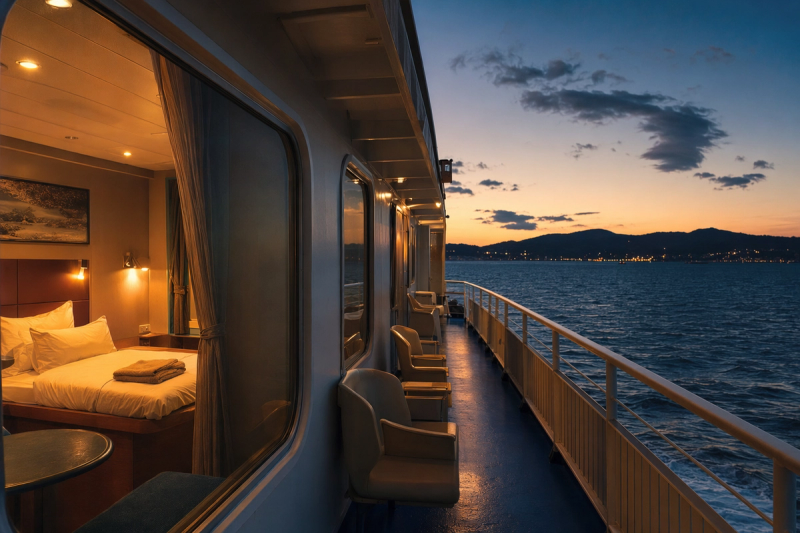
That night I realised ferry sleep is a whole different game
#Overnight ferries look romantic from outside, no? Sea breeze, dark water, lights of the port slowly going away, maybe one filmy moment on the deck with chai in hand. Then reality comes. Someone’s kid is crying, the engine is doing dhad-dhad-dhad under your bones, the AC is either Antarctica or not working only, and you are suddenly thinking, “Boss, should I have paid extra for cabin?” I’ve done overnight ferry journeys in India and around our side of the world enough times now to have strong feelings about this cabin vs seat vs deck debate. Not expert-expert, but proper traveller level, with mistakes made and sleep lost.
For Indian travellers especially, ferry travel can be confusing because we are used to trains. In train we understand sleeper, 3AC, 2AC, general, side lower drama, RAC, all that. Ferry categories sound simple but behave differently. A cabin is not always luxury. A reclining seat is not always torture. Deck is not always cheap-and-best. It depends on route, season, your age, your luggage, whether you get sea sick, whether you are travelling with parents or kids, and honestly, how much sleep you need to not become a monster next morning.
This guide is basically what I wish somebody had told me before my first proper overnight ferry. I’ll keep it practical, but also real. Because the official booking page will tell you “air-conditioned cabin” and “recliner seat”, but it won’t tell you that one corner near the toilet smells weird after midnight, or that the best deck breeze can become a cold slap at 3 am. Trust me, these small things matter.
First, understand what “overnight ferry” actually means in our travel scene
#In India, overnight ferry can mean a lot of different things. It could be a government ship to the Andaman and Nicobar Islands from Chennai, Kolkata or Visakhapatnam, which is not just overnight but often multi-day. It could be a private cruise-style service on the west coast, sometimes between Mumbai and Goa depending on season and operator availability. It could be a shorter overnight sea crossing outside India, like island routes in Thailand, Indonesia, Greece, Turkey, or even local ferries in parts of the Middle East where many Indians travel for work or vacation. And then we have river ferries and coastal boats in Kerala, Assam, Sundarbans side, though many of those are not proper overnight sleeping ferries.
The category names also change. You may see private cabin, shared cabin, bunk, berth, dormitory, reclining seat, lounge seat, air seat, economy seat, deck passage, open deck, floor space. Some ships assign you an exact bed or seat. Some are more relaxed and you grab your place early, like our old unreserved train vibes but floating. Before booking, don’t just compare price. Look at duration, boarding time, arrival time, weather season, and what kind of sleeping arrangement is guaranteed.
One important thing: ferry schedules in coastal India and island routes are not like metro timings. Weather, sea conditions, port clearance, cargo loading, maintenance, all can change things. During monsoon or cyclone alerts, sailings may be delayed or cancelled. Operators usually prioritise safety, and honestly we should be thankful for that even if it ruins plans. Keep buffer days if you have a flight after the ferry, especially in Andaman, Lakshadweep or any island destination. Don’t do that tight Indian jugaad itinerary where ferry arrives at 7 am and flight is 10 am. It sounds smart until it isn’t.
Cabin: best sleep, best privacy, but not always paisa vasool
#Let’s start with the dream option. Cabin. The first time I booked one, I felt like I had upgraded my life. Door you can close, proper bed, sometimes attached bathroom, sometimes a small washbasin, sometimes AC, sometimes a window or porthole if you are lucky. If you are travelling as a couple, with elderly parents, with a small child, or you just hate public sleeping, cabin is the safest recommendation. You can keep bags inside, change clothes properly, lie flat, and escape the constant people movement.
But cabin quality varies madly. On some ferries, private cabins are neat and hotel-like. On older government ships, the cabin can feel like a railway retiring room at sea. Functional, not fancy. Sheets may be clean but not soft. AC may be too cold, or the room may have that damp metal smell because ships are humid by nature. If you enter and it smells musty, don’t ignore it immediately. Open ventilation if possible, check if AC is dripping, and request staff early if the cabin feels unhealthy or too damp. I’ve written about this same sleep problem in hotel rooms too, and the tips are similar here: Hotel Room AC Smells Musty? What to Do Before Sleep. On ferries, you just have less time to fix it, so complain politely before everyone disappears.
Price-wise, cabin is usually the top end. On Indian government or semi-government island routes, the difference between deck or bunk and cabin can be several times higher. On private cruise ferries, cabin pricing can jump further, especially weekends, school holidays, Christmas-New Year period, and long weekends when half of Mumbai or Kochi suddenly wants sea views. As a rough India-style expectation, basic seats may be in the lower thousands or even less on some routes, bunk or berth mid-range, and cabins can go from a few thousand per person to much higher depending on ship and season. Always check the operator’s current fare chart because ferry prices are route-specific and change more than we think.
Who should pick a cabin without overthinking?
#- Families with kids, because one sleeping child in a seat can become full family disaster by 2 am
- Elderly travellers or anyone with back, knee, breathing, anxiety or bladder issues, because easy rest and bathroom access matters
- Couples who want privacy, especially on busy tourist routes where public areas get crowded
- Anyone taking an early morning road trip or activity after arrival, like scuba, long bus ride, trekking, temple visit, whatever
- Light sleepers who wake up even when someone opens a chips packet in the next row
My only warning: choose cabin location if the system allows it. Near engine area can vibrate more. Near staircases, toilets, cafeteria or crew doors can be noisy. Mid-ship and lower movement zones are usually better for sea sickness, though lower cabins can feel closed in. If you are picky about sleep, think like you would while booking a hotel near a main road. This noise-check mindset is useful beyond hotels, actually: How to Check if a Hotel Room Will Be Noisy Before Booking. Ferry sleep is the same game, only with engine sound added free of cost.
Reclining seat: the middle-class hero, but choose carefully
#Reclining seats are where most practical travellers end up. Not too costly, not too exposed, and usually air-conditioned or inside a lounge. If you’ve survived overnight Volvo buses from Bangalore to Goa or Delhi to Manali, you’ll think, haan this is manageable. And it is, mostly. A good recliner on a smooth ferry can be perfectly fine for one night. You lean back, put a shawl, headphones, neck pillow, and somehow reach morning.
But the seat experience depends on legroom and crowd. Some ferry seats recline nicely. Some recline two inches and call themselves “luxury”. Some rows are too close. If the person in front pushes back fully, your knees may file a police complaint. Window seats are nice for views before dark, but aisle seats make bathroom trips easier. If you get motion sick, sitting near the middle of the ferry is usually calmer than far front or back. Don’t sit near the food counter if you are sensitive to smells, because fried snacks plus diesel plus sea motion is not a combo everyone can digest.
For solo Indian travellers, especially budget ones, I actually like seats. You feel safer than open deck because there are other passengers and staff around, luggage is usually near you, and you’re not isolated. For women travelling alone, I’d say choose a well-lit indoor seating area or shared cabin with other women if available. Many operators are decent, but still, basic caution. Keep your valuables in a small sling bag on your body. Don’t keep phone charging somewhere far and then sleep deeply. We all know how it goes.
What to carry if you booked a seat
#- Neck pillow, or at least a rolled dupatta or shawl. Looks uncle-type but saves your neck.
- Light blanket or hoodie. AC lounges can become Shimla for no reason.
- Eye mask and earplugs. Cheap ones also work. Engine noise is constant but announcements and people noise is what disturbs.
- Small snack, water bottle, ORS sachet, basic medicines. Don’t depend fully on ferry canteen.
- Power bank. Charging points may exist, may not work, may be occupied by one guy charging three devices.
Food before the journey is also underrated. Don’t eat a massive oily meal just because boarding area had biryani smell and your heart became emotional. Keep it simple. Idli, curd rice, banana, poha, sandwich, something your stomach already knows. If you are boarding from an airport or doing flight plus ferry same day, even your pre-flight food matters. I know it sounds extra, but a bad stomach on a ferry is a different type of punishment. This piece on Airport Salad Before a Flight: Buy, Pack, or Skip? is useful for the same reason: eat smart before long travel, not fancy.
Deck passage: cheapest, most memorable, and sometimes completely wrong choice
#Deck is the option that divides people. Some travellers love it. Fresh air, open sky, low fare, real adventure. Backpacker feeling. I get it. My best ferry sunrise happened after a rough deck night, when the sky turned orange and everyone suddenly forgot how uncomfortable the floor was. There is something very Indian and communal about deck travel too. People spread bedsheets, aunties open tiffin, somebody offers peanuts, kids run around till parents shout. It can be beautiful.
But deck is not automatically romantic. It can be windy, damp, noisy, crowded and cold at night. If rain comes, your “sea breeze” becomes wet bedding. If the ferry has only limited sheltered deck space, people claim corners early. Toilets may be far or heavily used. You may not sleep properly because luggage is right there, strangers are stepping around you, lights may stay on, and every few minutes someone decides to drag a suitcase like they are ploughing a field.
On some routes, deck passengers get basic floor or open seating areas rather than actual beds. On others, deck means you can access open spaces but may still have a specific low-cost berth. Read the ticket terms. Ask before booking. If the operator says “deck only”, clarify whether you need to bring mat or bedding, whether covered space is available, and whether women/family sections exist. In many places, locals know the real answer better than the website, so call the ticket office if you can.
Deck is okay if...
#- You are young-ish, flexible, and can sleep anywhere, like railway platform level talent
- The weather is dry and not peak monsoon or storm season
- The journey is one night, not two or three nights
- You are travelling with a group and can watch each other’s bags
- You are carrying a sleeping mat, shawl, light blanket, and you don’t mind basic toilets
I would avoid deck if travelling with senior citizens, infants, expensive camera gear, or if you have to reach fresh for work, scuba diving, long driving, or a wedding function. Imagine reaching a destination with salt hair, red eyes, and no sleep, then straight into family photos. Not cute. Also, seasickness on deck is tricky. Fresh air helps many people, but if the sea is rough and you are stuck outside feeling cold and nauseous, you will start bargaining with God.
Cabin vs seat vs deck: quick comparison from actual traveller brain
#If I have to explain it simply, cabin is like booking 2AC or a hotel room, seat is like a decent Volvo bus or airline economy with more drama, and deck is like general compartment plus picnic plus sea wind. Sorry, that’s not a perfect comparison, but for Indian brain it works. Cabin gives privacy and sleep. Seat gives budget comfort. Deck gives cheapest fare and story value. Your best choice is not the same for every trip.
For one short overnight crossing, I can manage a reclining seat happily. For a multi-night ship, I’ll try hard for a cabin or at least a berth. For a fun group trip in good weather, deck can be a memory. For solo travel when I need sleep, seat. For parents, cabin. For honeymoon, please cabin only, don’t be kanjoos unless both of you are hardcore travellers and already discussed it properly. Nothing kills romance like arguing over who gets the less-wet corner of the deck.
Also think about arrival time. If ferry arrives at 5 am, you may still have to wait for hotel check-in till noon. In that case, paying for cabin can be worth it because at least you slept. If arrival is late morning and you can relax after, seat may be enough. If you have a buffer day, deck becomes possible. Basically, don’t choose only by ticket price. Add the hidden cost of bad sleep: extra taxi, early check-in, wasted sightseeing day, headache medicine, and mood off.
Season matters more than people realise
#Best months for ferry travel in most Indian coastal and island routes are usually the calmer, drier months. For Andaman, many travellers prefer the winter and early summer window when seas are generally more predictable, though exact sailing depends on official schedules and weather. For west coast routes, post-monsoon to winter is more pleasant. Monsoon can be dramatic and beautiful, but ferry schedules may get affected and sea swell can be stronger. If you are prone to motion sickness, don’t be heroic in rough weather. Choose cabin or mid-ship seat, carry medicine after asking your doctor, and avoid heavy food.
Festive and holiday seasons also change the vibe. Around Diwali, Christmas-New Year, long weekends, school vacations, and local festivals, ferry cabins sell out faster and fares on private operators can rise. Government ship bookings may have fixed categories but availability becomes the headache. Island destinations have their own peak periods too, like winter diving season in Andaman and Lakshadweep tourism windows where permits, stays and transport all need coordination. Book early. Not “Indian early” meaning two days before. Proper early.
Safety-wise, modern ferry travel is generally organized on main tourist and passenger routes, but don’t ignore instructions. Check where life jackets are. Listen to crew announcements even if they sound boring. Don’t sit in restricted areas for selfie. Don’t lean too far over railings after one beer. And if crew says deck closed due to weather, don’t argue like WhatsApp University captain. Sea is not impressed by confidence.
Booking tips Indian travellers should not skip
#First thing, book from official operator counters, government portals where applicable, recognised agents, or your hotel only if they are reliable. Ferry ticket scams are not super common everywhere, but confusion is common. Names on ticket should match ID. Carry Aadhaar, passport, permit copies if destination requires it, and printed ticket if network is doubtful. In islands, mobile data can be patchy near ports. Screenshot everything. I’ve seen people scrolling WhatsApp desperately at boarding gate while network says bye-bye.
Second, reach early. Ferry boarding is not like catching a city bus. There may be security, baggage check, port entry, ID verification, luggage loading, and sometimes a confusing queue where three lines become one emotional crowd. If travelling from major ports, factor city traffic. Chennai, Mumbai, Kochi, Kolkata, Visakhapatnam, Port Blair, all can delay you in their own style. Autos near ports may quote tourist rates, so keep cab apps as backup but don’t depend only on them early morning or late night.
Third, ask about baggage rules. Some ferries allow generous luggage, some charge extra, some have separate cargo handling, and some won’t allow certain items. If you are carrying scooter helmet, diving gear, musical instrument, alcohol, gas stove, big cartons for island transfer, please check rules. On many island routes, locals travel with supplies, so luggage area gets busy. Mark your bags with bright ribbon, because black suitcase army is real.
Food, toilets, and the unglamorous things that decide your trip
#Ferry food ranges from surprisingly decent to “bhai, why did I buy this”. Some ships have canteens with tea, coffee, bread omelette, veg meals, biscuits, chips, instant noodles, cutlet, maybe rice and curry. Private cruise ferries may have better snacks and packaged options. Government ships can be basic but filling. Don’t expect Zomato-level choice. If you have dietary restrictions, pack your own. Jain food, diabetic-friendly food, baby food, high-protein gym bro food, all better handled yourself.
Carry water, but don’t overdo it if toilets are difficult. Toilet condition depends on crowd and cleaning schedule. Early night is usually okay, late night can get rough. Wet floors happen because ship movement plus people. Wear slippers, not fancy sneakers, for toilet trips. Keep tissue, sanitizer, small soap strip, and a plastic bag for waste. Women should carry period supplies even if not expected, because travel stress changes body timing sometimes. Sorry if TMI, but someone has to say it.
If you are prone to nausea, avoid alcohol before boarding. Even a little can make motion feel worse for some people. Ginger candy helps some, not all. Sitting where you can see horizon helps many travellers. Lying flat in cabin can help too, but if the cabin is closed and smelly then no. Don’t read too much on phone if sea is rolling. Download music or podcasts. Keep the phone brightness low, else your eyes and neighbours both will hate you.
Port culture: half the fun is before and after the ferry
#One thing I love about ferry travel is the port-side energy. It’s not polished like airports. It’s more alive. Porters shouting, chai stalls doing good business, families sitting on luggage, fishermen moving around, taxi drivers asking “hotel? hotel?”, and that mixed smell of sea, diesel, fried snacks and wet rope. Very specific smell. In places like Port Blair, Kochi, Mumbai, Panaji side, or smaller island jetties, the port tells you a lot about local life.
If you have extra time before boarding, walk around nearby but don’t go too far. Eat at a clean local place rather than random port stall if your stomach is sensitive. In coastal towns, simple meals are best: fish curry rice, appam stew, veg thali, idli-sambar, lemon rice, banana chips, chai. After arrival, don’t rush out blindly. Sometimes prepaid taxi counters are better than bargaining outside, sometimes local buses are cheap and perfectly usable, sometimes your homestay owner will send a pickup if you ask nicely.
Lesser-known thing: ask locals about the “good side” for sunrise or sunset, and whether dolphins or flying fish are commonly spotted on that route. No guarantee, obviously, but crew members know. On one ferry, a cleaner bhai casually told us to stand port side around sunrise, and we saw the most peaceful pink sky with small fishing boats cutting across. Not a tourist attraction, no ticket, just a quiet moment. These are the things ferries give that flights never will.
My honest recommendation: what I book now
#If money is not too tight, I book cabin for anything longer than 10-12 hours, especially if arrival day has plans. If I’m solo and the route is one night only, I book a reclining seat and carry my sleep kit. If I’m with friends, dry season, and the ferry is known to have decent sheltered deck space, I might do deck for the experience, but not every time. Age also changes you, yaar. At 22 I could sleep on a backpack. Now even a wrong pillow makes me philosophical.
For first-timers, my safest advice is: don’t choose deck on your first overnight ferry unless you really know what you’re signing up for. Try a seat or shared cabin first. You’ll learn your sea tolerance. Some people discover they love ferry travel. Some discover they should fly forever. Both are valid. Travel is not a competition.
And please don’t let Instagram decide. Deck photos at sunset look amazing, cabin photos look boring, seat photos don’t get posted at all. But at 3 am, the best option is the one that lets you sleep, keeps you warm, keeps your bag safe, and doesn’t make you regret your entire personality. That’s the real review.
Final thoughts before you book your overnight ferry
#Overnight ferry travel has its own charm. It slows you down. You can’t just rush from airport gate to taxi. You watch land disappear, you eat simple food, you hear engines, you share space with strangers, and somewhere in the middle of the night, the sea reminds you that travel is not always comfortable but it can still be beautiful. Cabin, seat, deck — all three have their place. The trick is matching the option to your body, budget, route, season and mood.
If you want comfort, pay for cabin and sleep like a decent human. If you want balance, take a reclining seat and pack smart. If you want cheapest and most raw experience, deck can be unforgettable, but go prepared and don’t romanticise discomfort too much. I’ve done that mistake, and next morning my face looked like I had fought with the Bay of Bengal personally.
So yeah, book thoughtfully, reach the port early, carry snacks, respect the sea, and keep one shawl extra because Indian moms are right about that. For more practical, real-world travel guides and these small-but-useful trip details, I keep finding nice reads on AllBlogs.in too. Worth browsing before your next ferry, flight, train, or whatever adventure you’re planning next.