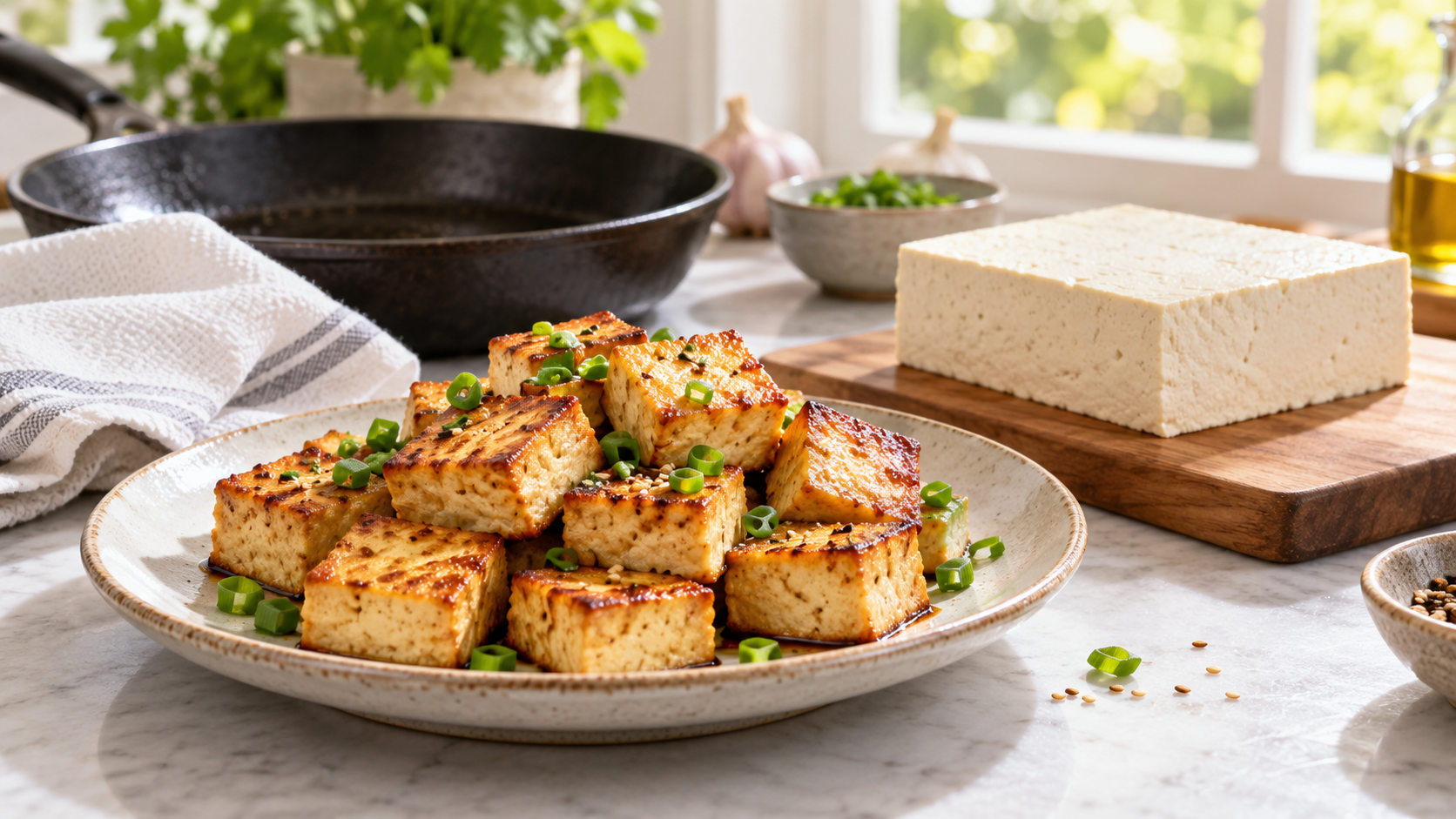
The easiest way to cook tofu is to choose the block for the dish before choosing the pan. Firm or extra-firm tofu is a good starting point for browned pieces. Silken tofu belongs in gentle soups, sauces and soft dishes where it does not need to hold a crisp edge. Once you have the right type, drying the surface and leaving space around each piece matter more than adding a complicated marinade.
Tofu is not one uniform ingredient. A package can contain a delicate custard-like block or a dense block that survives turning in a skillet. This guide helps you read the label, choose a method, and correct the most common texture problems. The examples are cooking methods, not claims that a particular recipe was personally tested.
Start with the type, not the recipe photo
#Silken tofu is soft and easily broken. It can be spooned into a bowl, blended into a sauce or warmed gently in broth. Its smooth texture is the point; pressing and aggressive flipping work against it. A recipe that wants neat golden cubes is unlikely to mean silken tofu.
Soft and medium tofu sit between silken and firm products, but labels vary by brand and market. They can suit gentle simmering or a dish where the tofu may break into large tender pieces. Handle them with a wide spoon or spatula and avoid piling heavy ingredients on top.
Firm and extra-firm tofu contain less free water and keep their shape better. They are practical for slices, cubes, skewers, a hot pan or an oven tray. Some packs are sold as super-firm or high-protein tofu and feel denser still. Follow the pack's handling and storage directions; product names alone do not tell you every detail of the texture.
| The result you want | Start with | A method that fits |
|---|---|---|
| Smooth sauce or soft soup | Silken | Blend or warm gently |
| Tender pieces in broth | Soft or medium | Add late and simmer gently |
| Browned cubes for a bowl | Firm or extra-firm | Dry, then pan-sear or bake |
| Dense slices for a sandwich | Extra-firm or super-firm | Sear, bake or grill carefully |
If you bought the “wrong” block, change the dish rather than trying to turn silken tofu into a crunchy cube. The reverse is also true: dense tofu can be crumbled or blended in some dishes, but it will not automatically give you the same smooth finish as silken tofu.
Do you need to press tofu?
#Pressing is useful when a water-packed firm block needs to brown. Remove it from the package, drain the packing liquid, wrap it in a clean towel and set a gentle weight on top for a while. The goal is to remove some water without crushing the block. Patting the cut pieces dry just before cooking also helps the surface make better contact with hot oil.
It is not a rule for every type. Silken tofu can fall apart under pressure. A very dense or already drained block may need little more than a pat dry. If your recipe is a soup, aggressive pressing can make the tofu less tender than you wanted. Let the chosen cooking method decide.
Pressing and marinating are also different jobs. Pressing changes available moisture. A marinade changes flavor mostly near the surface and may leave that surface wet. If you marinate pieces that you later want crisp, drain or pat the exterior before it meets the pan. Save a clean portion of any sauce for finishing; do not repeatedly pour a watery marinade into a crowded skillet and expect browning.
Pan-sear firm tofu for browned edges
#Use a firm or extra-firm block. Drain it, press if it is very wet, and cut pieces large enough to turn without breaking. Pat the exposed surfaces dry. Preheat a suitable skillet, add a thin layer of oil, and place tofu in one layer with space between the pieces. The pan should be hot enough to cook steadily but not so hot that the outside burns before it browns evenly.
Leave the tofu alone while the first side forms a crust. Move one piece gently with a spatula. If it grips the surface, give it another short interval instead of scraping hard. Turn when the underside releases and looks browned. Continue with the other sides as needed, then add a sauce near the end if the goal is a glazed surface.
The exact minutes change with thickness, pan and heat. Food Network's method gives roughly three to four minutes per side for one firm-tofu preparation; use visible browning and a fully heated center as your checks instead of treating that as a universal clock. If the tofu is wet or crowded, it steams rather than sears.
A thin optional starch coating can help make the exterior crisp. Keep it light and even. Too much coating can turn pasty when it meets a wet sauce. If your dish calls for a soft texture, skip the starch entirely.
Allblogs already has a focused tofu sticking guide for pan choice, moisture and release problems. Use it when the main issue is pieces attaching to the skillet; this guide covers the bigger decision of type and cooking method.
Bake tofu when you want a hands-off batch
#An oven is useful when you need several portions and do not want to turn every cube in a skillet. Choose firm or extra-firm tofu, dry it, cut fairly even pieces, and spread them on a lightly oiled or lined tray with space between them. A hot oven can dry and brown the exposed surfaces; turning once helps both sides color.
Food Network describes baking prepared tofu at about 400°F/205°C for roughly 30 minutes, turning once. That is a method example, not a guarantee for every oven or cube size. Check the pieces as they cook. A smaller cube dries more quickly; a very large slab needs a different expectation. If you intend to coat them in a sauce, toss or brush after they brown so the sauce does not keep the surface wet throughout baking.
Baked tofu is useful in rice bowls, noodles or salads because it can be made while other ingredients are prepared. It may be less glossy than a pan-seared version, but the trade is less hands-on time. Do not leave it cooking just to chase a deep crust if the interior has become unpleasantly dry.
Warm soft tofu without breaking it
#For a broth or soup, bring the surrounding liquid close to its finished flavor first. Slide in large spoonfuls or cubes of soft tofu near the end and heat gently. A vigorous boil and frequent stirring can break it into small pieces. That may be fine for a rustic dish, but it is not the same result as tender intact pieces.
Silken tofu can also be blended into a smooth savory sauce or a dessert base when a suitable recipe calls for it. The source recipe should account for its high moisture and mild taste; a firm-block recipe does not convert automatically. If serving a ready-to-eat tofu product without much cooking, follow the package's storage and use instructions and keep utensils and surfaces clean.
Choose seasoning that fits the method
#Tofu's mild taste makes it flexible, but its surface treatment matters. A wet marinade can be useful for flavor; a dry surface is useful for browning. You can do both by marinating, draining and drying before cooking, then finishing with a separate sauce. Alternatively, cook plain seasoned tofu until brown and toss it with sauce just before serving.
Build a dish around a flavor direction rather than adding every available seasoning. For a bowl, a salty-sour dressing and crisp vegetables may do the work. For a soup, the broth, aromatics and garnish carry much of the flavor. For a sandwich, a thicker glaze sticks better than a pool of thin sauce. These are combinations to choose from, not fixed quantities or nutrition claims.
If you need a crisp outside and soft inside, cut reasonably thick pieces and avoid prolonged cooking after they brown. If you want chew, a denser block or a different preparation can help. Allblogs' freezing tofu guide explains that separate texture choice. Freezing changes the structure; it is not a necessary step for everyday pan cooking.
Fix common tofu problems
#It falls apart when you turn it. Check the package type. Soft and silken tofu are fragile. Use a wide spatula, larger pieces and gentler heat, or move that block into a broth or sauce. For next time, buy firm or extra-firm if the dish requires repeated turning.
It will not brown. Dry the surface and make sure the pan or oven is hot enough before adding tofu. Cook in batches if the skillet is crowded. A watery sauce added too early will keep the surface moist. Browning is a surface process; more spices alone will not create it.
It sticks to the pan. Allow a crust to form before lifting it, use enough oil for the pan, and avoid moving the piece every few seconds. If the coating tears, lower the urge to scrape and consult the focused sticking guide. A nonstick pan can make a first batch easier, provided you follow its temperature and utensil guidance.
It tastes bland inside. Check whether the sauce is only a thin finish or part of the whole meal. Serve it with a seasoned broth, dressing or vegetables. Smaller pieces have more seasoned surface relative to their center. Do not assume that pressing alone puts flavor into the tofu.
It is rubbery or dry. The block may have been too dense for the dish or cooked too long. Add sauce and use it in a moist meal; next time choose a softer type or stop earlier. Chasing a crust on all six sides of a small cube can dry it out.
The sauce turns the crust soft. That is expected if crisp pieces sit in liquid. Finish at the table or toss just before serving. A glossy sauced tofu and a dry crisp tofu are different, equally valid outcomes.
Store it as a perishable food
#Follow the date and storage instructions on the package for unopened and opened tofu. Keep refrigerated tofu cold. Once it is cooked, treat it like other perishable leftovers: refrigerate promptly in shallow containers. U.S. government food-safety guidance advises a two-hour limit before refrigeration, shortened to one hour when food is exposed to heat above 32°C/90°F, and generally three to four days for refrigerated leftovers. Do not use a smell check to override unsafe handling.
For a packed lunch in hot weather, the relevant issue becomes temperature control, not whether the tofu was originally cooked. Allblogs' tofu tiffin safety guide addresses that specific situation. This cooking guide is for choosing the texture and method before the meal is packed.
A reliable first attempt
#If you have never cooked tofu, start with a firm block and a simple meal. Drain and pat it dry, cut even pieces, cook them in an uncrowded lightly oiled pan until each side releases and browns, then add a sauce at the end. That teaches you what your block and pan do together. After that, choose softer tofu for gentle dishes or a tray for a larger batch. The “best” way is the one that produces the texture your meal needs.