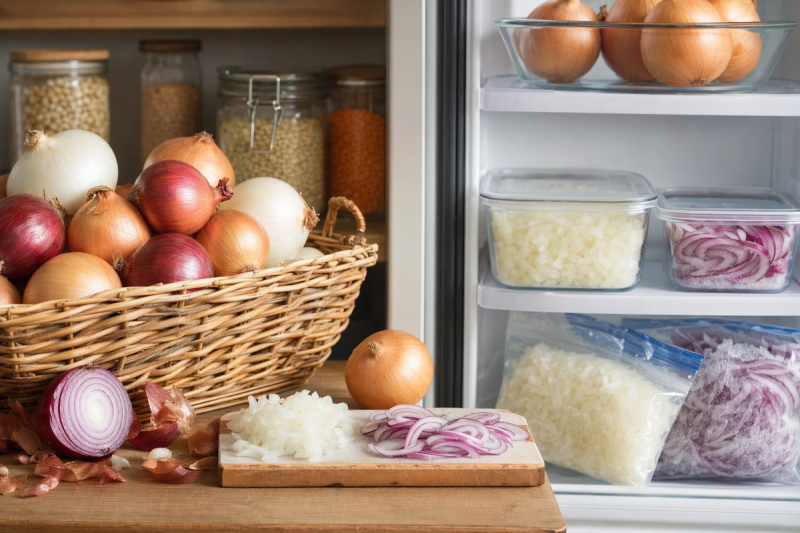
The onion basket that taught me a lesson, kinda dramatically
#I used to think onions were basically indestructible. Like, they sit in a mesh bag at the grocery store looking all papery and ancient, so surely they can survive anything, right? Wrong. So wrong. I learned this the gross way one summer when I shoved a five-pound bag of yellow onions into the cabinet under my sink because the counter was messy and I was “hosting” dinner, which mostly meant I had bought olives and was pretending I had a plan. Two weeks later, I opened that cabinet and got hit with the smell of sad onion soup, but not in a cozy French bistro way. More like swampy, sweet, sticky disaster. One had gone soft, then another, then they all joined hands and ruined my afternoon.
That was the day I became an onion storage person. Not in a fancy label-maker way, although I do admire those people. More in a “I refuse to waste the thing that starts half my dinners” way. Because onions are never just onions. They’re the beginning of dal tadka, tomato sauce, biryani, shakshuka, pierogi filling, caramelized onion toast at midnight, and those tiny fried bits you steal from the pan before anyone sees. So yeah, storing onions correctly matters. It saves money, it saves flavor, and it saves you from that one terrifying onion liquifying in the pantry like it has a personal grudge.
Quick onion storage cheat sheet, because sometimes we just need the answer
#| Onion situation | Best place | How long it usually keeps | My very honest note |
|---|---|---|---|
| Whole yellow, white, or red onions | Cool, dry, dark pantry with airflow | Several weeks, sometimes longer | No plastic bags, please. They sweat and get weird. |
| Sweet onions, like Vidalia or Walla Walla | Pantry for short term, fridge for longer | About 1 to 2 weeks pantry, longer chilled | They’re juicier, which is lovely for eating, annoying for storage. |
| Cut or sliced onions | Fridge in airtight container | Use within 7 to 10 days | Keep them covered unless you want onion-scented butter. |
| Cooked onions | Fridge, sealed container | 3 to 4 days | Honestly, they rarely last that long in my house. |
| Frozen chopped onions | Freezer bag or airtight container | Best quality around 8 to 12 months | Perfect for soups, curries, sauces, not raw salads. |
| Green onions or scallions | Fridge, damp towel or jar method | About 1 to 2 weeks | They are needy little things, but worth it. |
Those timelines line up with the practical food-safety advice you’ll see from places like USDA and FoodSafety.gov: cut produce belongs in the fridge, cooked leftovers get a shorter window, and frozen food stays safe longer when kept solidly frozen, though quality eventually drops. But real kitchens are not lab kitchens. Your pantry might be humid, your fridge might run warm, your roommate might leave the onion bin open next to the dishwasher steam. So use your eyes and nose too. If it’s slimy, moldy, leaking, or smells like something crawled into a compost pile and gave up, don’t negotiate with it.
Whole onions love the pantry, but not just any pantry
#Whole bulb onions, the regular yellow, red, and white ones, want three things: cool, dry, and airy. That’s it. They are simple, but they are also weirdly picky. A dark cabinet can be great if it’s not beside the oven, not under the sink, and not full of damp dish towels or mystery grocery bags. A basket on a lower pantry shelf works beautifully. So does a wire bin, a mesh bag, a hanging basket, or one of those old-school crates that makes your kitchen look like you casually live in a countryside cookbook.
The main thing is airflow. Onions have papery skins for a reason, and when you trap them in plastic, moisture builds up and suddenly you’ve created a little onion sauna. And nobody asked for that. I take them out of the plastic produce bag as soon as I get home. If they came in mesh, I usually leave them there, unless there’s one bruised onion hiding in the middle. I check because one soft onion can ruin the bunch, and I say that as someone who has lost an entire bag because I was too lazy to investigate a suspicious smell.
Temperature matters too. A cool spot is better than a warm one. Around cellar-cool is dreamy, though most of us do not have a romantic root cellar with stone walls and a wooden stool and probably a cat named Basil. I wish. In a normal apartment, just keep them away from heat sources. Not on top of the fridge, not beside the stove, not in a sunny windowsill, and definitely not in the cabinet above the oven where all good ingredients go to die. Heat makes onions sprout faster and soften faster, and sprouted onions are still usable sometimes, but the texture starts going downhill.
Please stop storing onions and potatoes together, I beg a little
#I know the potato-and-onion basket looks cute. Very farmhouse. Very “I make soup from scratch and never forget to thaw chicken.” But potatoes and onions are not best friends in storage. Potatoes give off moisture and gases as they sit, onions are sensitive to dampness, and both can encourage each other to sprout or spoil faster. I keep mine on separate shelves, not miles apart, just not cuddling. The potatoes get a dark breathable bin. The onions get a basket with space around them. Garlic can hang out with onions more peacefully, though even garlic likes things dry and breezy.
If your kitchen is humid, you’ve got to be even more careful. Monsoon kitchens, coastal kitchens, tiny rental kitchens where the exhaust fan is mostly decorative... I’ve had all of them. Moisture is the villain. It’s the same reason spices clump and lose their punch in damp weather, and if that’s a familiar battle, this guide on How to Store Masala and Spices in Humid Weather is actually the same mindset: dry containers, dry hands, less steam, more common sense. Onions don’t need airtight jars when whole, but they do need to stay dry.
What about sweet onions? The juicy divas of the onion world
#Sweet onions are gorgeous. Vidalia, Maui, Walla Walla, Texas sweets... I love them sliced thick on a burger with sharp mustard, or chopped into a tomato-cucumber salad with lime and salt. But they don’t store like the tough yellow onions you buy for everyday cooking. Sweet onions have more water and less of that aggressive sulfur bite, which is why they taste so mellow, but it also means they’re more delicate. Basically, the very thing that makes them delicious makes them a little high-maintenance.
If I’m going to use sweet onions within a week or so, I’ll keep them in a cool pantry, separated so air can move around them. If I bought a big bag because they were on sale and I briefly became a person with optimism, I move some to the fridge. I wrap them individually in paper towels or keep them in a breathable bag, not sealed up wet. Some growers recommend refrigeration for longer storage of sweet onions, and that matches what I’ve seen in my own kitchen. They last better cold, but they can soften if they get damp, so don’t just throw them into the crisper naked and hope for the best.
Cut onions belong in the fridge, and yes, cover them properly
#Once you cut an onion, the rules change. It’s no longer a dry pantry item. It’s fresh cut produce, which means fridge. I put halved onions cut-side down in a small airtight container or wrap them tightly, then use them within a week if possible. Chopped onions go into a glass container with a tight lid because plastic containers can hold onto onion smell like it’s a family heirloom. If you’ve ever eaten strawberries that taste faintly of onion because someone stored them nearby uncovered... I am so sorry. I have been there.
Food safety guidance generally says cut onions can be refrigerated at 40°F or below and used within 7 to 10 days. That’s the official-ish comfort zone. My personal comfort zone is closer to 3 to 5 days for raw chopped onion, because the smell gets bossy and the texture gets less crisp. For cooking, day six or seven is fine if it still looks and smells good. For raw salsa or salad? I want it fresher. I’m picky like that, and I don’t apologize.
Also, dry matters in the fridge. I know the fridge is cold, but cold doesn’t magically fix wetness. If your container has condensation dripping inside, your onions can get slimy faster. Pat cut onions dry if they’re wet, use clean containers, and don’t store them beside uncovered leftovers. If your fridge often has water droplets on shelves or soggy produce drawers, it’s worth checking out Fridge Condensation: Causes, Fixes and Food-Safety Checks, because excess moisture is one of those boring kitchen problems that quietly ruins food.
Do cut onions really “absorb bacteria” from the air?
#This rumor has been around forever, and I still hear it at family dinners. Someone will say you should never save half an onion because it “sucks up germs.” I get why it sounds believable, because onions are pungent and mysterious and make everybody cry, but no, they are not magical bacteria magnets. A cut onion can spoil like any cut vegetable if handled badly, left out too long, or stored dirty and wet. But if you cut it with a clean knife, put it in a clean airtight container, and refrigerate it, you’re fine. Don’t leave chopped onions on the counter all afternoon and then blame the onion. That’s on us, friend.
Cooked onions: the leftovers I always pretend are “meal prep”
#Cooked onions are one of my favorite fridge treasures. A container of sautéed onions can become omelets, grilled cheese, quick fried rice, quesadillas, lentils, noodles, literally anything. I once had leftover caramelized onions from a dinner party, and the next morning I put them on toast with a fried egg and chili crisp. I still think about that breakfast more than I think about some vacations.
But cooked onions have a shorter fridge life than whole onions. Treat them like cooked leftovers: cool them down, get them into a shallow container, refrigerate within about two hours, and use within 3 to 4 days. If they smell sour, look fuzzy, or get a strange slickness, let them go. I know wasting caramelized onions feels like a small personal tragedy, but food poisoning is not the plot twist we need.
One tiny thing I do: I label the container with masking tape if I made a big batch. Not because I’m organized, ha, I am not. It’s because caramelized onions from Monday and mushroom gravy from Friday can look disturbingly similar when you’re tired. Past me has betrayed future me too many times.
Freezing onions is not glamorous, but it is deeply useful
#Frozen onions will never be the onion you slice raw into a kachumber salad or pile on tacos for crunch. Let’s just be honest. Freezing breaks down the cell structure, so thawed onions come out softer and wetter. But for cooking? They are gold. I freeze chopped onions for soups, stews, curries, chili, meatballs, frittatas, and weeknight tomato sauce when I’m already hungry and chopping feels like a moral failure.
The best way is simple. Peel and chop or slice the onions, spread them on a tray if you want them loose, freeze until firm, then transfer to a freezer bag or airtight container. Push out as much air as you can. I flatten freezer bags into thin sheets so I can break off a handful later, which makes me feel very clever even though everyone’s grandmother probably did this before us. You can also portion onions into half-cup amounts if you’re a recipe person. I am more of a “that looks like enough” person.
Freezer quality is where packaging really matters. Air is what gives you dry, icy, freezer-burned onion bits that taste like old snow and sadness. Use freezer-safe bags, press out air, double-bag if your freezer is chaotic, and keep them away from uncovered fish or strong-smelling foods. If freezer burn is a recurring villain in your kitchen, this breakdown on How to Prevent Freezer Burn and Keep Food Better is worth reading, especially for chopped onions because all those tiny cut surfaces love to collect ice crystals.
Do you need to blanch onions before freezing?
#For chopped onions, I don’t bother. Some vegetables really benefit from blanching before freezing, but onions are usually fine raw-frozen if you plan to cook them later. The smell can be strong, though. Very strong. The first time I froze a giant bag of chopped red onion, my freezer smelled like a sandwich shop for three days. Now I use thicker freezer bags or a lidded container, and I do not store them next to ice cream. Onion-vanilla is not a flavor journey I recommend.
For best quality, use frozen onions within about 8 to 12 months. They’re still safe beyond that if kept continuously frozen at 0°F, according to general freezer guidance, but quality fades. I try to use them within a few months because they’re so handy. Toss them straight into the pan from frozen, no thawing. They’ll release water at first, so let that cook off before you add oil-heavy spices or try to brown them. If you dump frozen onions into hot oil and expect instant golden edges, you’ll be annoyed. Ask me how I know.
Green onions, scallions, spring onions... tiny name chaos, different storage rules
#Green onions are not stored like bulb onions. They’re leafy, tender, and dramatic. I store them in the fridge, either wrapped in a barely damp paper towel inside a loose bag, or standing in a jar with a little water like a sad little bouquet. If I do the jar method, I cover the tops loosely with a bag and change the water every couple of days. It feels fussy, but it works. The tops stay perky and I get more scallion pancakes, so everybody wins.
If the roots are still attached, you can sometimes regrow them on the windowsill in water. It’s fun, and it makes you feel like a kitchen wizard, but the regrown shoots get thinner after a while. I still do it because snipping green onion over noodles at 11 p.m. is one of life’s cheap luxuries. For longer storage, slice green onions and freeze them. The green tops lose their fresh crunch, but they’re great tossed into fried rice, brothy soups, and savory pancakes.
How to tell an onion has gone bad, without overthinking it
#- Soft spots are the first warning sign. One small bruise can be cut away if the rest is firm, but if the onion feels squishy overall, nope.
- Mold on the outer papery skin can sometimes be peeled away if it’s minor and the onion underneath is firm, but fuzzy mold that reaches flesh means throw it out.
- Sprouts are not automatically dangerous. The onion may taste sharper or bitter, and the texture can be tired, but you can cut out the sprout and use the firm parts.
- A sour, rotten, fermented smell is your sign to stop trying to save it. Good onions smell oniony. Bad onions smell like a mistake.
- Leaking liquid is bad news. That onion has crossed over into compost territory.
I’m pretty ruthless with bad onions now because I’ve learned that saving fifty cents is not worth ruining a whole pot of food. One rotten onion in a curry can make the whole thing taste off. And when you’ve already toasted spices, chopped tomatoes, washed cilantro, maybe made rice... ugh. The betrayal is real.
My onion routine after grocery shopping
#- I unpack onions right away and remove any plastic produce bags. If they’re damp from the store misting system, I let them dry on a towel before storing.
- I check for soft or bruised ones. Those become dinner first, usually in scrambled eggs, quick dal, or a lazy pasta sauce.
- I store whole regular onions in a breathable basket in a lower pantry shelf, away from potatoes and away from the oven.
- Sweet onions get used quickly, or I move them to the fridge if I know I got carried away at the market.
- If I cut an onion and don’t use it all, it goes into a sealed glass container in the fridge. No exceptions, because onion smell travels like gossip.
- If I have extra energy, which is not often, I chop two or three onions for the freezer. Future me is always weirdly grateful.
This routine sounds more organized than it feels. In real life I’m usually unpacking groceries while answering a text, eating a heel of bread, and trying to remember if I already bought ginger. But the onion part is automatic now, and that’s the trick. Make the good habit easy enough that you do it even when you’re tired.
The restaurant lesson: onions are flavor architecture
#One of the reasons I care so much about onions is that restaurants remind me constantly how powerful they are. I had this bowl of French onion soup years ago in a tiny place with fogged windows and wobbly tables, and the broth tasted like someone had taken an entire rainy afternoon and turned it into dinner. It wasn’t fancy. The cheese was a little too browned on one edge, the bowl was chipped, and the server forgot our water twice. Still one of my favorite soups ever. The onions were cooked so slowly they’d become jammy and deep and almost smoky.
Same thing at a South Indian restaurant I love, where the sambar starts with onions cooked just enough to sweeten but not disappear. Or at a taco place where raw white onion and cilantro make carnitas taste alive. Or the old kebab shop near my college where the sliced red onions came with lemon wedges and chaat masala, and me and my friends would eat them like salad even though our breath was probably illegal afterward. Onions are background until they’re not. They build the whole room of flavor, and if you store them badly, you start dinner with a weak foundation.
A few little onion storage mistakes I still see all the time
#The first mistake is buying too many. I know bulk bags are cheaper, and I too have been seduced by a mountain of onions at a good price. But if your kitchen is warm or humid and you cook for one or two people, buying a smaller amount more often can actually waste less money. The second mistake is hiding them somewhere you forget. Onions need air, but they also need visibility. If you can’t see them, one will rot in secret. Sneaky little goblin.
The third mistake is refrigerating all whole onions by default. Regular storage onions usually do better in a dry, ventilated pantry than a damp fridge. The fridge can make them soft or encourage mold if moisture collects. That said, if your kitchen is super hot, the fridge might be the lesser evil for short periods, especially for sweet onions. See, this is where food advice gets annoying because there’s always a “depends.” But that’s cooking. It depends on your onion, your weather, your fridge, your life.
The fourth mistake is not sealing cut onions. I cannot stress this enough: uncovered cut onion in the fridge is an act of aggression. Your milk will know. Your leftover cake will know. Your butter will absolutely know. Put it in a tight container and everybody can live peacefully.
So, pantry, fridge, or freezer?
#Here’s my simplest rule. Whole dry bulb onions go in the pantry. Cut onions go in the fridge. Extra chopped onions go in the freezer. Sweet onions get special treatment because they’re juicy and fragile. Green onions go in the fridge because they’re basically herbs with confidence. And everything needs dryness, cleanliness, and a little bit of attention.
Good onion storage is not about being perfect. It’s about giving one of the hardest-working ingredients in your kitchen a fighting chance.
When I started treating onions better, my cooking genuinely got easier. I had fewer weird smells, fewer wasted bags, and more nights where dinner started quickly because the basics were ready. There’s something comforting about reaching into the pantry and finding firm onions waiting there, like, yes, we can make something from nothing. A soup. A curry. A sauce. A skillet of potatoes with crispy edges. Maybe just onions fried in butter with a little salt, eaten standing at the stove. No judgement.
Anyway, that’s my onion sermon for the day. Store them dry, keep them breathing, refrigerate once cut, freeze what you won’t use, and don’t let potatoes bully them into early sprouting. If you’re into these slightly nerdy kitchen habits and food stories, I keep finding nice rabbit holes over on AllBlogs.in, the kind of stuff you read while dinner is simmering and you’re pretending you’re not snacking straight from the pan.